
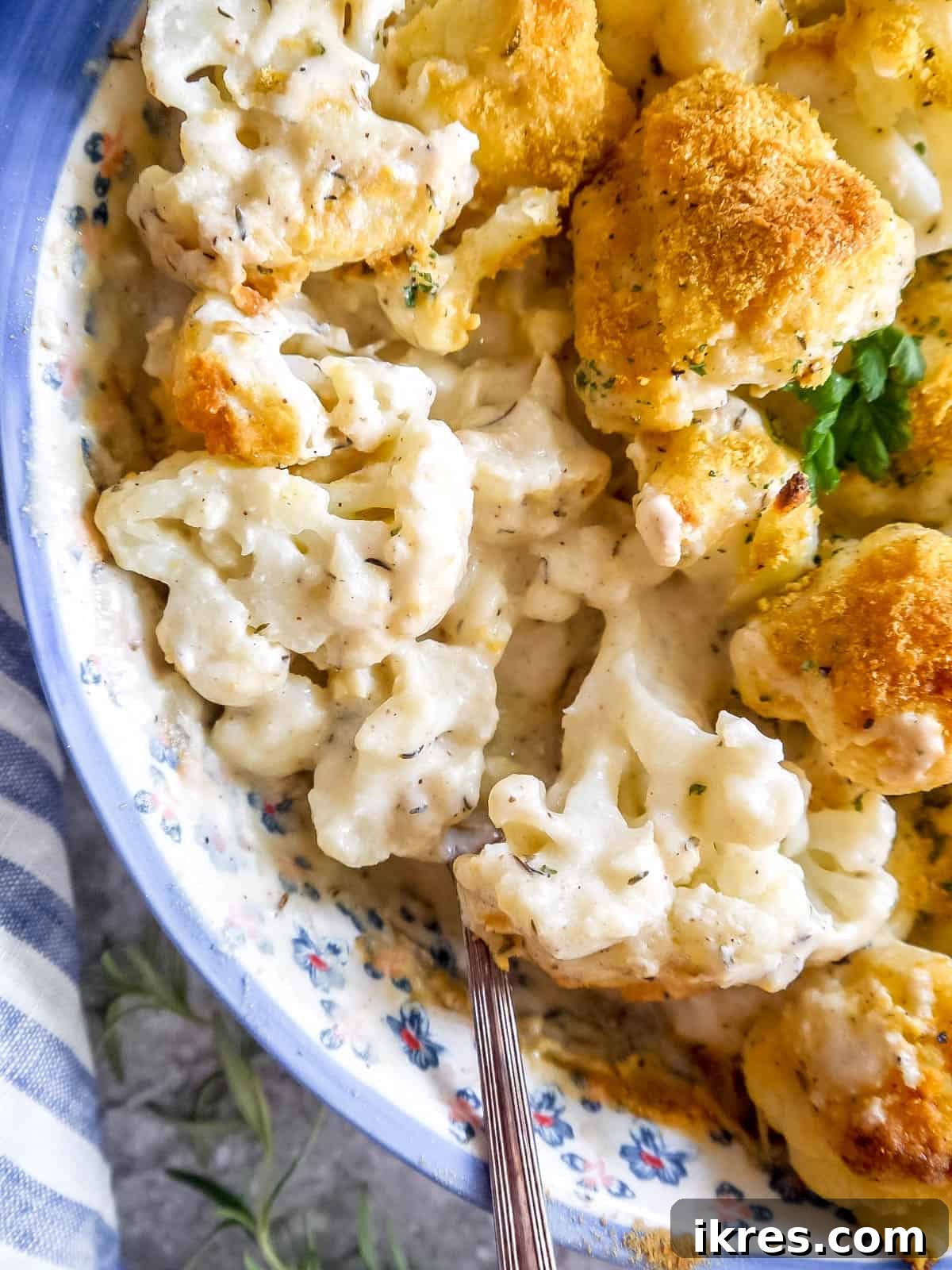
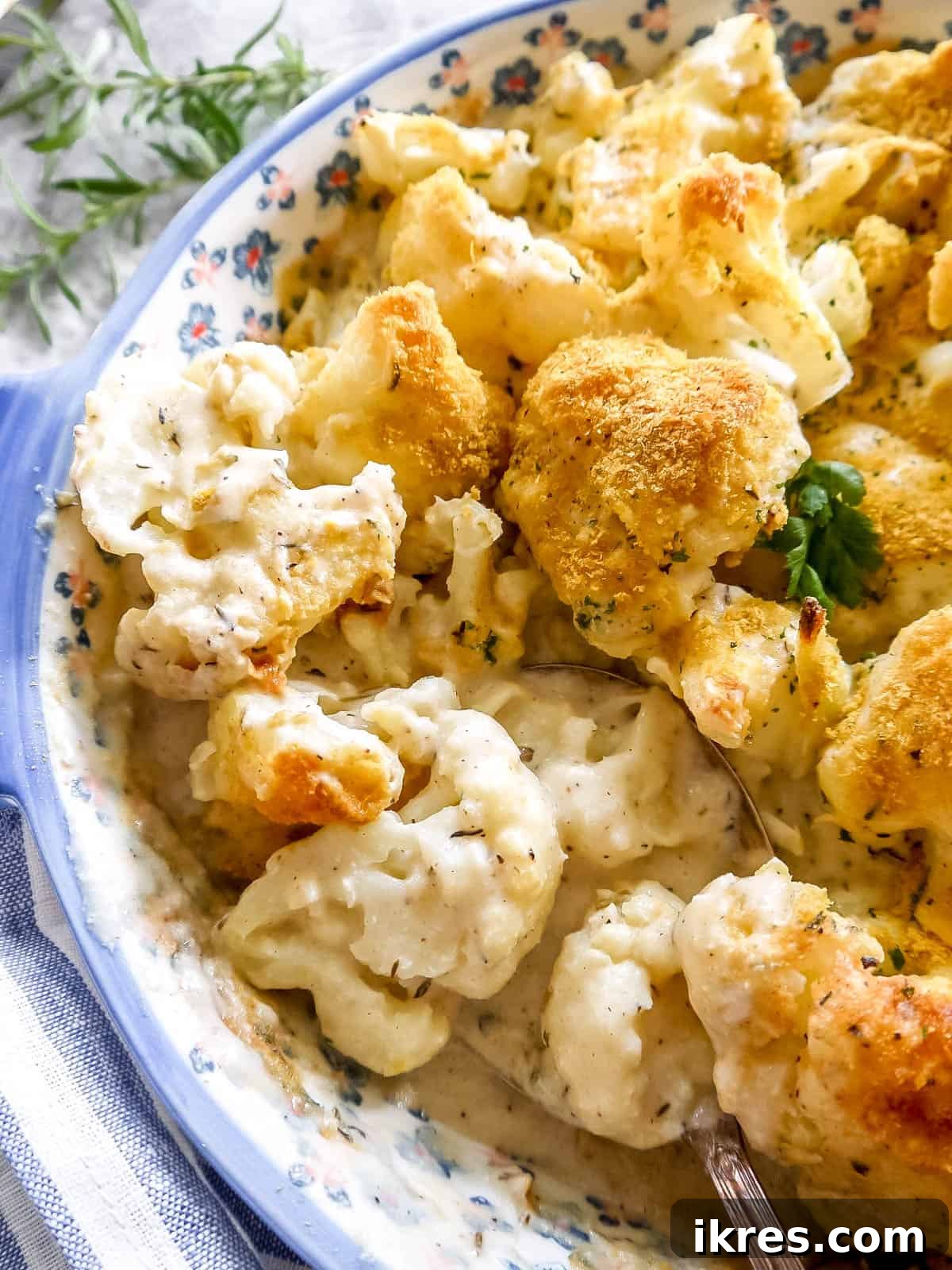
Indulge in this incredibly satisfying Vegan Cauliflower Casserole, an effortless yet elegant savory dish. Enjoy perfectly tender cauliflower florets generously coated in a rich, velvety dairy-free sauce, seasoned with savory nutritional yeast, and baked to a beautiful golden perfection. This delightful cauliflower gratin proudly adheres to Paleo, Whole30, Gluten-free, Grain-free, and Dairy-free dietary guidelines, making it a truly inclusive and healthy comfort food option.
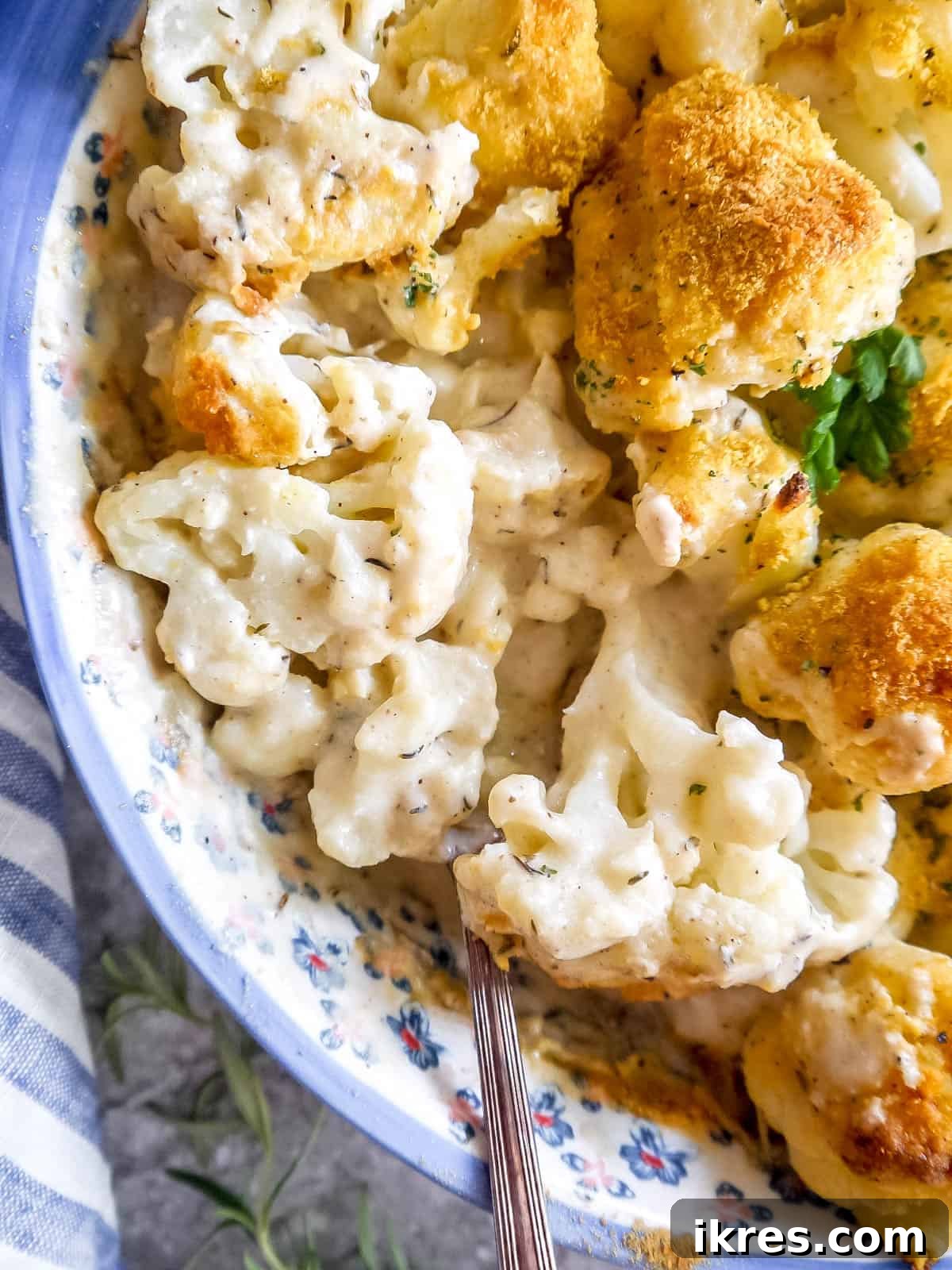
There’s an undeniable warmth and profound satisfaction that comes with creamy cauliflower dishes. Whether it’s expertly crafted cauliflower gnocchi, a luscious cauliflower sauce, or a hearty cauliflower and potato mash, the versatile nature of cauliflower truly shines when paired with a rich, plant-based cream. This particular healthy vegetarian cauliflower casserole takes that delicious combination to a whole new level, offering a dairy-free gratin experience that’s both indulgent and wholesome.
For years, I perfected classic cauliflower gratin with traditional dairy ingredients. However, embracing a dairy-free lifestyle ignited a mission: to create an equally decadent version without any butter or milk. After much experimentation, I am thrilled to share that this mission was a resounding success! This Vegan Cauliflower Casserole features an incredibly **rich and flavorful sauce** crafted from the harmonious blend of creamy coconut cream, unsweetened almond milk, and savory nutritional yeast. The entire dish is then baked until it achieves a gorgeously golden, bubbly crust, proving that plant-based cooking can be just as, if not more, satisfying than its traditional counterparts.
Table of Contents
- Why This Recipe Works
- Key Ingredients for Vegan Cauliflower Casserole
- Additions and Substitutions for Your Gratin
- Step-by-Step Guide to Making Cauliflower Casserole
- Expert Tips for a Perfect Vegan Cauliflower Gratin
- Vegan Cauliflower Casserole FAQs
- Other Delicious Vegan Side Dishes You May Enjoy:
- Full Vegan Cauliflower Casserole Recipe Card
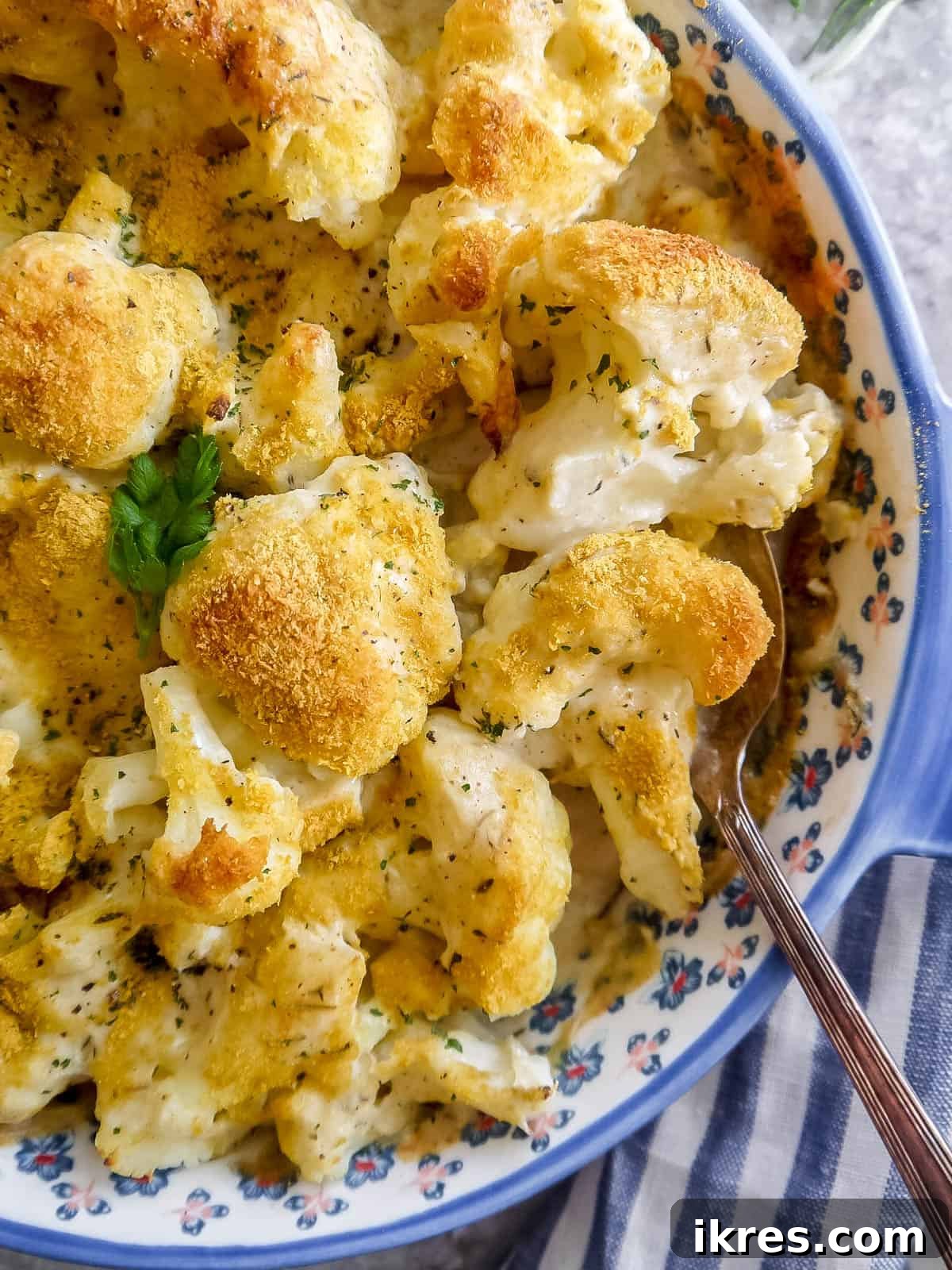
Why This Recipe Works
This Vegan Cauliflower Casserole isn’t just another side dish; it’s a culinary triumph for several compelling reasons:
- Dietary Inclusivity: It’s an ideal choice for individuals managing a dairy allergy or those committed to a specific dietary regimen such as a Vegan, Paleo, or Whole30 diet. Its plant-based nature ensures everyone at the table can enjoy a truly comforting meal without compromise.
- Versatile Side Dish: This gratin serves as an exquisite and satisfying side dish, capable of complementing a wide array of main courses. From a simple weeknight dinner to a festive holiday spread, its creamy texture and rich flavor elevate any meal.
- Irresistibly Creamy Texture: The magic lies in the luxurious cream sauce. The thoughtful combination of unsweetened almond milk and rich coconut cream creates an incredibly smooth and decadent base, perfectly mimicking traditional dairy-based sauces while remaining entirely plant-based.
- Simply the Best: Many have crowned this recipe as the best Vegan cauliflower casserole they’ve ever tasted! The balance of flavors, the tender cauliflower, and the golden, savory topping make it a standout dish that will impress even the most discerning palates.
- Wholesome Ingredients: Prepared with only clean, real food ingredients, this casserole prioritizes health without sacrificing taste. You can feel good about serving a dish that’s free from artificial additives and packed with natural goodness.
- Nutrient-Rich: Cauliflower, a star cruciferous vegetable, is known for its remarkable health benefits, including a high content of antioxidants and essential nutrients. This recipe offers an easy and delicious way to incorporate these powerful veggies into your diet, boosting overall well-being.
- Comfort Food Redefined: It brings all the comforting qualities of a classic gratin – warm, creamy, and satisfying – but in a lighter, healthier, and plant-forward package. It’s comfort food that truly nourishes the body and soul.
Key Ingredients for Vegan Cauliflower Casserole
Crafting this flavorful vegan gratin requires a selection of fresh and pantry-staple ingredients. Each plays a crucial role in achieving the perfect texture and taste profile.
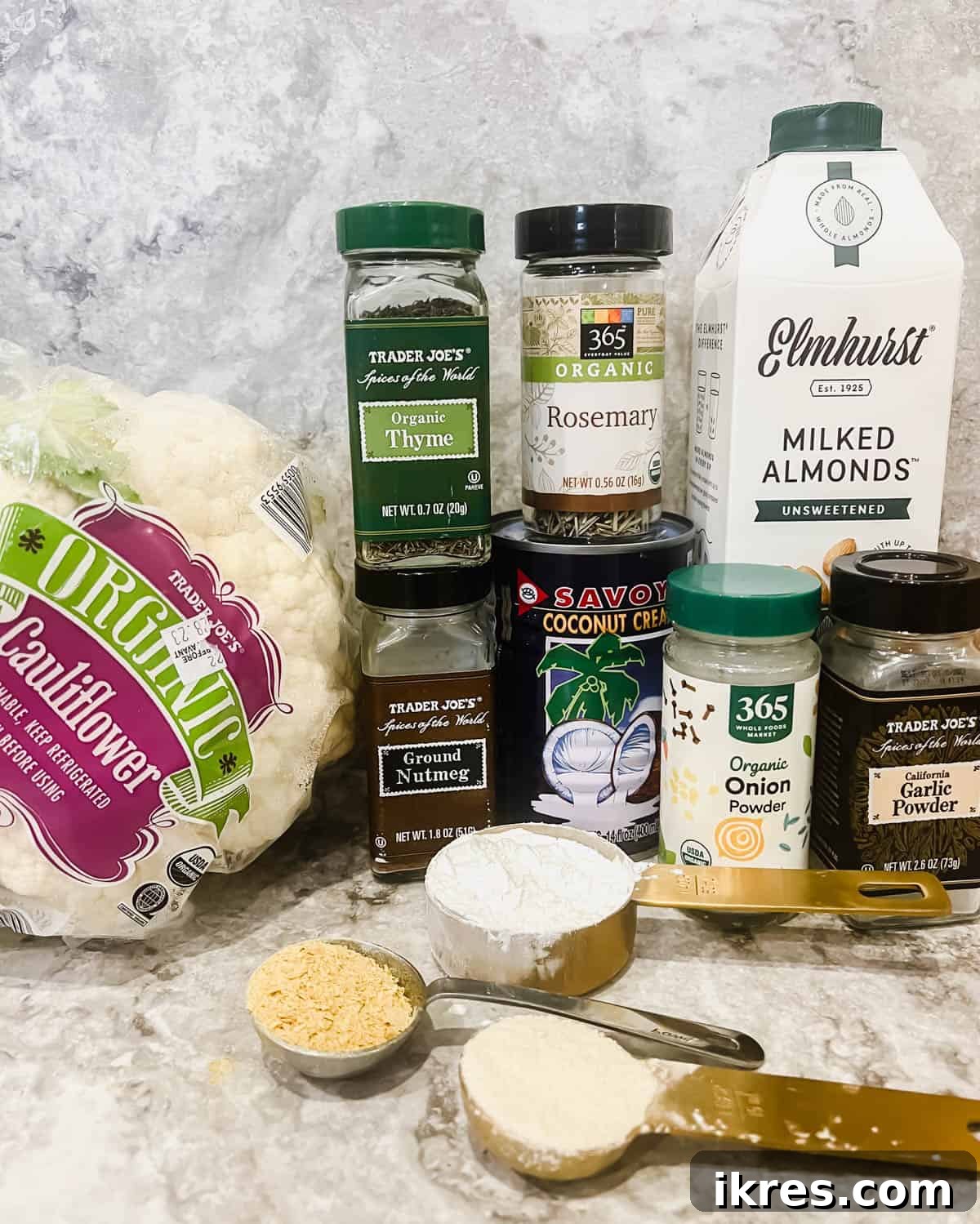
- A Large Head of Cauliflower: The star of our dish! Ensure you select a fresh, firm, and sizable head to yield enough florets for the casserole. Its mild flavor and tender texture once cooked make it perfect for absorbing the creamy sauce.
- Tapioca Flour: This gluten-free starch is essential for thickening the creamy sauce, giving it a smooth and luscious consistency without any lumps. It helps create that desirable rich texture.
- Coconut Flour: Working in conjunction with tapioca flour, coconut flour further aids in thickening the sauce while also adding a subtle depth of flavor. Its high absorbency is key to the sauce’s body.
- Full-Fat Coconut Cream: The foundation of our dairy-free cream sauce. For the best results, it’s paramount to use a high-quality brand of coconut cream that you genuinely enjoy the taste of, as its flavor will permeate the dish. I personally recommend Savoy coconut cream for its superior taste.
- Unsweetened Almond Milk: Any unsweetened non-dairy milk will work, but almond milk contributes to the creamy base without adding unwanted sweetness, making it an excellent choice for savory dishes.
- Onion Powder: A fundamental seasoning that provides a foundational savory note to the sauce, enhancing its overall flavor profile with ease.
- Garlic Powder: Another indispensable spice, garlic powder infuses the sauce with a warm, aromatic kick, complementing the other flavors beautifully.
- Ground Nutmeg: My secret weapon for any cream-based sauce! A touch of ground nutmeg adds an unexpected yet delightful depth and warmth, elevating the sophistication of the creamy sauce without overpowering it.
- Dried Rosemary: This aromatic herb imparts an earthy, slightly piney flavor, bringing a classic savory gratin essence to our vegan version.
- Dried Thyme: Similar to rosemary, dried thyme adds a subtle, peppery, and slightly minty note, enhancing the overall herbal complexity of the sauce.
- Nutritional Yeast: Crucial for that “cheesy” flavor without any dairy. It’s important to choose a brand of nutritional yeast whose flavor you appreciate, as its unique umami taste is prominent. The one from Anthony’s is a personal favorite.
- Olive Oil: Used to create the roux base for our creamy sauce, ensuring a smooth start and a rich flavor.
- Salt and Ground Black Pepper: Essential to taste, these basic seasonings bring all the individual flavors together and ensure the casserole is perfectly balanced.
For precise measurements and a detailed recipe, please refer to the complete recipe card below.
Additions and Substitutions for Your Gratin
This vegan cauliflower casserole recipe is wonderfully adaptable, allowing for various additions and substitutions to suit your preferences or what you have on hand. Feel free to get creative!
- Tapioca Flour Alternatives: If tapioca flour isn’t available, arrowroot starch makes an excellent 1:1 substitute. Both are gluten-free and will provide a similar thickening power to your sauce. Cornstarch can also be used, but start with slightly less (e.g., 1.5 Tbs for every 2 Tbs tapioca) and adjust, as it can create a slightly different texture.
- Non-Dairy Milk Options: While almond milk is recommended, you can use any unsweetened non-dairy milk of your choice. Oat milk, soy milk, or cashew milk can all work beautifully, each imparting a slightly different nuance to the sauce. Ensure it is unsweetened to maintain the savory profile.
- Add a Spicy Kick: For those who enjoy a bit of heat, consider adding a pinch of cayenne pepper or red pepper flakes to the sauce.
- Fresh Herbs: Elevate the aroma and flavor by incorporating a tablespoon of finely chopped fresh rosemary or thyme instead of dried, or add fresh chives or parsley as a garnish after baking.
- Roasted Garlic: For an even deeper, sweeter garlic flavor, roast a head of garlic, mash the cloves, and add them to the sauce instead of (or in addition to) garlic powder.
- Nutritional Yeast Boost: If you’re a big fan of cheesy flavor, don’t hesitate to add an extra tablespoon or two of nutritional yeast to the sauce or as a top layer before baking.
- Vegetable Add-ins: While this is a cauliflower casserole, feel free to mix in other vegetables like thinly sliced mushrooms, spinach (wilted before adding), or even broccoli florets for an extra nutrient boost and texture.
- Crunchy Topping: For an additional layer of texture, sprinkle some gluten-free breadcrumbs, crushed nuts (like pecans or almonds), or sunflower seeds over the top along with the nutritional yeast before baking.
- Lemon Zest/Juice: A squeeze of fresh lemon juice or a sprinkle of zest after baking can brighten the flavors and add a wonderful tang.
Step-by-Step Guide to Making Cauliflower Casserole
Follow these straightforward steps to create your perfect vegan cauliflower gratin. Precision in each stage ensures a delicious and creamy result.
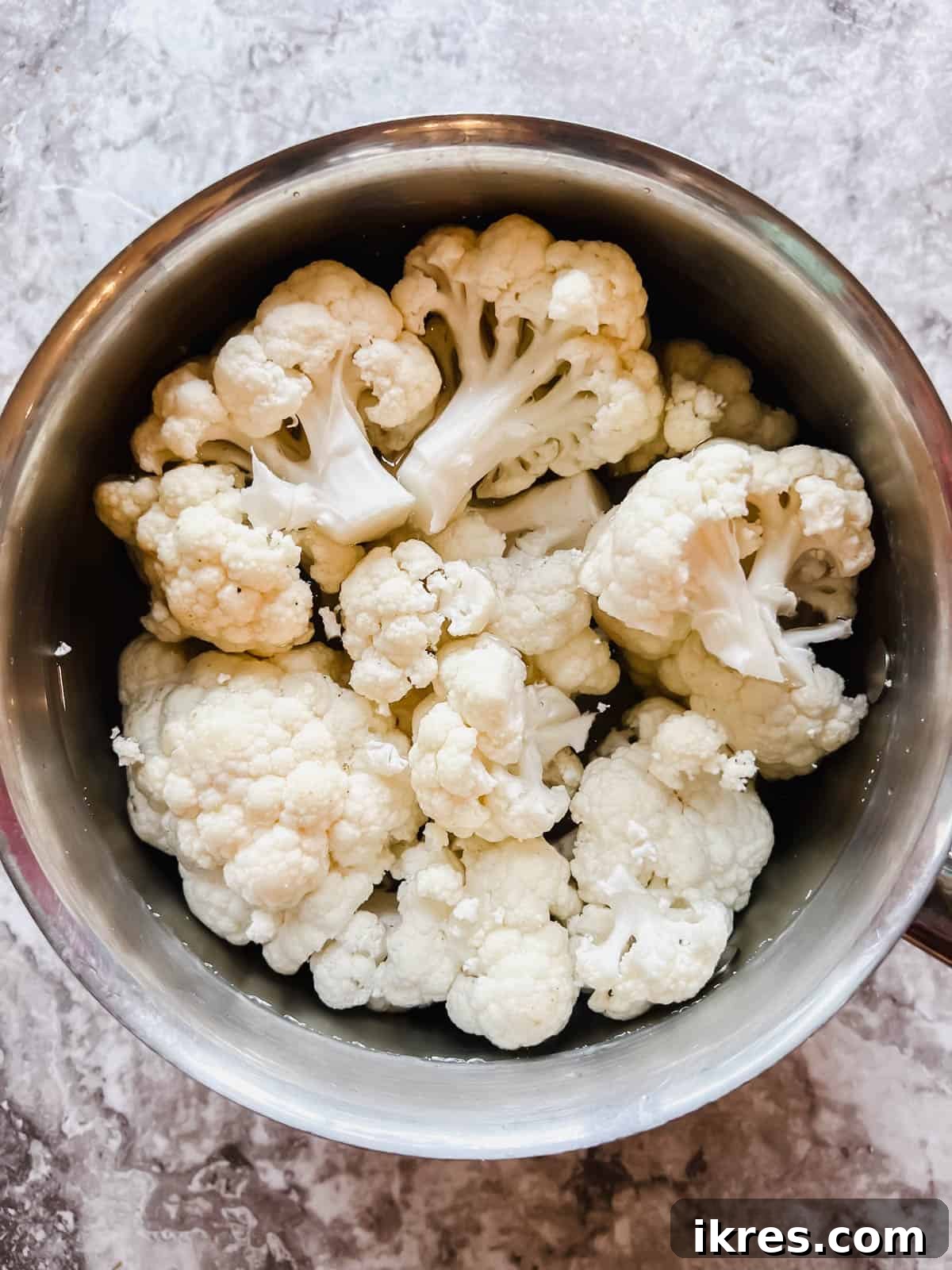
Step 1: Prepare the Cauliflower by Boiling. Bring a large pot of water to a rolling boil and carefully add your medium-sized cauliflower florets. Boil them for approximately 5-6 minutes. This initial cooking step is crucial as it ensures the cauliflower will become perfectly tender and soft enough during the subsequent baking process, preventing an undercooked, hard texture. Drain thoroughly after boiling.
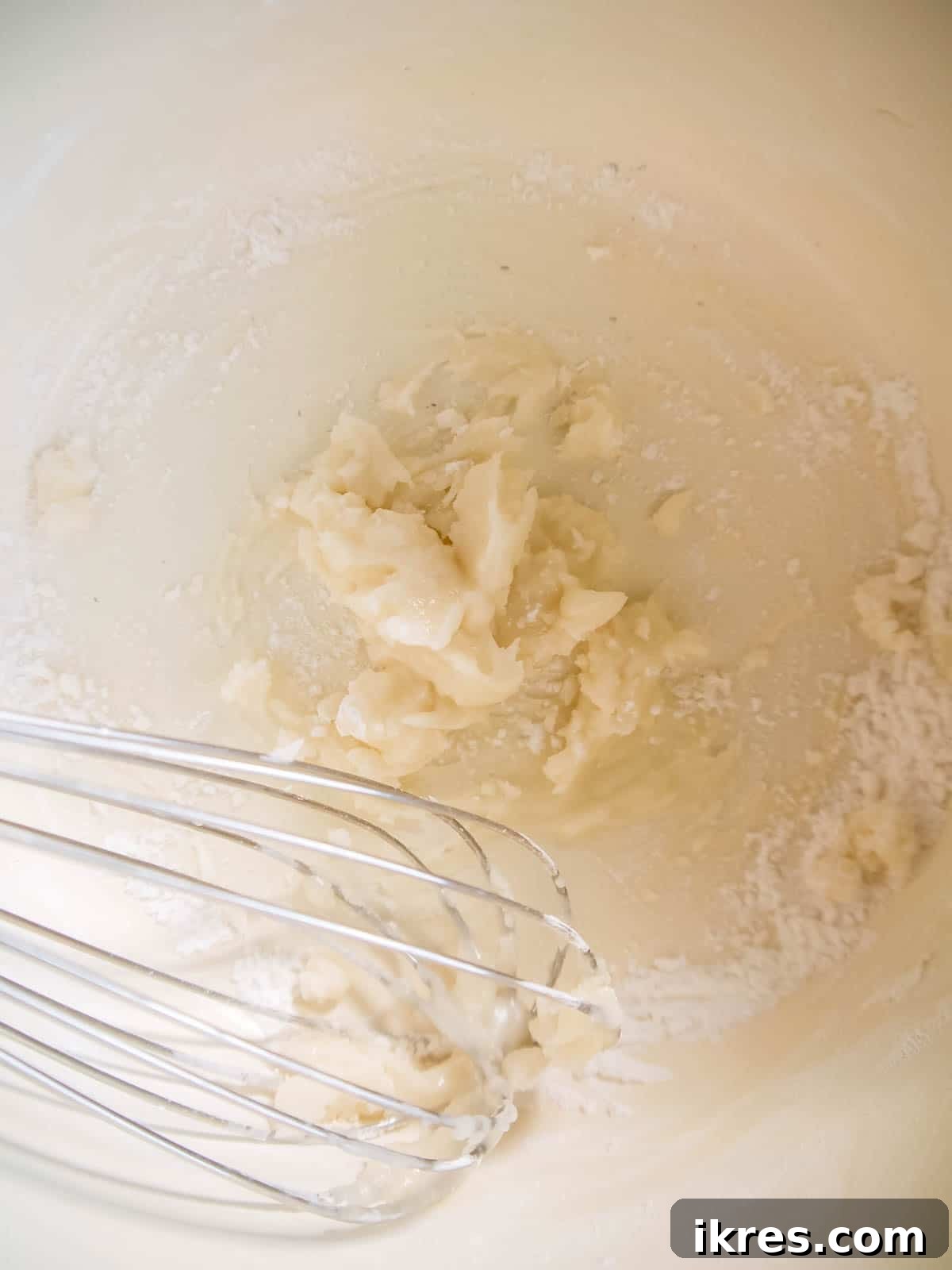
Step 2: Begin Crafting the Dairy-Free Cream Sauce. In a separate pan, heat the olive oil over medium heat. Immediately add the tapioca flour and coconut flour. Whisk continuously and vigorously. You will notice the mixture quickly transform into small clumps, forming a roux. This thickening action happens almost instantly, so be ready to move to the next step.
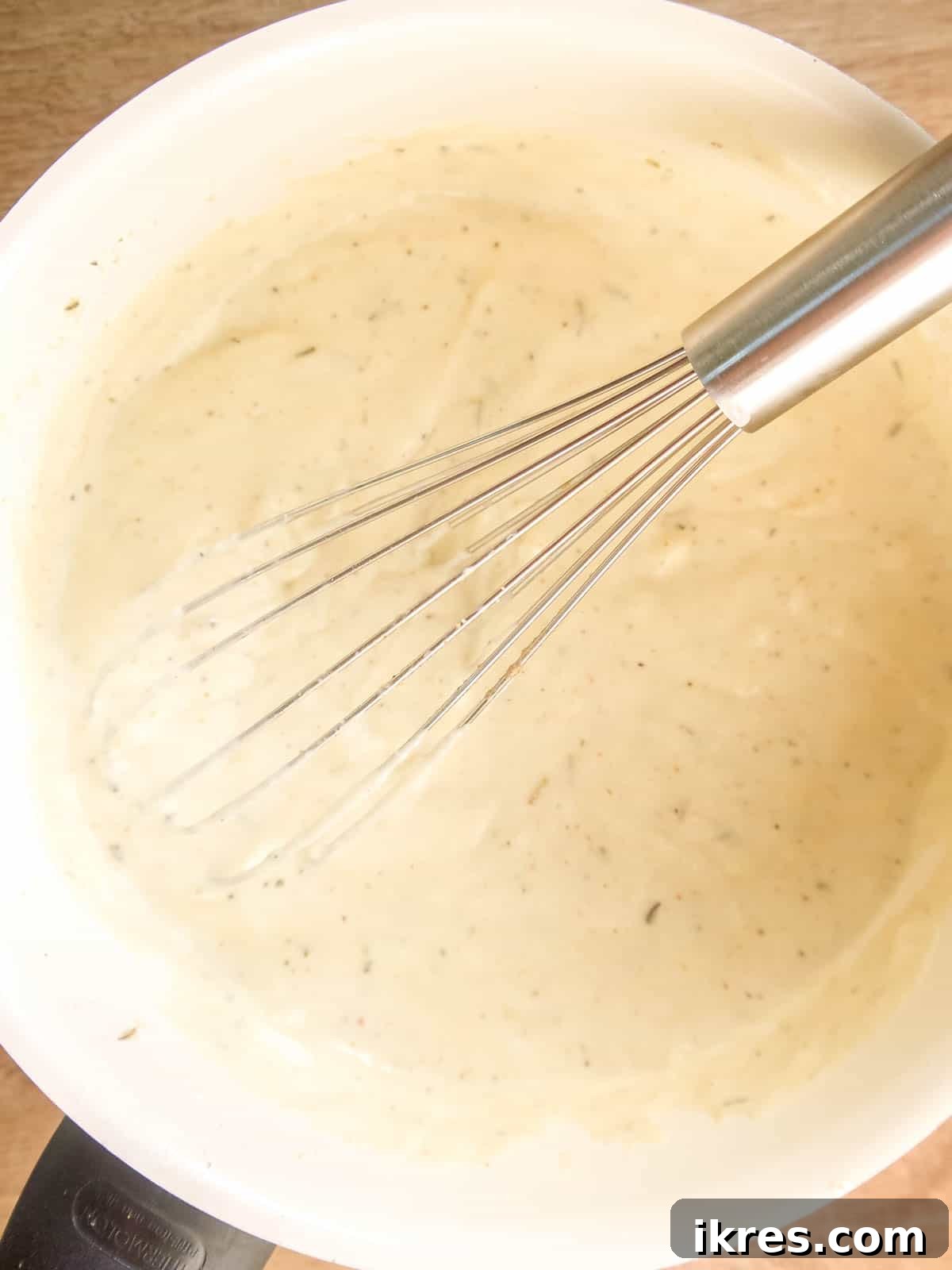
Step 3: Incorporate Liquids and Seasonings. Gradually whisk in the almond milk and coconut cream into the flour mixture in the pan. Continue whisking until the mixture is smooth and lump-free. Then, add the onion powder, garlic powder, ground nutmeg, salt, ground pepper, dried rosemary, dried thyme, and 1 tablespoon of nutritional yeast. Whisk everything thoroughly again to ensure all the spices are well distributed and integrated into the creamy base.
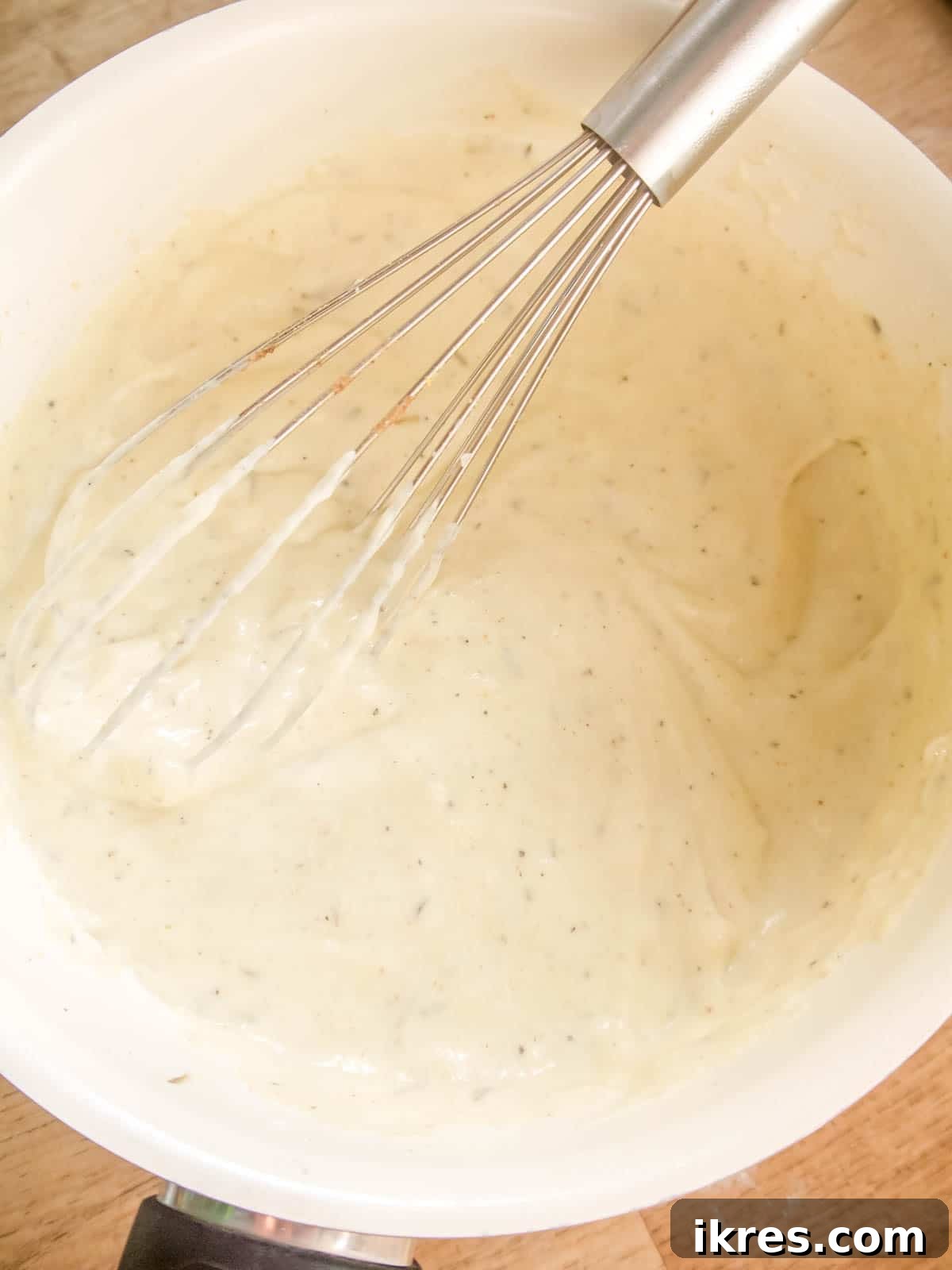
Step 4: Thicken the Creamy Sauce. After mixing, allow the sauce mixture to sit undisturbed for about 2.5-3 minutes to allow the starches to begin hydrating. Following this, whisk it frequently, every 10-15 seconds, for another few minutes until the sauce begins to boil and thickens significantly. This should take approximately 1.5-2 minutes once you start whisking. Once it reaches a consistency similar to a thin pudding or a rich creamy sauce, immediately remove it from the heat to prevent over-thickening.

Step 5: Assemble and Bake the Casserole. Transfer the pre-boiled cauliflower florets into a deep baking dish, spreading them evenly. Pour the prepared creamy dairy-free sauce generously over the cauliflower, ensuring all the florets are thoroughly coated. Finally, sprinkle the remaining 1 tablespoon of nutritional yeast over the top for an extra savory, “cheesy” crust. Bake in your preheated oven at 375°F (190°C) for 30-40 minutes, or until the cauliflower is fork-tender and the top is golden and bubbly. For an extra crispy, golden finish, briefly broil the casserole for 1-3 minutes, keeping a close eye on it to prevent burning.
Expert Tips for a Perfect Vegan Cauliflower Gratin
Achieving a truly exceptional vegan cauliflower casserole involves a few key techniques. These expert tips will help you master the dish every time.
Tip 1: The Importance of Cauliflower Floret Size and Tenderness.
The size you cut your cauliflower florets greatly impacts the final texture of your casserole. Aim for medium-sized florets, roughly 1 to 1.5 inches. If the florets are too large, they may not cook through sufficiently during baking, remaining unpleasantly firm. Conversely, if they are too small, they risk becoming overly mushy, losing their structural integrity. While I personally enjoy a softer texture, some prefer a slight bite.
Therefore, you can adjust the boiling time:
- For a noticeably softer cauliflower, boil for a minute or two longer than the recommended 5-6 minutes.
- If you prefer a cauliflower with a slight al dente crunch, reduce the initial boiling time to around 4 minutes.
Experiment to find your ideal texture!
Tip 2: Mastering the Creamy Sauce Consistency.
The thickness of your dairy-free cream sauce is paramount. When preparing the sauce, exercise caution to avoid over-thickening. As soon as the sauce begins to boil and visibly thickens to a consistency resembling a thin pudding or a rich creamy soup, immediately remove it from the heat. Tapioca flour, while excellent for thickening, can lead to a slightly “slimy” texture if cooked for too long or allowed to become excessively thick. The ideal sauce should be luscious and pourable, not gel-like.
The precise ratio of 2 tablespoons of tapioca flour to 1 tablespoon of coconut flour in this recipe is specifically designed to achieve this perfect texture, effectively preventing any tapioca-related sliminess and ensuring a smooth, delightful sauce.
Tip 3: Vigilance During Broiling.
Broiling is the final touch that gives your vegan cauliflower gratin that irresistible golden, crispy topping. However, oven temperatures can vary significantly, so constant vigilance is absolutely essential. Broiling happens quickly, and what takes 2 minutes in one oven might take 1 minute or 3 in another. Stay by your oven door and watch the casserole closely. The goal is a beautiful golden-brown crust, not a burnt one! My oven achieved this perfect browning in exactly 2 minutes, but yours might differ.
Tip 4: Don’t Skimp on Nutritional Yeast.
Nutritional yeast is key to the cheesy, savory flavor profile of this vegan casserole. Ensure you’re using a fresh batch and, if you love that umami depth, consider adding a little extra sprinkle on top just before serving. It not only adds flavor but also contributes to the golden crust.
Tip 5: Taste and Adjust Seasoning.
Always taste your sauce before pouring it over the cauliflower. This gives you the opportunity to adjust salt, pepper, or other seasonings. Remember, cauliflower itself is quite mild, so the sauce needs to carry most of the flavor for a truly delicious gratin.
Vegan Cauliflower Casserole FAQs
Here are answers to some common questions about this delicious plant-based casserole:
Can you make cauliflower gratin in advance?
Absolutely! This vegan cauliflower gratin is an excellent dish for meal prepping. You can prepare the entire casserole as outlined in the recipe, assemble it in your baking dish, then cover it tightly and refrigerate for up to 2 days before you’re ready to bake. When ready to cook, simply remove it from the fridge about 30 minutes prior to baking to allow it to come closer to room temperature, then bake as directed (you might need a few extra minutes in the oven if baking directly from cold).
What does “au gratin” mean?
“Au gratin” is a culinary term referring to a dish that is topped with a browned crust, typically made of grated cheese or breadcrumbs, and then baked or broiled. In the case of this vegan recipe, the “gratin” effect is achieved by generously sprinkling the casserole with nutritional yeast before baking and then briefly broiling it. This creates that desirable golden, crispy, and flavorful top layer without any dairy.
How do you serve this cauliflower casserole?
This versatile cauliflower casserole can be enjoyed in many ways! For an extra burst of flavor and freshness, I highly recommend adding an additional sprinkle of nutritional yeast and a squeeze of fresh lemon juice on top immediately after baking. The lemon juice brightens the flavors beautifully. It makes a fantastic side dish to serve alongside a variety of proteins, from a hearty veggie burger for a fully plant-based meal, to roast chicken or steak if your diet allows. Its rich and creamy nature also makes it substantial enough to be enjoyed as a light main course with a simple green salad.
How should I store and reheat leftovers?
Store any leftover vegan cauliflower casserole in an airtight container in the refrigerator for up to 3-4 days. To reheat, you can warm individual portions in the microwave until heated through, or for a crispier result, reheat in an oven preheated to 350°F (175°C) for 15-20 minutes, or until warmed through and the top is slightly re-crisped. If desired, cover with foil during the initial reheating to prevent drying out, then uncover for the last few minutes.
Is nutritional yeast necessary for this recipe?
While not strictly “necessary” for the dish to function, nutritional yeast is highly recommended as it provides the distinctive savory, cheesy flavor that makes this gratin so delicious and satisfying without dairy. If you omit it, the casserole will still be creamy and flavorful from the herbs and spices, but it will lack that signature umami richness. Consider it a key ingredient for the full experience!
Other Delicious Vegan Side Dishes You May Enjoy:
Dairy-Free Mexican Street Corn: This vibrant and zesty recipe became an instant favorite! The creamy, tangy mayo and nutritional yeast sauce draped over grilled corn is absolutely addictive and full of flavor.
Carrot Grapefruit Salad (Paleo, GF): A refreshingly simple recipe that harks back to childhood memories. If you appreciate the crispness of carrots and the bright tang of grapefruit, this unique and healthy salad is a must-try.
Cauliflower Gnocchi with Mushroom Sauce: Discover the ultimate way to prepare Trader Joe’s Cauliflower Gnocchi. This recipe pairs it with an incredibly simple yet profoundly delicious creamy mushroom sauce that transforms a simple package into a gourmet meal.
Did you try this recipe? Please leave us a ⭐ review below and share your experience!
5 from 3 votes
Vegan Cauliflower Casserole (Paleo, Dairy-free)
By: Dominique
Servings: 6
Prep: 15 mins
Cook: 35 mins
Total: 50 mins
Share by Email
Print Recipe

A savory dish where cauliflower is covered in a rich and creamy dairy-free sauce, sprinkled with nutritional yeast, and then baked until golden.
Ingredients
- 1 large head of cauliflower, cut into medium florets
- 2 Tbs olive oil
- 2 Tbs tapioca flour
- 1 Tbs coconut flour
- 1 (14 ounce) can of coconut cream
- 1 cup almond milk
- 1 tsp onion powder
- 1 tsp garlic powder
- 1/2 tsp ground nutmeg
- 1/2 tsp salt
- 1/4 tsp ground pepper
- 1/2 tsp dried rosemary
- 1/2 tsp dried thyme
- 2 Tbs nutritional yeast, divided
Want to save this recipe for later? Enter your email below to get it sent to your inbox, along with new recipes from us every week!
Instructions
- Preheat your oven to 375°F (190°C).
- Boil cauliflower florets in a pot of boiling water for 5-6 minutes until slightly tender. Drain well. (Note: Adjust cooking time for desired tenderness – cook longer for softer cauliflower, or slightly less for more crunch).
- In a pan over medium heat, warm the olive oil, then immediately whisk in the tapioca flour and coconut flour until clumps form, creating a roux. Gradually whisk in the coconut cream and almond milk until smooth. Stir in the onion powder, garlic powder, ground nutmeg, salt, pepper, dried rosemary, dried thyme, and 1 tablespoon of nutritional yeast. Let the mixture sit for 2.5-3 minutes, then whisk frequently (every 10 seconds) for about 1.5-2 minutes until it boils and thickens to a creamy, thin pudding-like consistency. Remove from heat immediately.
- Transfer the pre-boiled cauliflower florets into a deep baking dish. Pour the creamy sauce evenly over the cauliflower, ensuring all florets are well coated. Sprinkle the remaining 1 tablespoon of nutritional yeast over the top.
- Bake for 30-40 minutes, or until the cauliflower is fork-tender and the top is golden and bubbly. For an extra crispy finish, broil for 1-3 minutes, watching carefully to prevent burning.
Notes
- Tapioca Flour Substitute: You can use arrowroot starch at a 1:1 ratio if tapioca flour is unavailable.
- Non-Dairy Milk Substitute: Feel free to use any unsweetened non-dairy milk of your choice in place of almond milk, such as oat, soy, or cashew milk.
Nutrition
Calories: 110kcal | Carbohydrates: 12g | Protein: 4g | Fat: 6g | Saturated Fat: 1g | Polyunsaturated Fat: 1g | Monounsaturated Fat: 4g | Sodium: 293mg | Potassium: 481mg | Fiber: 4g | Sugar: 3g | Vitamin A: 4IU | Vitamin C: 68mg | Calcium: 85mg | Iron: 1mg
Nutrition information is automatically calculated and should only be used as an approximation.
Additional Info
Course: Side Dish
Cuisine: American
Tried this recipe?
Mention @perchancetocook or tag #perchancetocook on Instagram!