
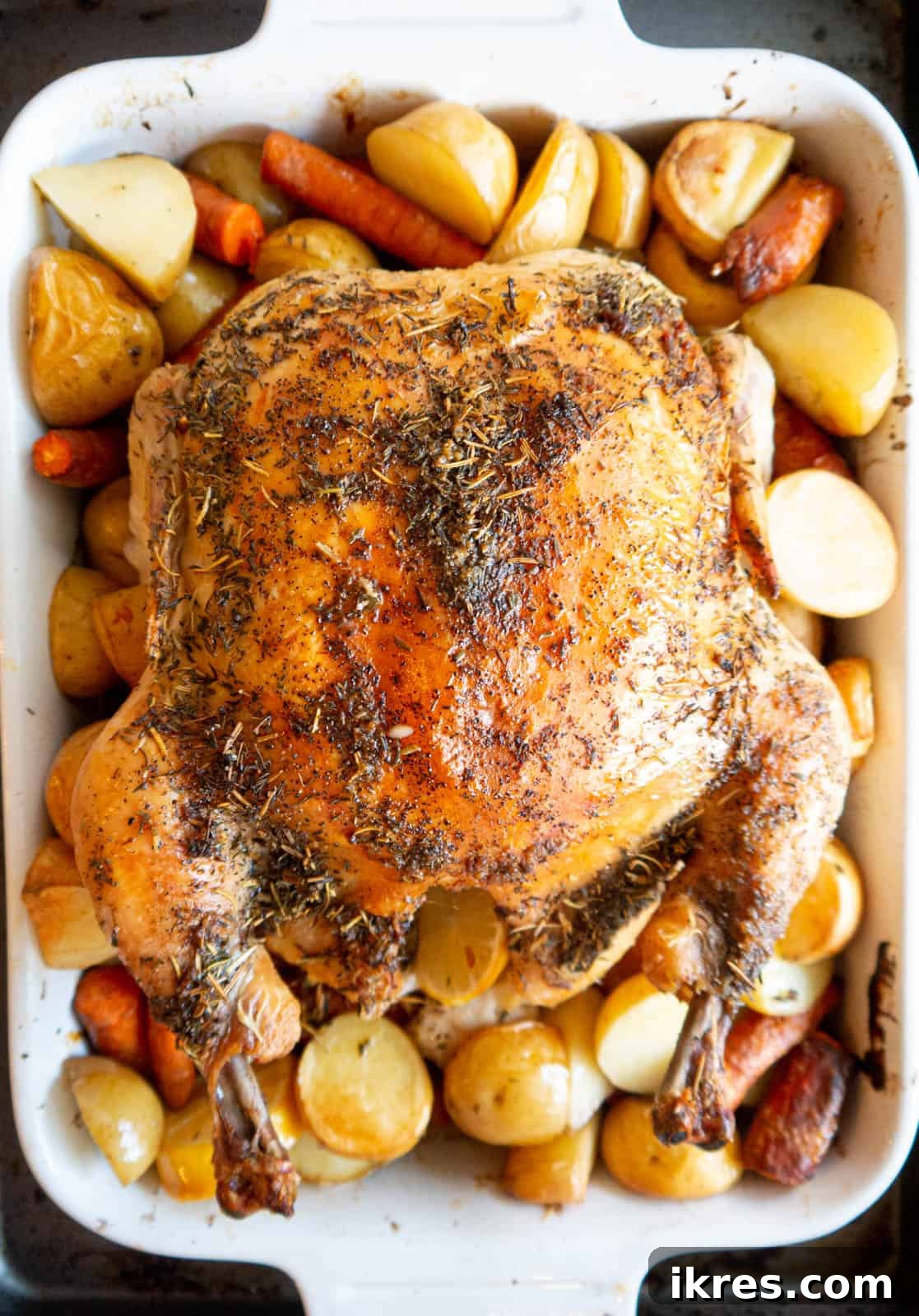
Discover the ultimate guide to creating a mouth-watering Lemon Thyme Roast Chicken with Root Vegetables. This incredibly easy, one-pan roasted whole chicken recipe is perfect for busy weeknights or impressive Sunday dinners. Imagine a succulent chicken, infused with aromatic lemon and herbs, roasted alongside tender parsnips, carrots, savory mushrooms, and fragrant garlic. This complete meal is not only delicious and satisfying but also packed with nutrients, making it a healthy choice for the whole family.
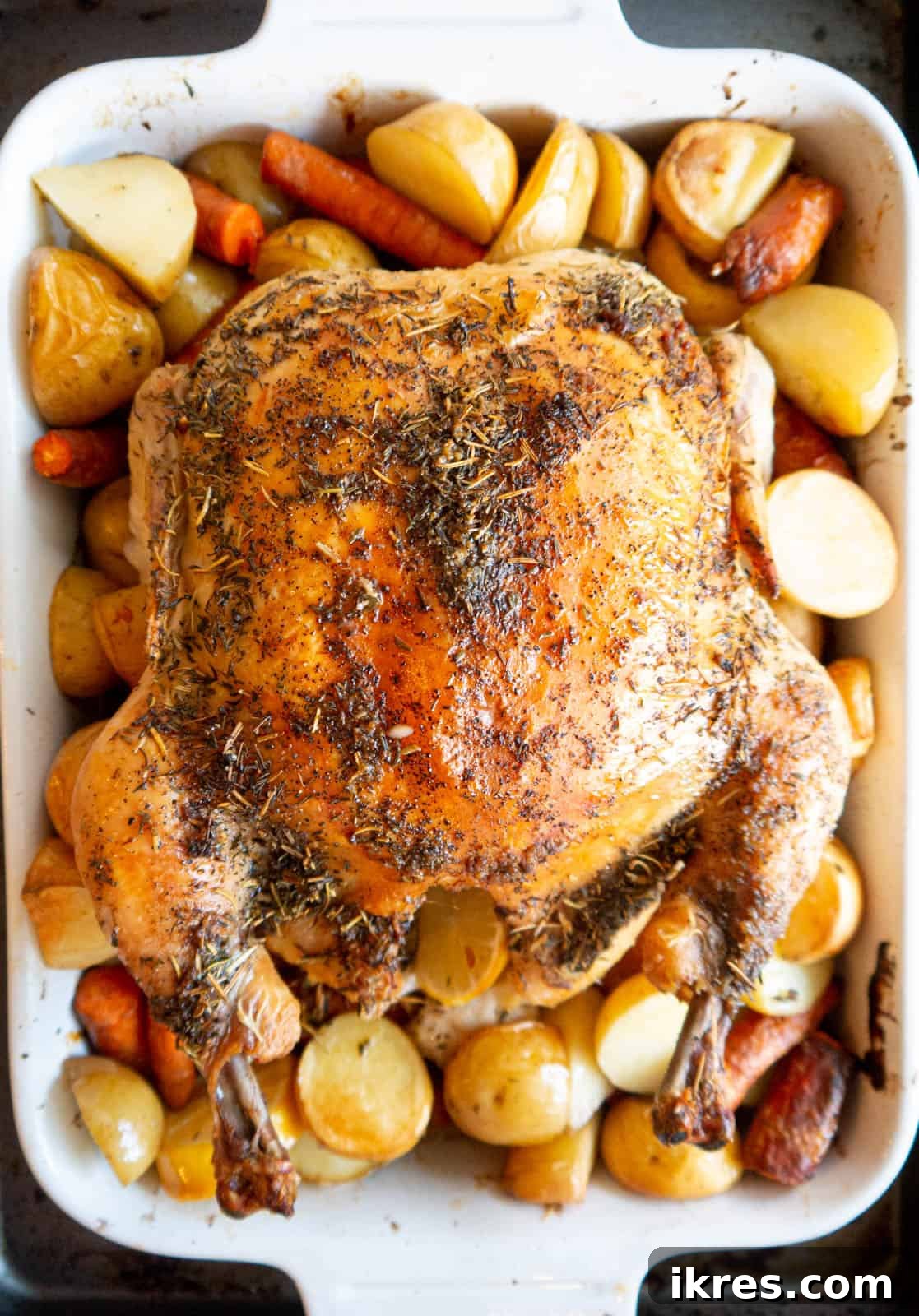
There’s something uniquely comforting and deeply satisfying about a perfectly roasted chicken. It’s a classic dish that evokes warmth and togetherness. While a simple roast chicken is delightful on its own, this recipe elevates the experience with its bright lemon, earthy thyme, and robust rosemary flavors. Paired with perfectly roasted root vegetables, this dish transforms into a gourmet meal that’s surprisingly simple to execute. Imagine serving this alongside creamy cottage cheese mashed potatoes and crisp grilled asparagus for an unforgettable culinary experience.
This roasted chicken with root vegetables stands out as a true family favorite. The strategic seasoning of the chicken, both inside and out, with fresh lemon, fragrant thyme, and fragrant rosemary, ensures every bite is bursting with flavor. Cooking it in a single pan with an assortment of hearty root vegetables like mushrooms, garlic, parsnips, and carrots allows all the ingredients to meld together, creating a rich, flavorful gravy as it cooks. The result is an incredibly juicy, tender chicken with crispy skin and perfectly caramelized vegetables, all coming together in one impressive, yet effortlessly made, complete meal.
Table of Contents
- Why This One-Pan Roast Chicken Recipe Works
- Key Ingredients for Lemon Thyme Roast Chicken
- Customizing Your Roast Chicken: Additions & Substitutions
- Step-by-Step Guide to the Perfect Roast Chicken
- Lemon Thyme Roast Chicken Recipe FAQs
- Serving Suggestions for Your Roast Chicken
- Tips for a Perfect One-Pan Roast
- More Delicious Chicken Recipes You’ll Love
- Lemon Thyme Roast Chicken with Root Vegetables Recipe
Why This One-Pan Roast Chicken Recipe Works
- Effortless Preparation: This recipe is incredibly straightforward, making it perfect for novice cooks and seasoned chefs alike. The beauty lies in its simplicity – virtually all the ingredients are prepped and tossed into a single pan, minimizing cleanup and allowing you to enjoy your evening without endless dishwashing. It truly is a set-it-and-forget-it kind of meal.
- Impressive Presentation: Despite its ease, the final dish looks stunning. A beautifully golden-brown whole chicken surrounded by vibrant, caramelized vegetables makes for an eye-catching centerpiece on any dinner table. It’s a gourmet meal that will surely impress your guests and family without requiring hours in the kitchen.
- Nutrient-Dense and Protein-Packed: This meal is a powerhouse of nutrition. Whole chicken provides a significant amount of lean protein, essential for muscle growth and repair. Combined with a medley of root vegetables, you get a robust dose of vitamins, minerals, and dietary fiber, contributing to a well-balanced diet.
- Rich in Fiber and Antioxidants from Roasted Root Vegetables: The inclusion of various root vegetables like parsnips and carrots not only adds incredible flavor and texture but also boosts the meal’s health profile. These vegetables are celebrated for being excellent sources of fiber and antioxidants, which are crucial for digestive health, immunity, and overall well-being.
- Dietary-Friendly Options: This recipe is naturally adaptable and fits several dietary needs. It is inherently dairy-free and gluten-free, making it suitable for those with common allergies or sensitivities. Furthermore, with a few simple considerations (like ensuring no added sugars in seasonings), it can easily align with Whole30 and Paleo eating plans, appealing to a wide range of healthy lifestyles.
Key Ingredients for Lemon Thyme Roast Chicken
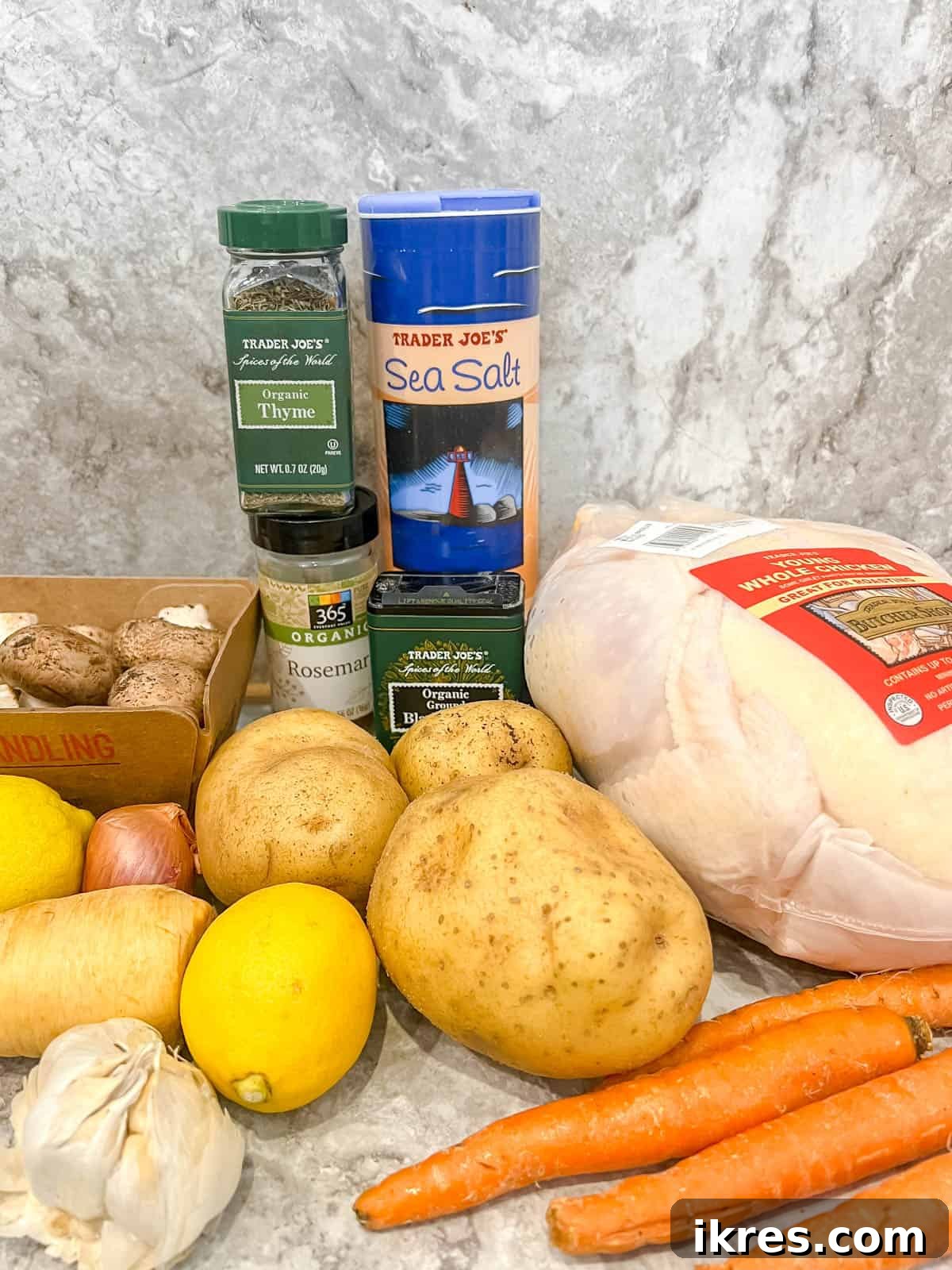
Crafting the perfect Lemon Thyme Roast Chicken with Root Vegetables begins with selecting the right ingredients. Each component plays a vital role in building the layered flavors and textures of this exquisite dish.
- Roasting Chicken: A whole roasting chicken, ideally around 5 pounds, is the star of this dish. This size is perfect for feeding 4-6 people and allows for even cooking. Most roasting chickens come with the neck and giblets inside, which should be removed before preparation.
- Dried Thyme: This aromatic herb is fundamental to the recipe, imparting a warm, earthy, and slightly minty flavor that complements the lemon beautifully. You’ll use it to season both the chicken and the vegetables.
- Dried Rosemary: Known for its pungent, piney, and slightly peppery notes, dried rosemary adds depth and a classic savory touch to the chicken. It pairs wonderfully with thyme and lemon.
- Lemon: Fresh lemons are essential. Their bright, zesty acidity is used to season the chicken from the inside out, tenderizing the meat and adding a vibrant freshness that cuts through the richness of the roast. Slices are also added for visual appeal and enhanced flavor.
- Garlic and Onion: These foundational aromatics are not just for flavoring the chicken; they create a rich, savory base for the pan juices, which ultimately become a delicious natural gravy for your root vegetables. Use a full head of garlic for maximum flavor.
- Parsnips: Often overlooked, parsnips are a wonderfully sweet and earthy root vegetable with a distinct, slightly nutty flavor profile. When roasted, they become incredibly tender and caramelized, adding a unique sweetness to the medley.
- Mushrooms: Any type of mushroom works, but Bella mushrooms (cremini) are highly recommended for their robust, meaty texture and deep, umami flavor. They absorb the pan juices beautifully and add another layer of savory goodness.
- Carrots: A universally loved root vegetable, carrots add natural sweetness, vibrant color, and a pleasant crunch when roasted. They soften beautifully in the pan, soaking up all the delicious flavors.
- Olive Oil: A good quality olive oil is used to coat both the chicken and the vegetables, promoting even browning, crisping the skin, and helping the herbs and spices adhere.
See the full recipe card below for precise measurements and detailed instructions.
Customizing Your Roast Chicken: Additions & Substitutions
One of the best aspects of a simple roast chicken recipe is its versatility. Feel free to experiment with these additions and substitutions to tailor the dish to your preference or what you have on hand.
- Boost the Lemon Flavor: If you’re a fan of a more pronounced citrus tang, don’t hesitate to add extra lemon slices around the chicken or squeeze more lemon juice over the vegetables before roasting. The acidity brightens the entire dish.
- Garlic and Onion Preference: Depending on your taste, you can adjust the quantities of garlic and onion. If you love garlic, feel free to add more cloves. If you prefer a milder flavor, you can use just onion or just garlic, or even swap out the onion for a milder shallot.
- Alternative Root Vegetables: While parsnips are delicious, you can easily substitute them with other hearty root vegetables like rutabagas or turnips. These alternatives offer similar textures and earthy flavors that roast beautifully. Sweet potatoes or Yukon Golds are also excellent additions.
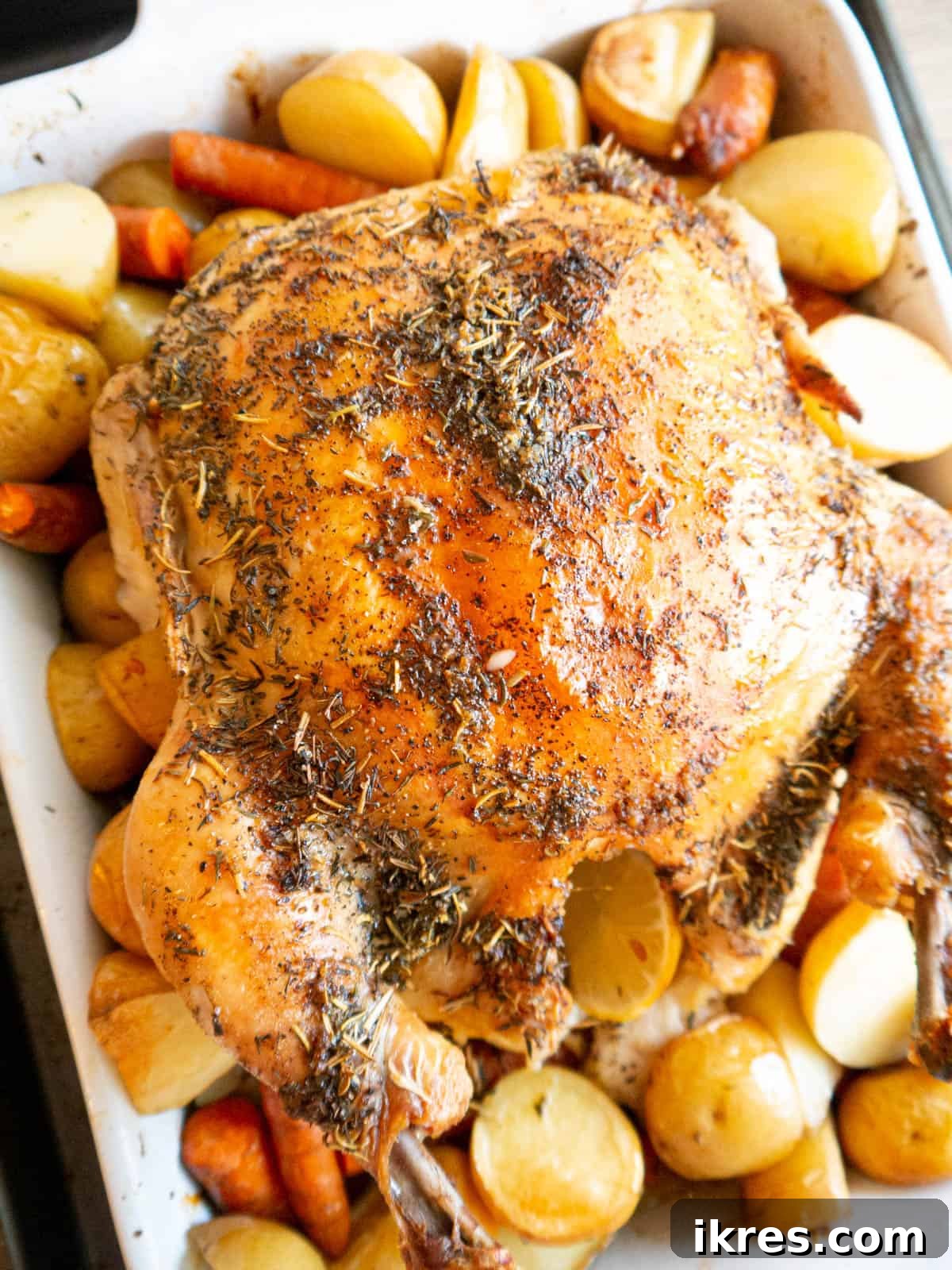
- Add Potatoes: For an even heartier one-pan meal, add chopped potatoes to the pan alongside the other root vegetables. Cut them into similar sizes as the parsnips and carrots to ensure even cooking. They’ll absorb the chicken juices and become wonderfully tender.
- Omit Mushrooms: If mushrooms aren’t your favorite, you can simply leave them out without compromising the integrity of the recipe. The other root vegetables and aromatics will still provide plenty of flavor and bulk.
- Fresh Herbs: For an even more vibrant flavor, consider using fresh thyme and rosemary instead of dried. Double the quantity if using fresh herbs.
Step-by-Step Guide to the Perfect Roast Chicken
Follow these detailed steps to achieve a perfectly golden, juicy, and flavorful lemon thyme roast chicken every time.
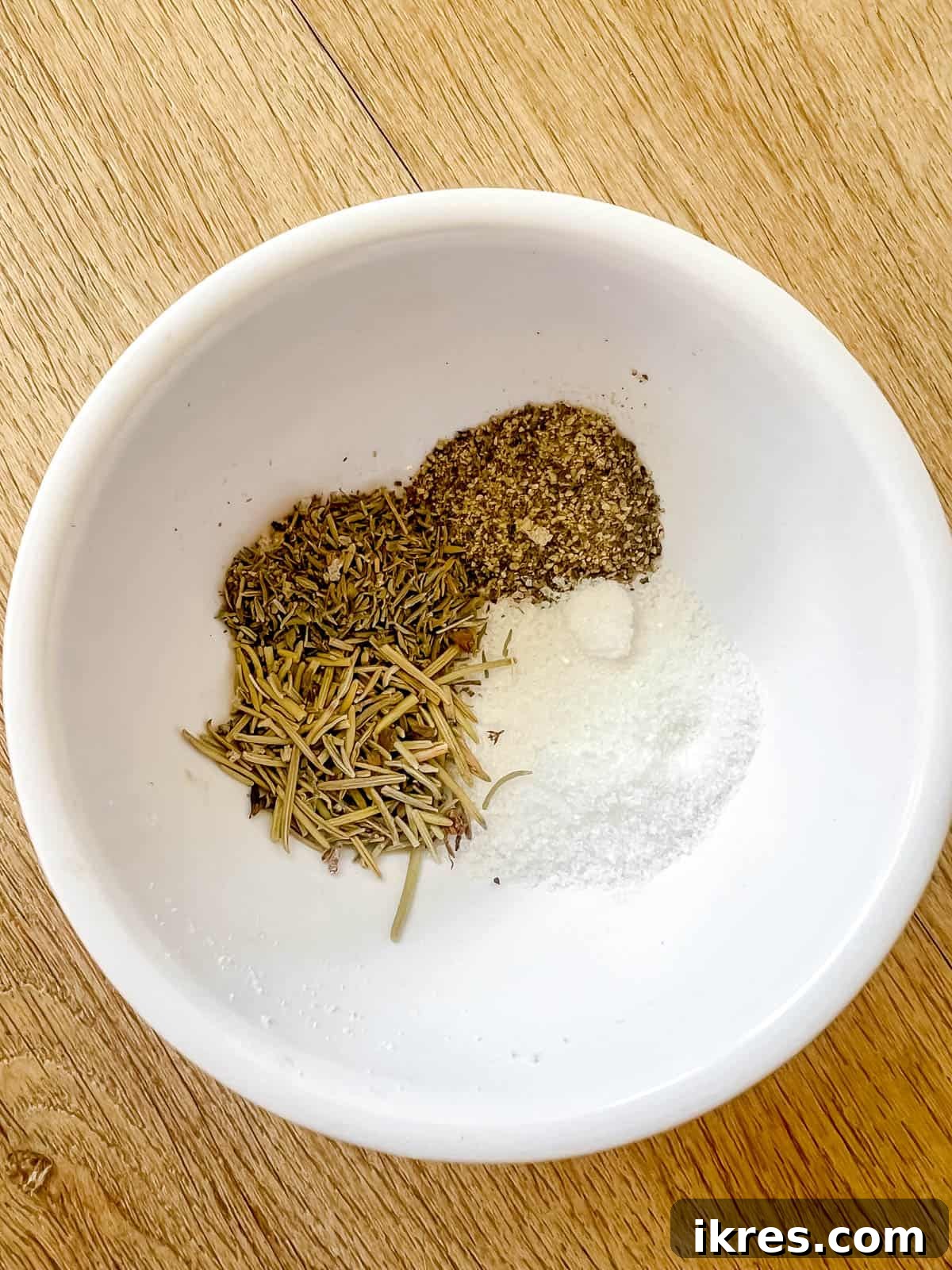
Step 1: Prepare the Herb Mixture. In a small bowl, combine the course sea salt, ground black pepper, dried rosemary, and dried thyme. Mix thoroughly to ensure the spices are well-distributed. This aromatic blend will be the foundation of your chicken’s flavor.
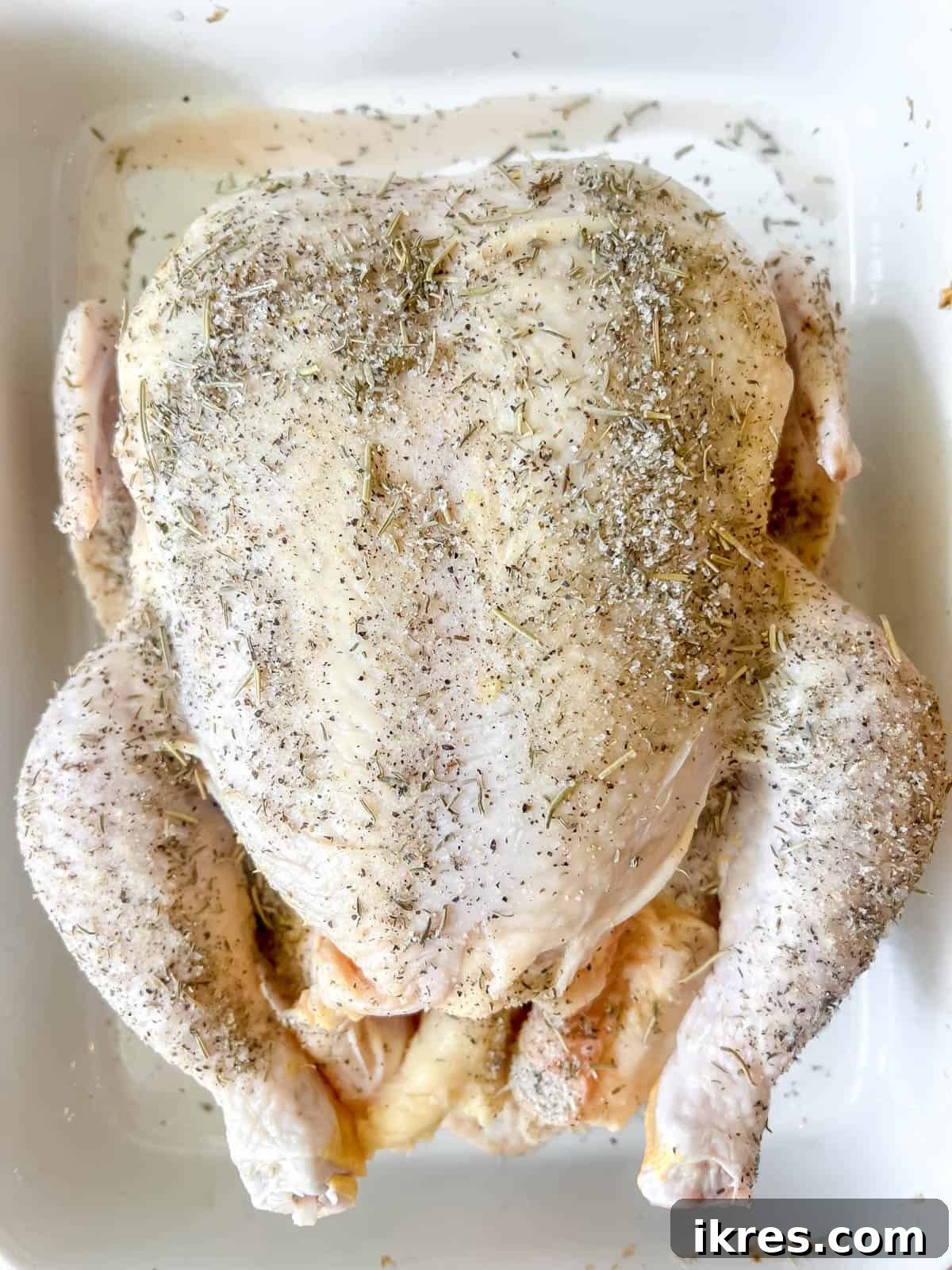
Step 2: Season the Chicken. Remove the neck and giblets from the chicken cavity. Lightly grease the bottom of your roasting pan with olive oil. Place the whole chicken upside down (thighs facing up) into the prepared pan. Sprinkle a small amount of the herb seasoning mix inside the chicken cavity. Then, generously rub the remaining seasoning mixture all over the exterior of the chicken, ensuring an even coating for maximum flavor and crispy skin.
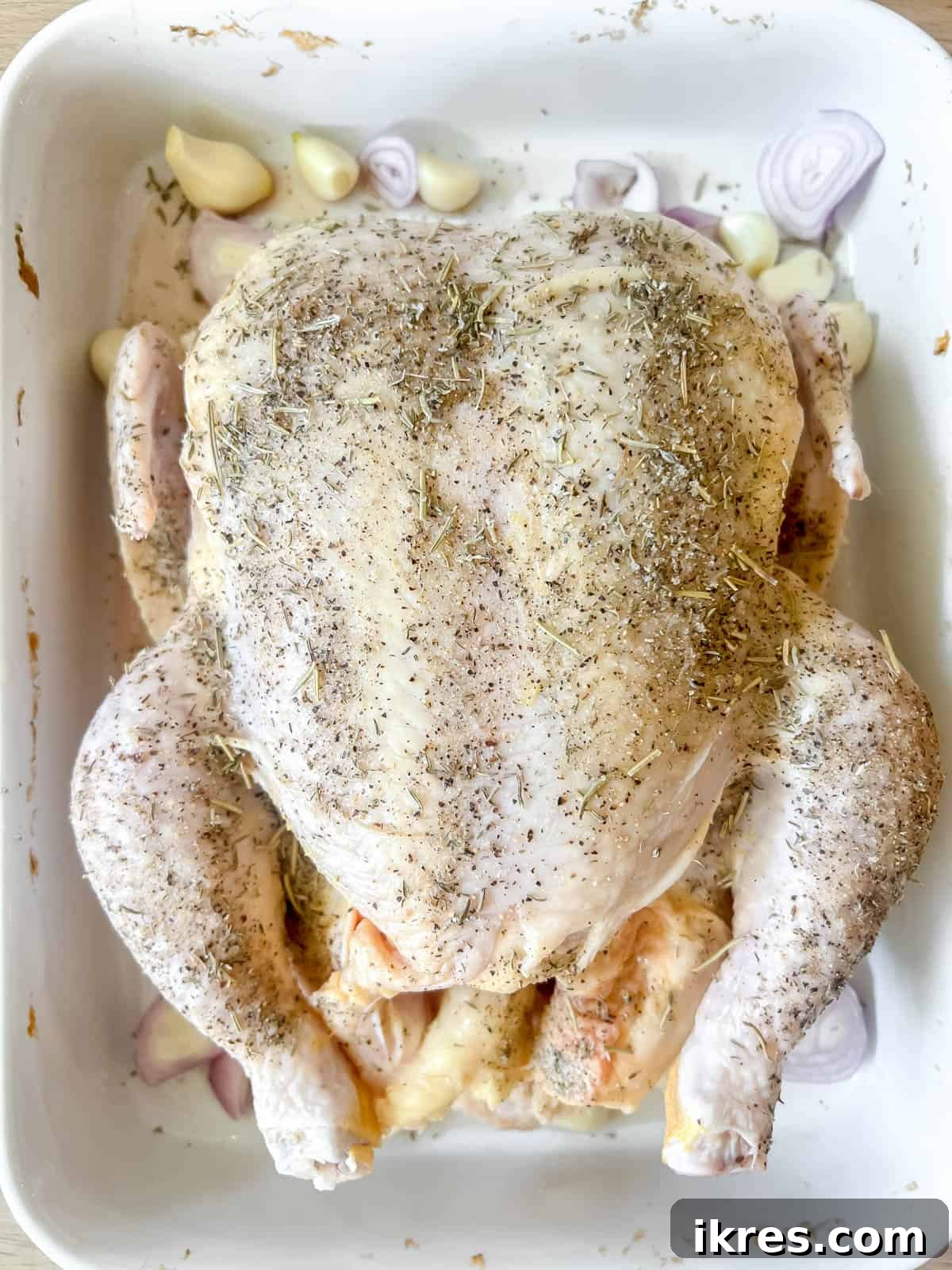
Step 3: Add Aromatics to the Pan. Take one peeled garlic clove and place it inside the chicken cavity. Then, scatter the remaining peeled garlic cloves and the sliced onion pieces around the chicken in the roasting pan. These aromatics will infuse the entire dish with their pungent and sweet flavors as they roast.
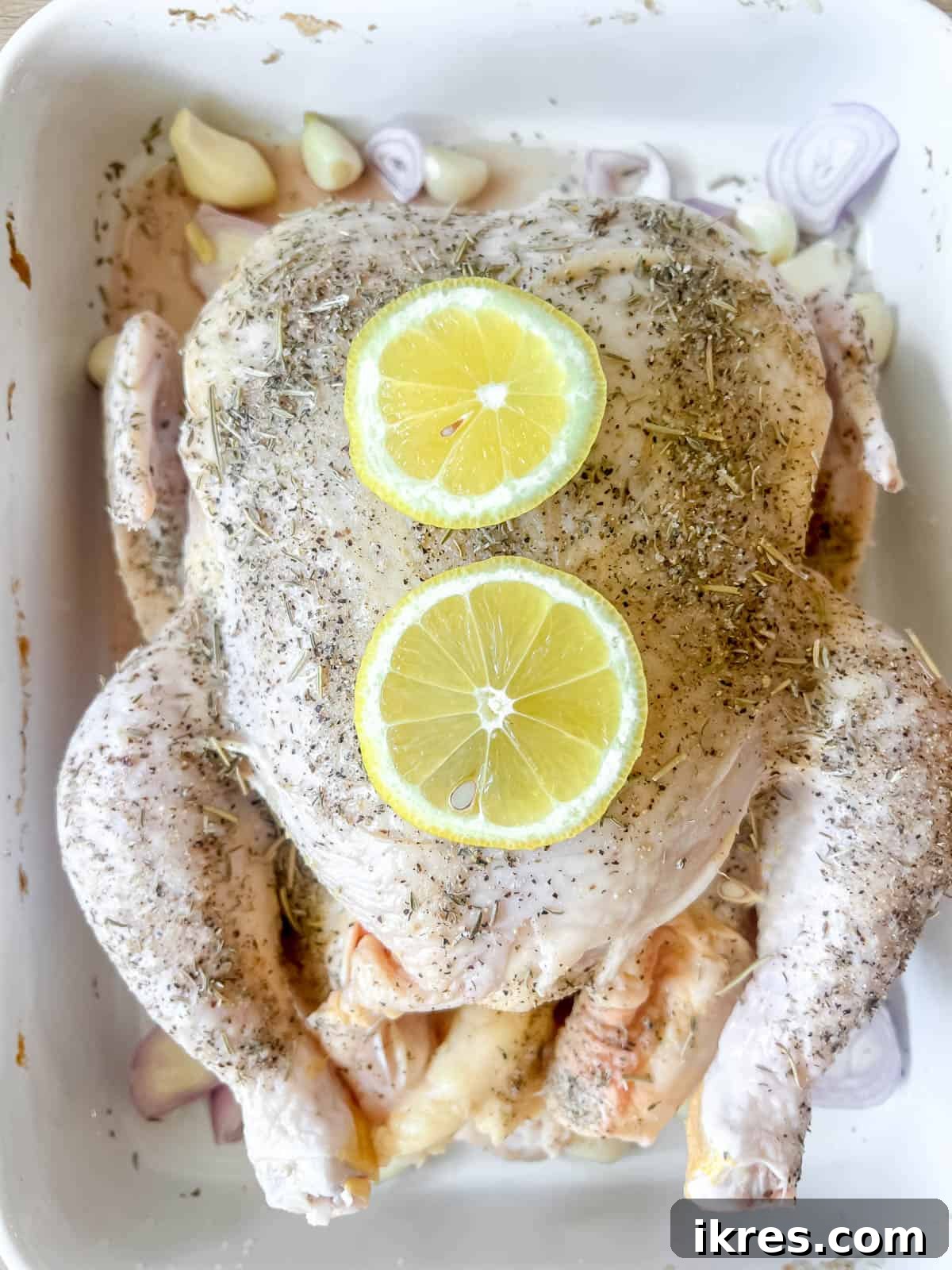
Step 4: Incorporate the Lemon. Take one of your lemon slices and squeeze its juice directly into the chicken cavity, then place the squeezed lemon piece inside the cavity. With the second lemon slice, squeeze its juice into the pan around the chicken, garlic, and onion. Finally, slice the third lemon piece into thinner rounds and arrange these slices aesthetically on top of the chicken. This ensures maximum lemon infusion throughout the dish.
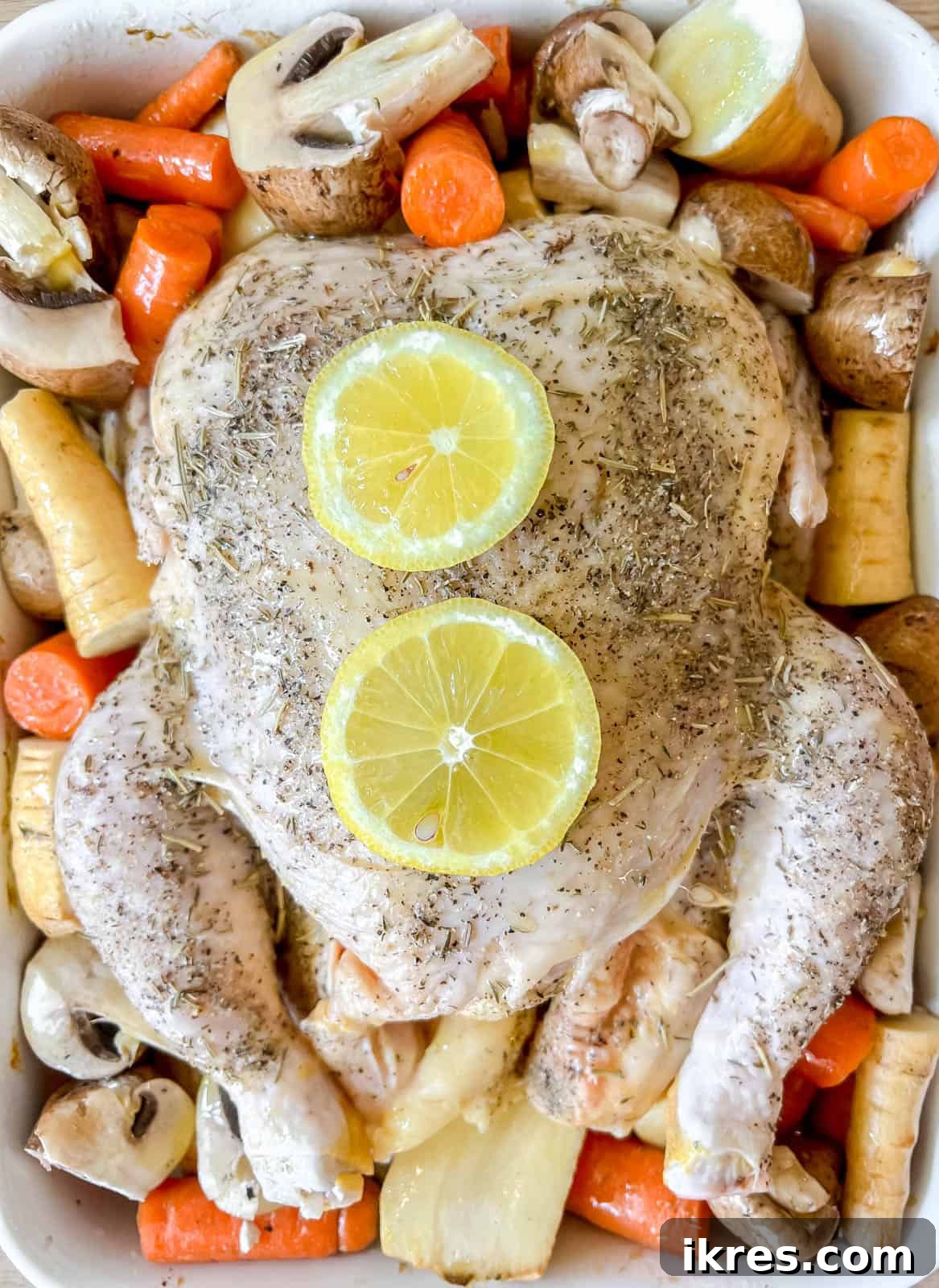
Step 5: Add Root Vegetables and Olive Oil. Arrange the chopped parsnips, sliced mushrooms, and larger pieces of carrots evenly around the chicken in the roasting pan. Drizzle 2 tablespoons of olive oil generously over all the vegetables and the chicken. Finish by sprinkling 1 teaspoon of dried thyme over the vegetables, ensuring they are well-coated and ready for roasting. Lightly spray the chicken with an olive oil or greasing spray to promote crispy skin.
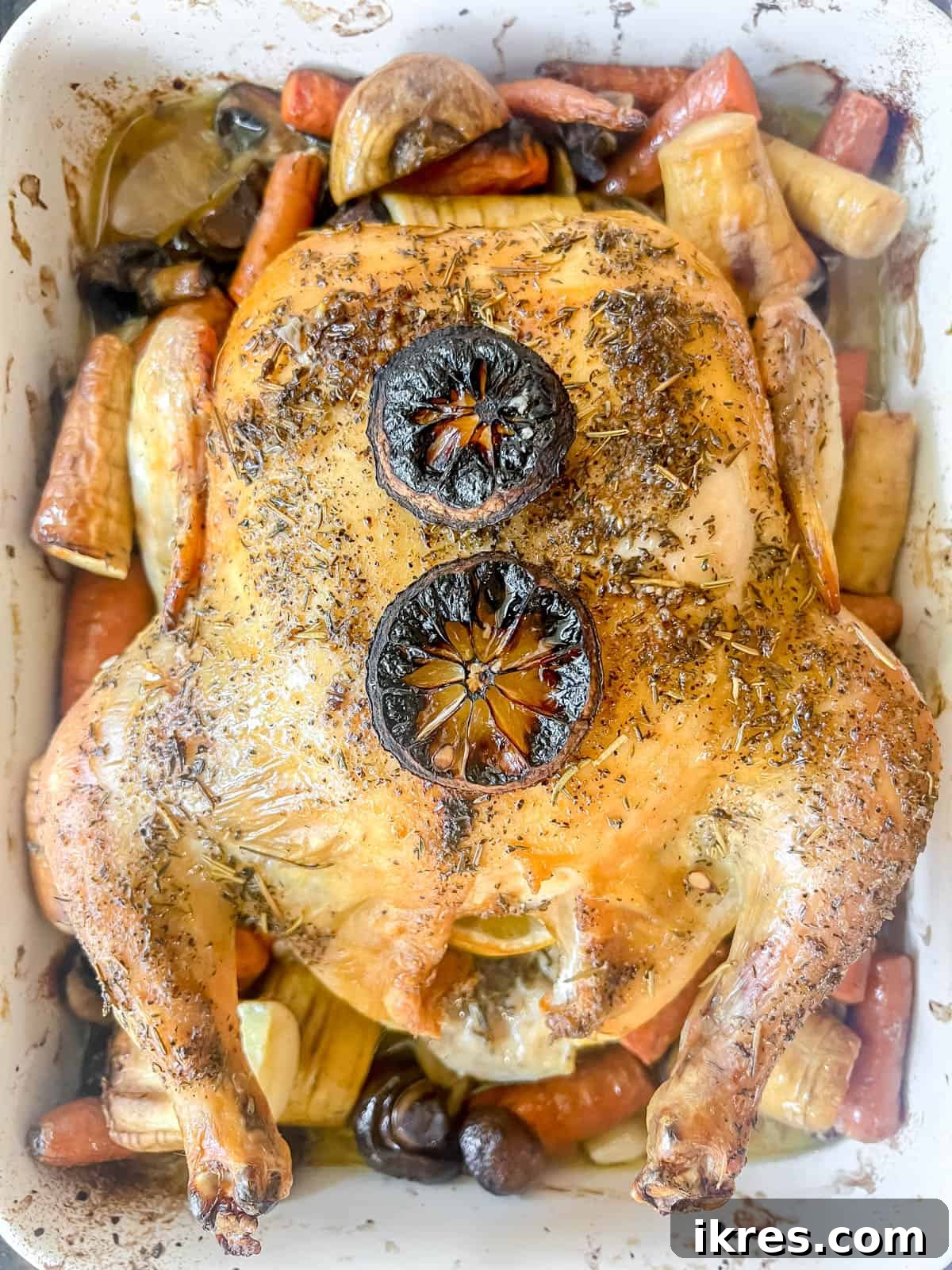
Step 6: Roast to Perfection. Preheat your oven to 425 degrees F (220 degrees C). Cover the roasting pan tightly with aluminum foil and bake for 1 hour and 15 minutes. After this time, carefully remove the foil and continue baking for another 15-30 minutes, or until the chicken is golden brown and thoroughly cooked. The chicken is done when the juices run clear when a knife is inserted between the leg and thigh, and an instant-read thermometer registers an internal temperature of at least 165 degrees F (74 degrees C) in the thickest part of the thigh.
Lemon Thyme Roast Chicken Recipe FAQs
Root vegetables are edible plant parts that grow underground, serving as storage organs for nutrients. Common examples include carrots, parsnips, potatoes, turnips, rutabagas, onions, and garlic – essentially, all the delicious vegetables in this pan with your chicken!
The most reliable way to ensure your chicken is safely cooked is by using an instant-read meat thermometer. Insert it into the thickest part of the thigh, avoiding the bone. The chicken is fully cooked when it reaches an internal temperature of at least 165 degrees F (74 degrees C). Additionally, if you cut into the thickest part of the meat (near the joint between the leg and thigh), the juices should run clear, not pink.
Covering the chicken with aluminum foil for the majority of the cooking time helps to trap moisture, ensuring the chicken remains juicy and tender. However, removing the foil for the last 15-30 minutes is crucial for achieving that desirable crispy, golden-brown skin. You can opt to leave it uncovered for the entire duration if you prioritize an extra-crispy skin, but watch it carefully to prevent over-browning.
You can certainly prep some components in advance. The herb mixture can be made and stored in an airtight container. The vegetables can be chopped a day ahead and stored in the refrigerator. For the chicken itself, you can season it a few hours before roasting, or even overnight, which can sometimes enhance the flavor further. However, for best results, roast the chicken fresh on the day you plan to serve it.
Allow any leftover chicken and vegetables to cool completely, then store them in an airtight container in the refrigerator for up to 3-4 days. To reheat, preheat your oven to 350°F (175°C). Place the chicken and vegetables in an oven-safe dish, adding a splash of broth or water to keep the chicken moist. Cover with foil and heat for 20-30 minutes, or until warmed through. Alternatively, individual portions can be reheated in a microwave.
Serving Suggestions for Your Roast Chicken
While this one-pan lemon thyme roast chicken with root vegetables is a complete meal in itself, here are a few ideas to complement it and round out your dinner:
- Creamy Sides: A side of fluffy mashed potatoes, cottage cheese mashed potatoes, or a rich polenta would provide a comforting contrast to the savory chicken and earthy vegetables.
- Fresh Green Salad: A simple, crisp green salad with a light vinaigrette can add a refreshing element and balance the richness of the roast.
- Additional Vegetables: If you’re looking for more greens, consider serving steamed green beans, sautéed spinach, or tender grilled asparagus alongside.
- Crusty Bread: Don’t forget some crusty bread to soak up all the delicious pan juices and gravy left in the roasting pan!
Tips for a Perfect One-Pan Roast
Achieving the perfect roast chicken is simple with these additional tips:
- Pat Dry the Chicken: Before seasoning, thoroughly pat the chicken dry with paper towels. This is crucial for achieving crispy skin. Moisture on the skin will steam the chicken instead of crisping it.
- Rest the Chicken: Once the chicken is cooked, remove it from the oven and tent it loosely with aluminum foil. Let it rest for at least 10-15 minutes before carving. This allows the juices to redistribute throughout the meat, resulting in a more tender and juicy chicken.
- Evenly Chop Vegetables: Ensure your root vegetables are cut into roughly similar-sized pieces. This promotes even cooking, so you don’t end up with some pieces burnt and others undercooked. Larger pieces are generally better for roasting as they won’t burn as quickly.
- Don’t Overcrowd the Pan: While it’s a “one-pan” meal, avoid packing the vegetables too tightly. Give them a little space to breathe in the pan to ensure they roast and caramelize properly, rather than steam. If necessary, use two pans.
- Use a Reliable Roasting Pan: A sturdy, oven-safe roasting pan that can withstand high temperatures is essential. Cast iron or heavy-gauge stainless steel pans work wonderfully to conduct heat evenly.
More Delicious Chicken Recipes You’ll Love
If you enjoyed this Lemon Thyme Roast Chicken, explore these other fantastic chicken recipes:
Creamy Dairy-Free Bacon and Mushroom Chicken
Roast Chicken with Apples and Potatoes
Skillet Honey Sesame Chicken (Paleo & Gluten-Free)
Rotisserie Chicken Salad Lettuce Wraps (Paleo & Whole30)
Dutch Oven Peach Maple Chicken Thighs (Paleo & Gluten-Free)
Gluten-Free Fried Chicken by This Vivacious Life
Easy Chicken Pot Pie with Store-Bought Crust
Did you try this recipe? Please leave me a ⭐ review below!
Lemon Thyme Roast Chicken with Root Vegetables
Share by Email
Print Recipe

Ingredients
- 1 roasting chicken ( roughly 5 lbs)
- 2 teaspoons course sea salt
- 1 teaspoon ground black pepper
- 2 teaspoons dried thyme, divided
- 1 teaspoon dried rosemary
- 1 lemon, sliced into 3 pieces
- 1 head of garlic, remove all cloves from the head of garlic and peel off the skin. (There should be about 10 cloves)
- 1 onion or shallot, sliced
- 3-4 parsnips, chopped into larger pieces
- 8 ounces baby bella mushrooms, sliced
- 6-8 large carrots, chopped into larger pieces
- 2 Tablespoons olive oil
To save this recipe and get new recipes delivered to your inbox weekly, please visit our subscription page.
Instructions
-
Preheat the oven to 425 degrees F (220 degrees C). Grease the bottom of your roasting pan with olive oil.
-
Remove the neck and giblets from inside the chicken and place the chicken upside down (thighs up) into the roasting pan.
-
In a small bowl, mix 2 teaspoons of course sea salt, 1 teaspoon of ground black pepper, 1 teaspoon of thyme, and 1 teaspoon of rosemary together. Put a sprinkle of the seasoning mix inside of the chicken (in the cavity). Rub the rest of the seasoning onto the outside of the chicken, ensuring it’s evenly coated.
-
Add 1 peeled garlic clove to the chicken cavity and put the remaining peeled cloves in the pan surrounding the chicken. Add the sliced onion to the pan as well.
-
Squeeze one piece of the lemon into the chicken cavity and then place that lemon piece into the cavity. Take the second piece of lemon and squeeze its juice into the pan with the garlic and onion. Take the third piece of the lemon and slice it into thinner rounds. Place these lemon slices on top of the chicken.
-
Distribute the chopped parsnip pieces, sliced mushrooms, and chopped carrots evenly around the chicken in the pan.
-
Evenly pour 2 Tablespoons of olive oil onto the vegetables surrounding the chicken. Sprinkle the remaining 1 teaspoon of thyme onto the veggies.
-
Lightly spray the chicken with an olive oil or greasing spray to help achieve crispy skin.
-
Cover the chicken with aluminum foil and bake for 1 hour and 15 minutes. Remove the foil cover and continue baking for another 15-30 minutes, or until the chicken is cooked through and golden brown.
-
The chicken will be done when you can cut between the leg and the thigh and only clear juices come out. It is also considered done if it reaches an internal temperature of at least 165 degrees F (74 degrees C) in the thickest part of the thigh, avoiding the bone.
-
Once cooked, remove the pan from the oven and let the chicken rest for 10-15 minutes, loosely tented with foil, before carving and serving with the roasted vegetables. This allows the juices to redistribute, resulting in a more tender and flavorful chicken.
Notes
- You can add more lemon if you want even more intense lemon flavor, perhaps adding more slices or zest.
- You can use just onion or just garlic, based on your preferences, but using both creates a richer flavor base.
- Instead of parsnip, you can use other root vegetables like rutabagas, turnips, or even sweet potatoes for a different flavor profile.
- You can add potatoes, such as Yukon gold or red potatoes, to the pan for a more filling meal. Ensure they are cut into 1-2 inch chunks.
- You can omit the mushrooms entirely if you don’t like them, or substitute with other hearty vegetables like bell peppers or zucchini (added in the last 30 minutes of roasting).
Nutrition
Carbohydrates: 38g
Protein: 37g
Fat: 37g
Saturated Fat: 10g
Polyunsaturated Fat: 7g
Monounsaturated Fat: 17g
Cholesterol: 164mg
Sodium: 1375mg
Potassium: 1433mg
Fiber: 10g
Sugar: 12g
Vitamin A: 16924IU
Vitamin C: 47mg
Calcium: 134mg
Iron: 5mg
Nutrition information is automatically calculated, so should only be used as an approximation.
Additional Info
Tried this recipe?
Mention @perchancetocook or tag #perchancetocook!