
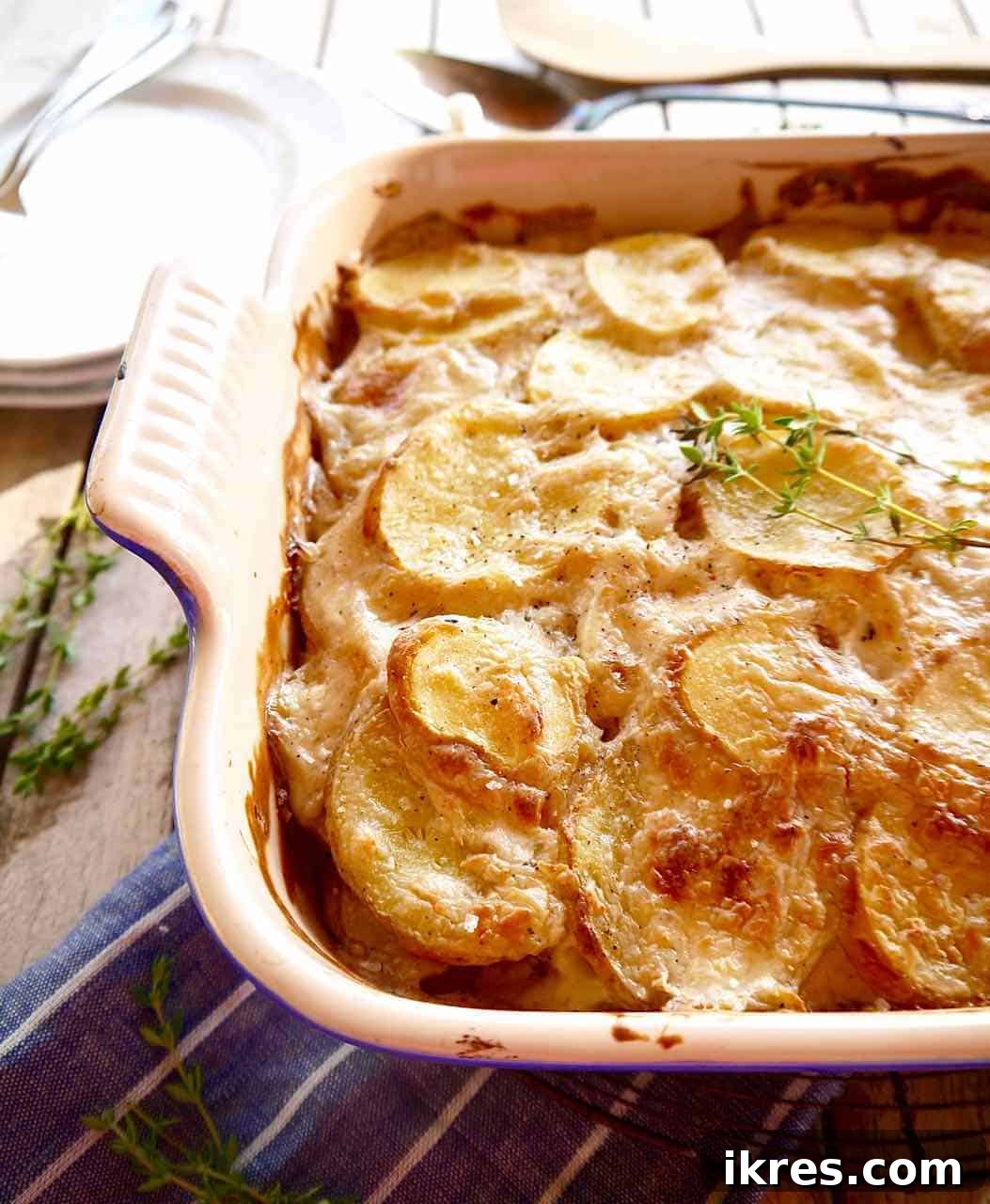
Indulge in the rich, comforting flavors of these Dairy-Free Scalloped Potatoes, a truly delicious dish crafted from thinly sliced potatoes that luxuriate in a luxurious, creamy, and entirely dairy-free sauce. Made with a harmonious blend of coconut cream and almond milk, this recipe redefines classic comfort food, proving that you don’t need dairy to achieve an incredibly satisfying texture and taste. Whether you’re planning a weeknight dinner or preparing an elaborate holiday feast, this versatile and universally appealing side dish is guaranteed to be a crowd-pleaser for every palate.
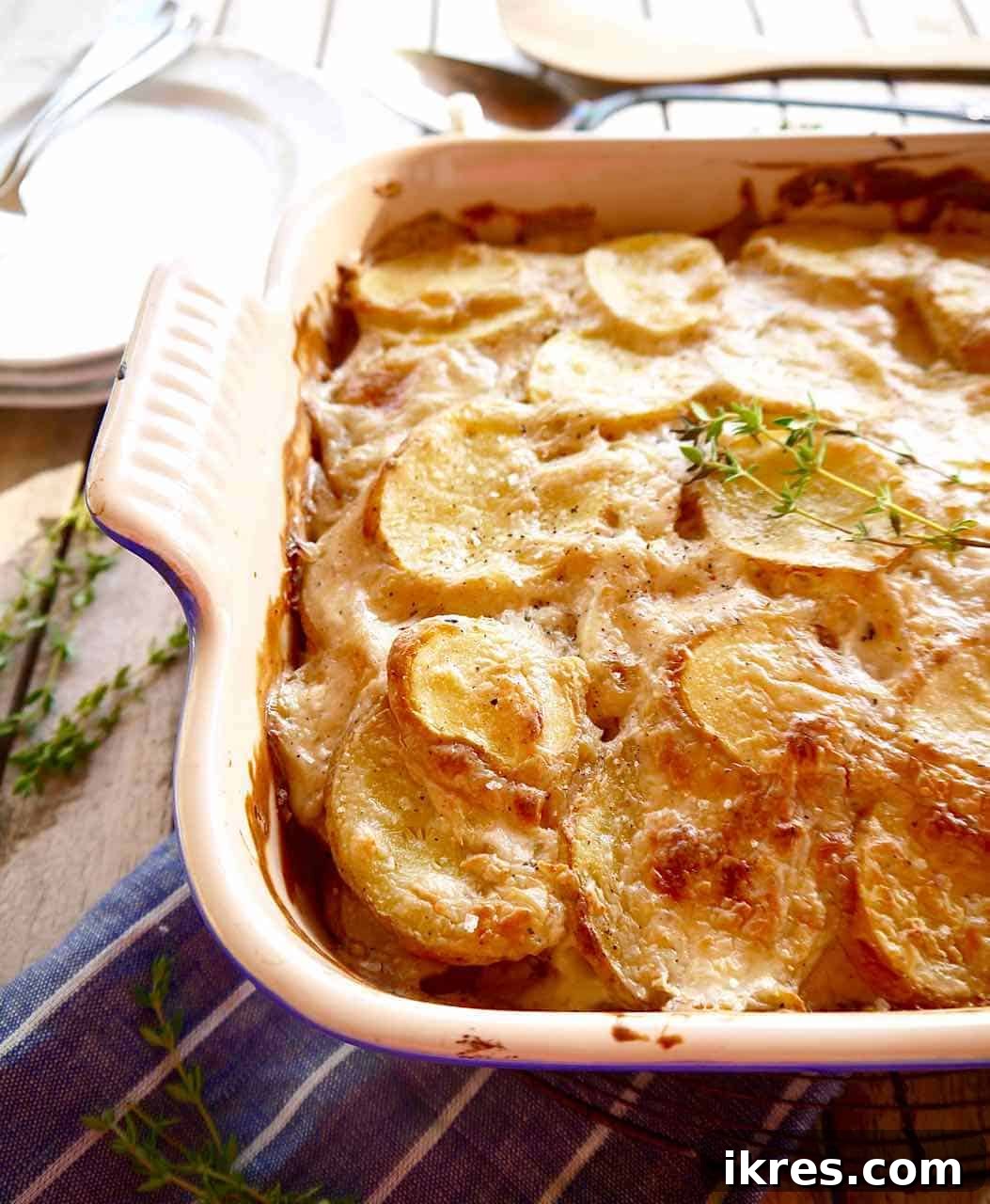
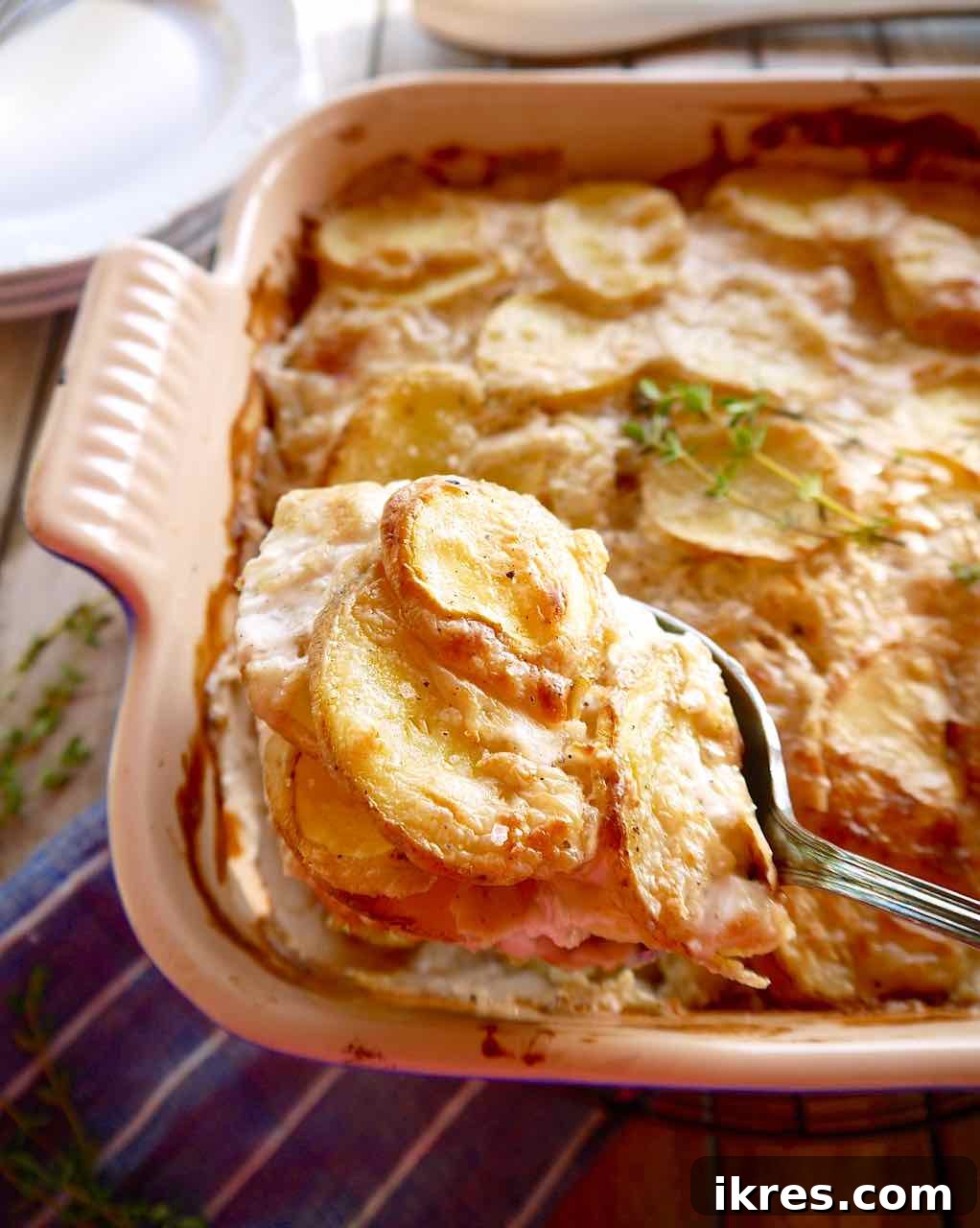
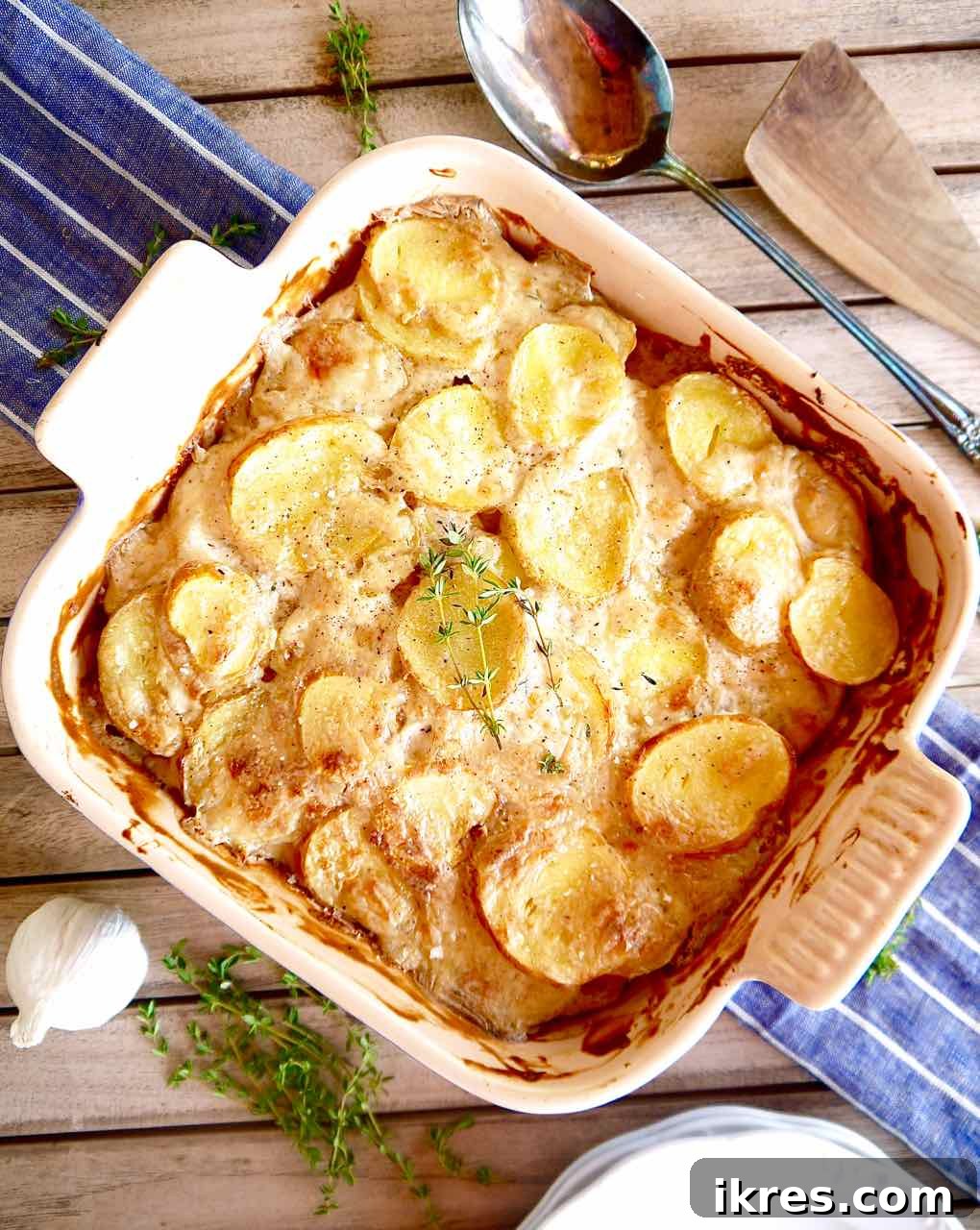
When the craving for ultimate comfort food strikes, these dairy-free au gratin potatoes are the ideal answer. Each tender slice of potato melts in your mouth, enveloped in a luscious, dairy-free sauce that’s both rich and incredibly flavorful. This remarkable sauce is delicately seasoned with aromatic garlic, sweet shallots, earthy thyme, and a hint of warm nutmeg, creating a symphony of tastes that elevates the humble potato to a gourmet experience. The potatoes emerge from the oven beautifully golden and bubbly, with a perfectly tender interior and a wonderfully crisp top layer, promising a dish that is as visually appealing as it is delicious and deeply satisfying. It’s a dish that embodies warmth and homely goodness without compromise.
Why You’ll Fall in Love with This Dairy-Free Scalloped Potatoes Recipe:
This recipe isn’t just a dairy-free alternative; it’s a stand-alone masterpiece that offers a host of benefits and delicious reasons to make it your new go-to comfort food side. From its incredible flavor profile to its adaptability for various dietary needs, this dish truly has it all.
- A Healthier Take on a Classic Comfort Food: Experience all the nostalgic warmth and satisfying richness of traditional scalloped potatoes without any of the dairy. This recipe delivers an incredibly creamy texture and deep flavor profile, making it a perfect, guilt-free indulgence for any occasion. It proves that healthy eating can still be utterly delicious and deeply comforting.
- Ideal for Diverse Dietary Needs and Preferences: If you’re navigating a dairy intolerance, actively adhering to a Paleo diet, or embarking on a Whole30 challenge, this dish is specifically crafted with you in mind. It proudly stands as an outstanding **Paleo scalloped potatoes** and **Whole30 scalloped potatoes** option, ensuring that everyone can savor a creamy potato gratin without any dietary compromise. Moreover, it is inherently gluten-free, broadening its appeal.
- A Stellar Choice for Unforgettable Holiday Feasts: Elevate your holiday spread with this exquisite **dairy-free potato gratin**. Its impressive presentation, coupled with its universally loved flavor, makes it a sophisticated and crowd-pleasing addition to any festive table. From the grandeur of Thanksgiving to the joy of Easter, Christmas, or New Year’s celebrations, its versatility means it pairs beautifully with a wide array of main courses and other side dishes, making your holiday meal inclusive for all guests.
- Crafted with an Allergen-Friendly Cream Sauce: Unlike many dairy-free alternatives that heavily rely on cashews, nutritional yeast, or tofu for their creamy base, this recipe achieves its decadent texture using a unique and simple blend of coconut cream and almond milk. This particular formulation makes it a fantastic option for those with common nut or soy allergies, offering a truly inclusive dish that doesn’t compromise on the luscious creaminess expected from scalloped potatoes.
- Meets Multiple Stringent Dietary Guidelines: This robust recipe is thoughtfully designed and tested to be fully Whole30, Gluten-free, Dairy-free, and Paleo compliant. This multi-compliance makes it an exceptionally adaptable and stress-free choice for those following strict dietary protocols, ensuring deliciousness without breaking your dietary rules.
- Remarkably Delicious Without Traditional Dairy: Prepare to be utterly amazed by how incredibly flavorful and satisfying this dish is! This recipe triumphantly proves that you absolutely don’t need butter and cheese to create truly exceptional scalloped potatoes. The carefully selected ingredients and the masterful blend of seasonings ensure a depth of flavor and a sumptuously creamy consistency that will make you forget all about the traditional dairy versions. You won’t miss a thing!
Essential Ingredients for Dairy-Free Scalloped Potatoes:
Crafting these delectable dairy-free scalloped potatoes requires a selection of fresh, high-quality ingredients that work together in harmony to create the perfect texture and flavor. Each component plays a vital role in achieving that sought-after creamy consistency and savory profile that defines an excellent potato gratin.
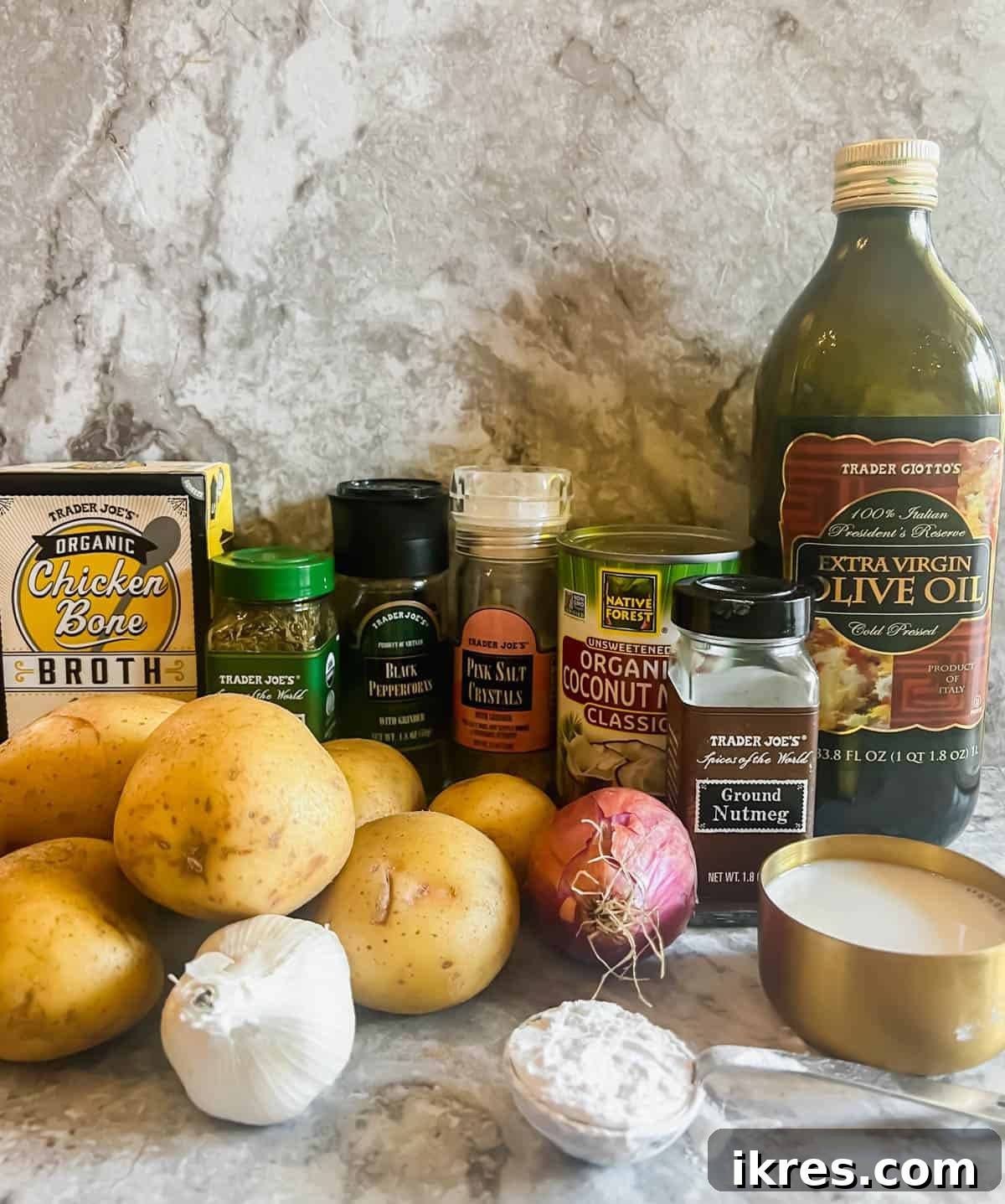
- Yellow Potatoes: The undisputed foundation of our dish! Varieties like Yukon Gold or other yellow potatoes are ideally suited for this recipe due to their medium-starch content and inherently buttery flavor. They cook down beautifully, becoming tender and readily absorbing the creamy sauce. Russet potatoes also work well, offering a slightly more floury texture. Ensure they are thinly sliced for optimal cooking and absorption.
- Fresh Garlic: A cornerstone of flavor in almost any savory dish. Minced fresh garlic infuses the dairy-free sauce with a pungent, aromatic depth that perfectly complements the subtle sweetness of the shallots and greatly enhances the overall savory profile of the gratin.
- Shallots: These elegant members of the onion family are prized for their milder, sweeter, and more nuanced flavor compared to regular onions. They provide an essential aromatic base for our creamy sauce, caramelizing slightly as they cook down, adding a tender sweetness that beautifully balances the richness of the coconut cream.
- Olive Oil: Used primarily for gently sautéing the aromatics. A good quality extra virgin olive oil helps to develop the foundational flavors of the garlic and shallots, ensuring a rich and fragrant base for your creamy sauce. It also adds a healthy fat component to the dish.
- Coconut Cream: The undeniable star of our dairy-free cream sauce! Rich, thick, and wonderfully luxurious, full-fat coconut cream provides the essential creamy body and velvety texture that traditionally comes from heavy dairy cream. It creates an astonishingly smooth and decadent sauce without any dairy. Be sure to select a good quality, full-fat coconut cream for the best results in both taste and consistency.
- Almond Milk: A versatile and widely available dairy-free milk alternative. Unsweetened plain almond milk effectively thins the sauce slightly, allowing for better layering and distribution, while still maintaining its overall creaminess. You can also experiment with other unsweetened non-dairy milks like oat milk or cashew milk if preferred, always ensuring they are unflavored to avoid altering the savory profile.
- Salt and Pepper: These fundamental seasonings are crucial for elevating and balancing all the other flavors in the dish. Potatoes require ample seasoning to truly shine, so adjust these to your personal taste preference throughout the cooking process.
- Ground Nutmeg: A classic and indispensable spice pairing for creamy potato dishes, especially those resembling béchamel-based gratins. Nutmeg adds a subtle warmth, a uniquely aromatic and slightly sweet note, and an earthy complexity that perfectly complements the creamy sauce and the potatoes, tying all the flavors together in a sophisticated way.
- Fresh Thyme: Earthy, fragrant, and wonderfully aromatic, fresh thyme provides a beautiful herbal counterpoint to the richness of the potatoes and sauce. It infuses the dish with a fresh, slightly peppery flavor that is wonderfully comforting. Don’t forget to reserve some extra sprigs for a final garnish before serving, enhancing both aroma and visual appeal.
- Bone Broth: This ingredient adds a profound layer of savory umami depth to the sauce, while also contributing valuable nutrients. It helps to balance the richness of the coconut cream and almond milk, preventing the sauce from becoming overly heavy. For those following a strict vegan diet, a high-quality vegetable broth makes an excellent substitute.
- Tapioca Flour: Our secret weapon for thickening this dairy-free sauce! Tapioca flour (also known as tapioca starch) is a fantastic, naturally gluten-free thickener that creates a silky-smooth and glossy sauce without any grittiness. It ensures that the sauce clings perfectly to each delicate potato slice, guaranteeing every bite is creamy and satisfying.
Creative Recipe Variations to Explore:
While this dairy-free scalloped potatoes recipe is perfect and satisfying as is, it also serves as an excellent canvas for culinary creativity. Feel free to experiment with these thoughtful variations to tailor the dish to your specific taste, dietary needs, or simply to add an exciting new dimension to this beloved classic.
- Add Crispy Bacon Bits: For a savory, smoky, and irresistible kick, cook some bacon until perfectly crispy, then crumble the bits. You can stir these into the sauce during the layering process, distributing them evenly, or sprinkle them generously over the top of the potatoes just before the final broil. This adds a fantastic textural contrast and a depth of umami flavor.
- Infuse with Fresh Pesto: Introduce a vibrant, herbaceous, and garlicky twist by stirring one or two tablespoons of your favorite dairy-free pesto directly into the sauce before layering. This works particularly well if you’re aiming for an Italian-inspired flavor profile and a beautiful green hue.
- “Cheesy” Flavor with Nutritional Yeast: If you find yourself missing a “cheesy” flavor, nutritional yeast is an exceptional dairy-free option. It offers a distinct umami-rich, savory profile. You can stir it into the sauce to melt in, or sprinkle it generously over the top of the potatoes before baking for a golden, savory crust.
- Delicious Crunchy Breadcrumb Topping: For an extra layer of delightful texture, mix dairy-free bread crumbs (gluten-free if needed) with a little olive oil or melted dairy-free butter. Sprinkle this mixture generously over the top of the dish before baking. They will toast up beautifully during the final broil, providing a satisfying crunch that contrasts with the creamy interior.
- Incorporate Fresh Spinach: Boost the nutritional content and add a touch of beautiful green to your dish by folding a handful of fresh baby spinach into the warm sauce just before you begin the layering process. The spinach will wilt down as the potatoes bake, adding a subtle earthiness and a pop of color without overpowering the main flavors.
Crafting Your Creamy Dairy-Free Scalloped Potatoes: A Step-by-Step Guide
Creating this decadent dish is a straightforward and enjoyable process, breaking down into a few simple yet crucial steps. Follow these instructions carefully to achieve perfectly tender potatoes bathed in a rich, flavorful dairy-free sauce that will impress everyone.
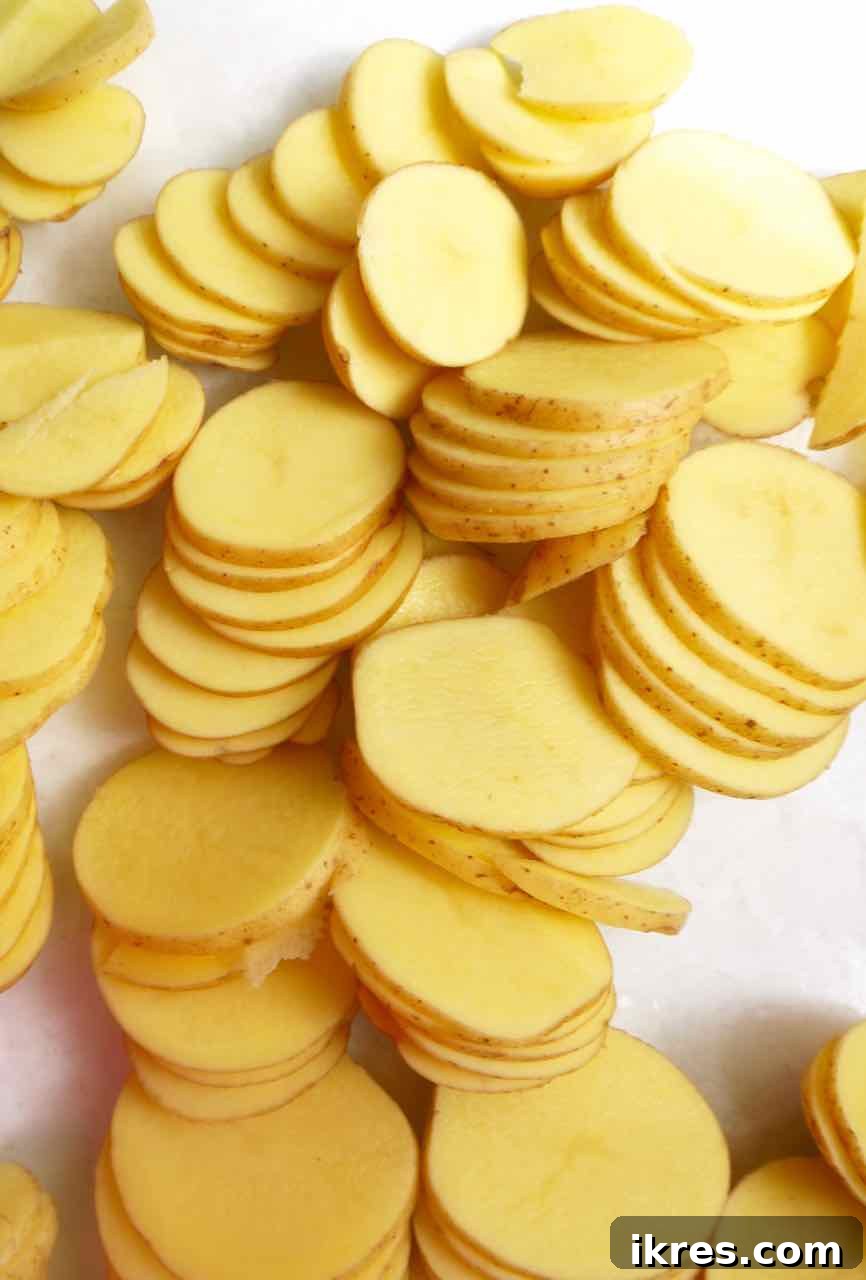
Step 1: Precisely Slice Your Potatoes
- Begin by thoroughly washing and peeling your chosen yellow or Russet potatoes. The key to evenly cooked scalloped potatoes, where every slice is perfectly tender, is uniform slicing. Aim for slices that are approximately 1/8 of an inch thick. This ideal thinness allows them to cook thoroughly, absorb the creamy sauce beautifully, and ensures a consistent texture throughout the gratin.
- While a mandoline slicer is an invaluable tool for achieving perfect, consistent slices with minimal effort, don’t be deterred if you don’t have one. A sharp chef’s knife and a steady hand will work perfectly. Just do your best to keep the slices as even as possible; minor variations are acceptable, but overall consistency helps ensure all potatoes cook at a similar rate, preventing some from being undercooked or overcooked.
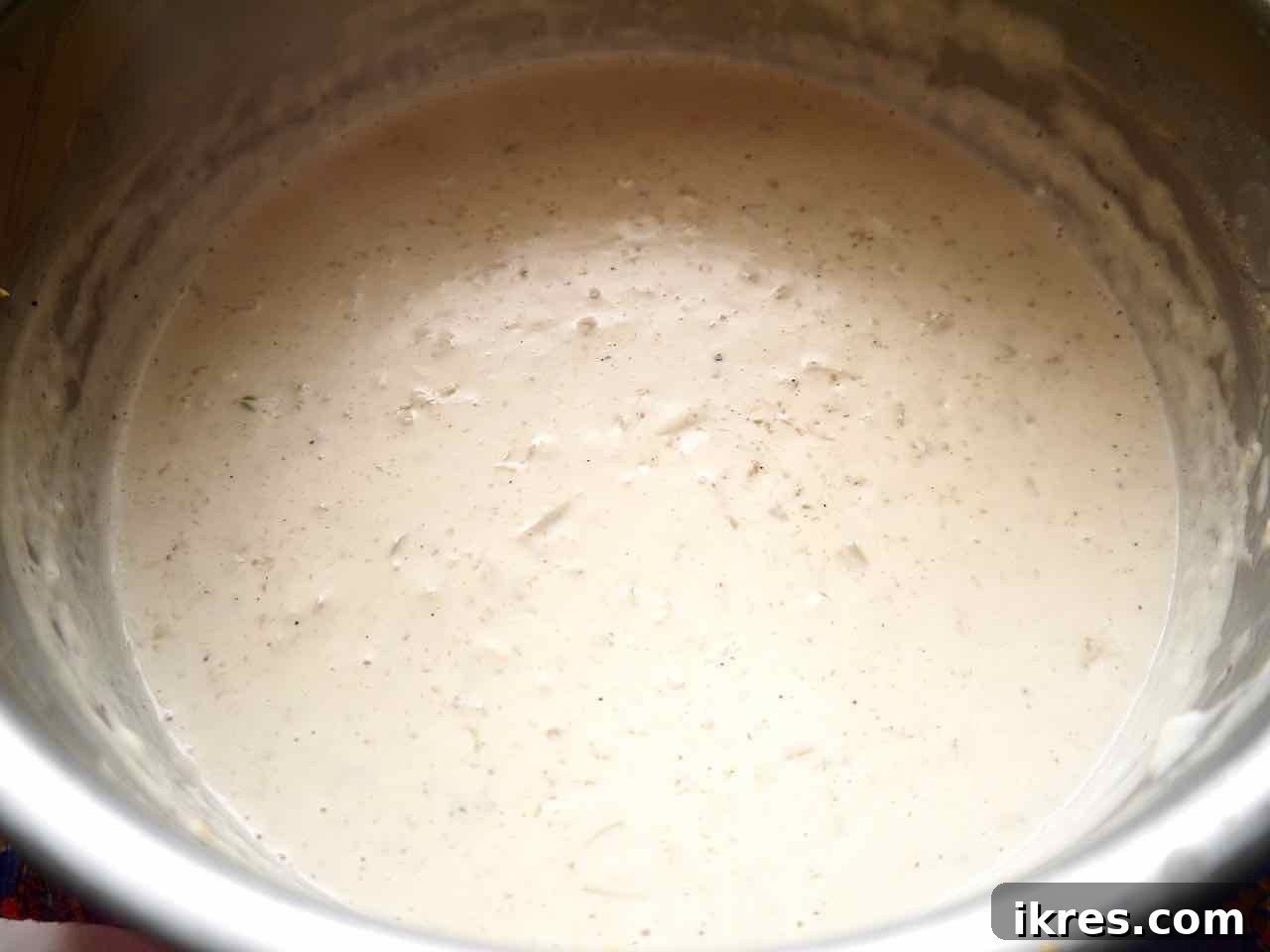
Step 2: Craft the Creamy Dairy-Free Sauce
- In a medium saucepan, heat the olive oil over medium heat. Add the diced shallots and minced garlic, sautéing them until they become fragrant, translucent, and softened, which typically takes about 3-4 minutes. This essential step builds a robust, aromatic foundational flavor profile for your sauce, which also helps to subtly mask any prominent coconut notes from the cream.
- Next, pour in the almond milk and full-fat coconut cream into the saucepan. Stir in the ground nutmeg, salt, freshly ground pepper, and fresh thyme. Bring this mixture to a gentle boil, then reduce the heat slightly and allow the flavors to meld and infuse for about 10 minutes, stirring occasionally.
- Finally, add the bone broth (or vegetable broth if making a vegan version) and the tapioca flour. Whisk continuously and vigorously until the tapioca flour is fully dissolved and the sauce begins to visibly thicken to a desirable, smooth consistency. This constant whisking is crucial to prevent any lumps from forming, ensuring a perfectly velvety sauce.
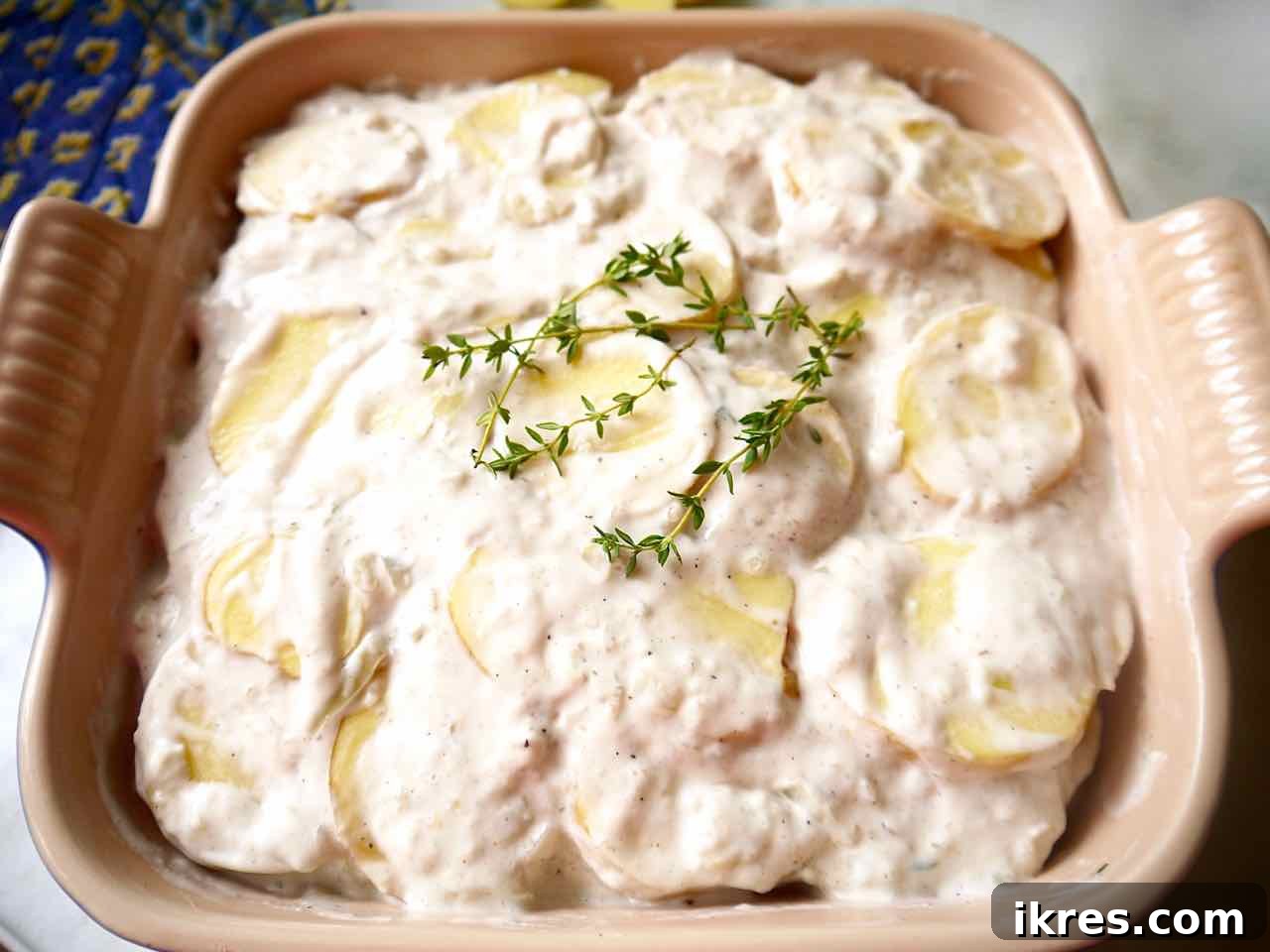
Step 3: Skillfully Layer the Potatoes and Sauce
- Begin by generously greasing your large baking dish. Preheat your oven to 350°F (175°C), ensuring it’s ready for baking. Arrange one-third of your thinly sliced potatoes in a slightly overlapping pattern at the bottom of the prepared dish. This creates an even base for the first layer.
- Evenly pour one-third of the freshly prepared dairy-free sauce over the potato layer, using a spatula to gently spread it to cover all potatoes and reach the edges of the dish. Repeat this precise layering process two more times until all potatoes and sauce are used, ensuring the top layer is finished with a generous coating of sauce. For an added touch of elegance and fresh aroma, you can artfully place a few fresh thyme sprigs on top before baking.
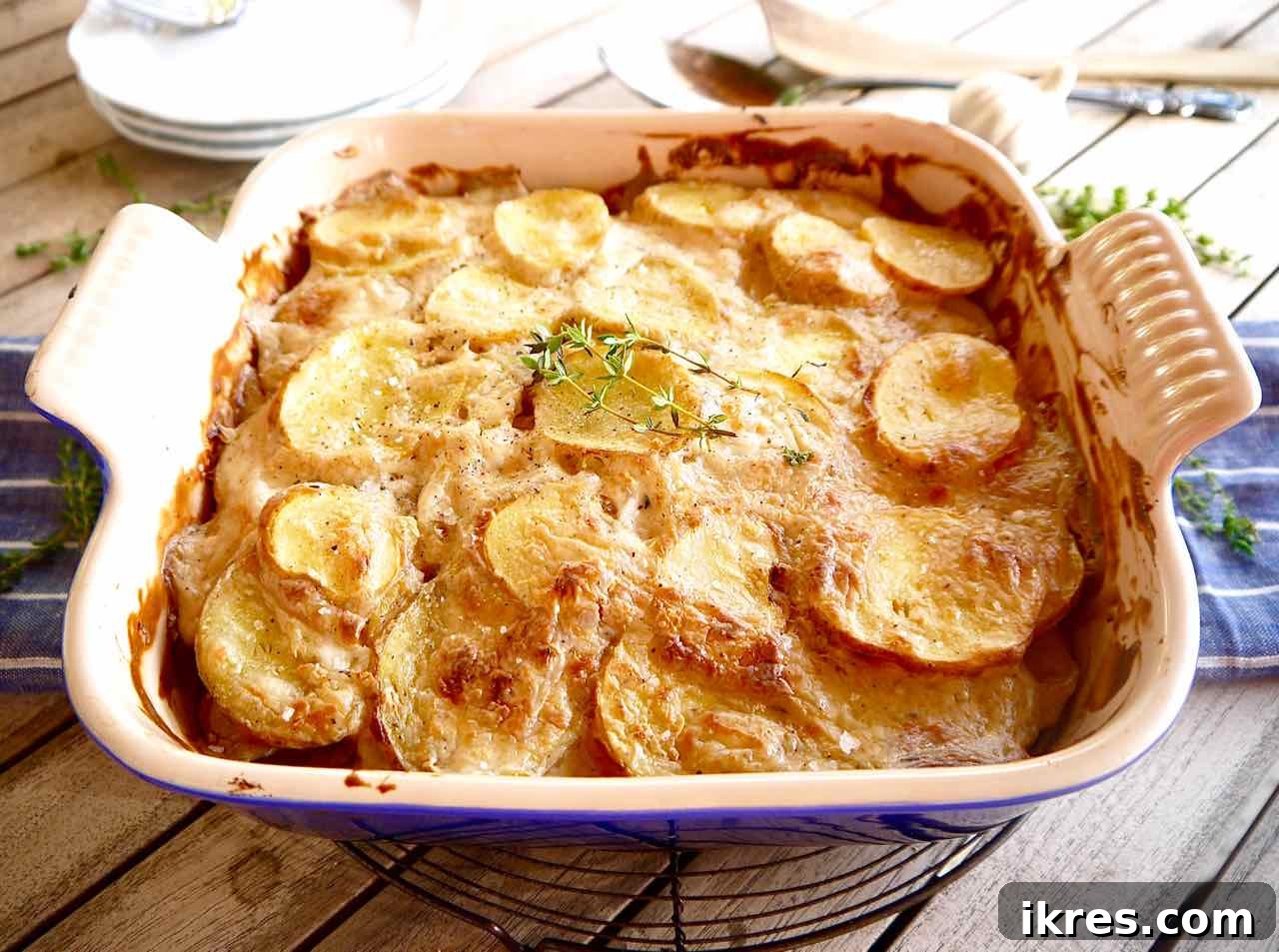
Step 4: Bake to Golden Perfection
- Cover the baking dish tightly with aluminum foil. This step is crucial as it traps moisture, allowing the potatoes to steam and become incredibly tender without drying out. Bake in the preheated oven for approximately 75 minutes. To check for doneness, begin piercing through all layers of potatoes with a sharp knife around the 60-minute mark; it should slide through easily with no resistance. If resistance is felt, continue baking for additional time until they are perfectly tender.
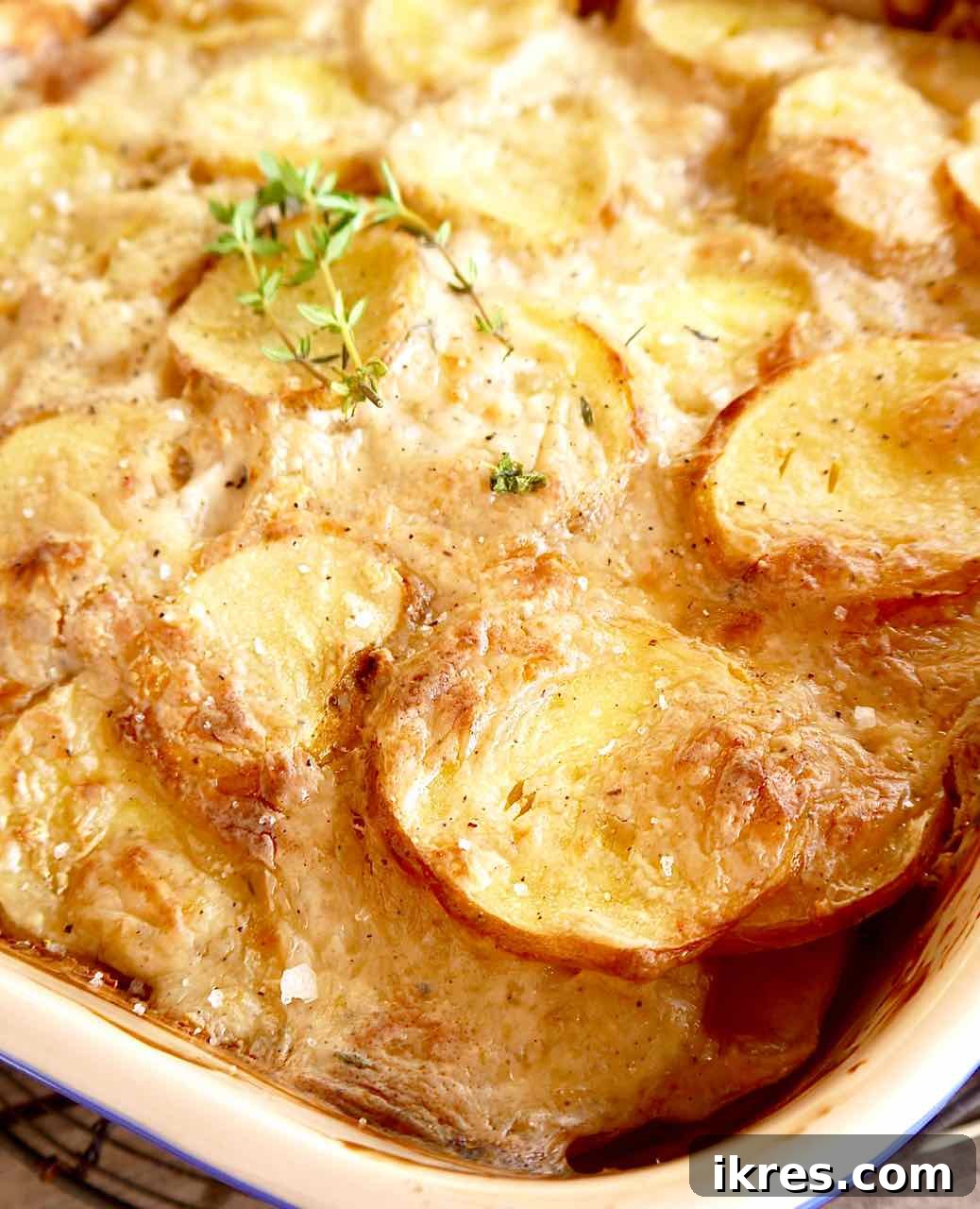
- Once the potatoes are tender, carefully remove the aluminum foil (and any thyme sprigs that were added for visual appeal). Increase the oven temperature to broil and cook for an additional 3-5 minutes, keeping a very close eye on the dish. Broil until the top layer is beautifully golden brown, bubbly, and slightly crispy. Be vigilant to prevent burning.
- Sprinkle with a final touch of flaky sea salt and freshly ground pepper before serving hot. Enjoy your perfectly creamy, golden, and utterly delicious dairy-free scalloped potatoes!
Expert Tips for Flawless Dairy-Free Scalloped Potatoes:
(1) Prioritize a High-Quality Coconut Cream: The choice of coconut cream is paramount to the overall success and flavor profile of this recipe. Not all coconut creams are created equal in terms of flavor intensity and quality. Many brands can unfortunately impart an undesirable “sunscreen-like” or overly strong coconut taste that can detract significantly from the savory essence of the dish. To ensure the best results, I highly recommend using a brand of coconut cream that you already know and personally enjoy the flavor of. For example, Savoy coconut cream is often praised by cooks for its wonderfully light, neutral taste and exceptionally creamy texture, alongside its commitment to being free from unnecessary gums or artificial chemicals. Crucially, always opt for full-fat coconut cream to achieve the desired richness, decadent mouthfeel, and proper thickening consistency for the sauce.
(2) Master the Use of Tapioca Flour: Tapioca flour, also known as tapioca starch, is a fantastic and versatile gluten-free thickening agent, but its use requires a delicate and precise hand. Employing too much tapioca flour can quickly result in a sauce that becomes overly gummy and unpleasant in texture, diminishing the desired silky-smooth consistency. Conversely, using too little will leave your sauce thin and watery, failing to properly coat the potatoes and resulting in a less satisfying gratin. The key to success is to add the tapioca flour gradually to your warm sauce while whisking constantly and vigorously until the sauce reaches a desirable, smooth consistency that beautifully coats the back of a spoon. If tapioca flour is not readily available or if you prefer an alternative, arrowroot flour (or arrowroot starch) can be used as a suitable substitute, though tapioca tends to provide a slightly glossier and more transparent finish in sauces.
(3) Easily Adapt for a Vegan Dish: Transforming this already delightful recipe into an entirely vegan dish is incredibly simple and straightforward, making it accessible to even more dietary preferences. The only non-vegan ingredient present in the original recipe is the bone broth. To convert this into a delicious vegan scalloped potatoes dish, simply substitute the organic chicken bone broth with an equal amount of a high-quality vegetable broth. Ensure your chosen vegetable broth is savory and well-seasoned to maintain the desirable depth of flavor in the creamy sauce, ensuring your vegan version is just as rich and satisfying.
Frequently Asked Questions (FAQs) About Dairy-Free Scalloped Potatoes:
What can I use instead of milk in scalloped potatoes?
For achieving creamy and delicious scalloped potatoes without dairy, a variety of excellent dairy-free milk alternatives can be successfully used. Top choices include unsweetened almond milk, which offers a neutral flavor and good consistency, or unsweetened oat milk, known for its natural creaminess. For maximum richness and a truly decadent texture, full-fat coconut milk or coconut cream are highly recommended. These options effectively provide the necessary liquid and fat content to create a luscious, velvety sauce without compromising on flavor or the desired mouthfeel. Always ensure you opt for unsweetened and unflavored varieties to maintain control over the savory profile of your dish.
Are potatoes Paleo?
Yes, potatoes have indeed become widely accepted within the modern Paleo community. While older, more restrictive interpretations of the Paleo diet often excluded them due to their starch content, contemporary Paleo thought acknowledges that nutrient-dense, whole foods like potatoes can be a healthy and beneficial part of the diet, particularly if they are tolerated well by an individual and prepared in a wholesome manner. Potatoes offer essential vitamins (like Vitamin C and B6), minerals (such as potassium), and complex carbohydrates, making them a valuable and energy-providing addition to a balanced Paleo approach.
What are the best potatoes for scalloped potatoes?
The best potatoes for scalloped potatoes are those that possess the ideal balance of starch and moisture, allowing them to hold their shape beautifully while becoming incredibly tender and absorbing the creamy sauce effectively. Varieties like Yukon Gold (or other yellow potatoes) are consistently highly recommended for their inherently buttery flavor, creamy texture, and ability to soften perfectly without turning to mush. Russet potatoes also work exceptionally well, as their higher starch content helps to create a wonderfully thick, hearty, and comforting dish. Both types will yield delicious, tender, and beautifully sauced results when thinly sliced and properly baked.
Can I make dairy-free scalloped potatoes ahead of time?
Absolutely, these dairy-free scalloped potatoes are an excellent dish to prepare in advance, making them perfect for busy weeknights or for streamlining holiday meal prep. You can fully assemble the entire dish, including layering the potatoes and sauce, then cover it tightly with plastic wrap or aluminum foil and refrigerate it for up to 24 hours before baking. When ready to bake, it’s beneficial to allow the dish to sit out at room temperature for about 30 minutes to an hour before placing it in the oven. Keep in mind that when baking from a cold start, you might need to add an extra 10-15 minutes to the overall baking time to ensure it heats through completely and the potatoes become perfectly tender.
How do I store and reheat leftovers?
Leftover dairy-free scalloped potatoes can be stored easily in an airtight container in the refrigerator for up to 3-4 days, maintaining their delicious flavor and texture. To reheat individual portions, simply warm them gently in the microwave until heated through, stirring occasionally for even warmth. For larger portions or to reheat the entire dish, cover the baking dish with foil and reheat in a preheated oven at a moderate temperature of 300°F (150°C) for 20-30 minutes, or until the potatoes are bubbling and thoroughly hot. If the potatoes appear a bit dry during reheating, adding a small splash of extra almond milk or bone broth can help restore their moisture and creaminess.
Serving Suggestions for Your Dairy-Free Scalloped Potatoes:
These creamy dairy-free scalloped potatoes are incredibly versatile and can beautifully complement a wide range of main dishes, making them suitable for casual family dinners, elegant gatherings, or festive holiday meals. Here are a few inspired ideas to ensure your next meal is nothing short of spectacular:
- As a Quintessential Side Dish: This gratin truly shines as a hearty, satisfying, and deeply flavorful accompaniment to various proteins. It pairs wonderfully with a succulent roasted chicken, a perfectly seared or grilled steak, tender pork loin, or even baked salmon. The rich, creamy potatoes provide a comforting and substantial contrast to savory meats and fish.
- With a Fresh Salad and Roasted Vegetables: For a lighter yet still incredibly fulfilling meal, serve the dairy-free scalloped potatoes alongside a crisp, vibrant lemon arugula salad and a medley of seasonal roasted vegetables. This combination offers a delightful balance of textures—creamy, crunchy, and tender—and a refreshing contrast to the richness of the potatoes.
- A Must-Have for Holiday Gatherings: No holiday table is truly complete without a show-stopping potato dish, and this dairy-free version is perfect for Thanksgiving, Christmas, or New Year’s celebrations. Its impressive presentation and universally crowd-pleasing flavor make it a festive and inclusive centerpiece. Consider serving it alongside a homemade cranberry sauce or a savory mushroom gravy for an even more celebratory feel.
- Brunch Favorite: Don’t limit these delectable potatoes exclusively to dinner! Serve warm scalloped potatoes as a star component of a decadent brunch spread. They pair beautifully alongside fluffy scrambled eggs, savory breakfast sausage, crispy bacon, or a wholesome quiche, adding a touch of elegance and comfort to your morning meal.
More Irresistible Potato Recipes to Explore:
If you’ve thoroughly enjoyed these dairy-free scalloped potatoes and are eager to discover even more creative and delicious ways to incorporate this incredibly versatile vegetable into your diet, these other potato-centric recipes are sure to delight your taste buds. Each offers a unique and flavorful take on preparing potatoes, perfect for any meal or occasion, showcasing the endless possibilities of this humble root vegetable.
Paleo Whole30 Potato Soup: This creamy potato soup is an absolute dream – rich, deeply comforting, and utterly divine. It’s one of my personal favorite ways to enjoy the wholesome goodness of potatoes in a warm, soul-satisfying bowl, perfect for a chilly evening.
Paleo Whole30 Potato Pancakes: I absolutely adore this recipe for potato pancakes! They are cleverly made with a delightful combination of both mashed and shredded potatoes, offering a wonderful textural contrast. These pancakes pair beautifully with so many different proteins, making them incredibly versatile for breakfast, lunch, or dinner.
French Potato and Tuna Salad: This is a cherished family potato salad recipe that has been lovingly passed down to me by my mother. It’s a refreshing, unique, and flavorful twist on a classic, perfect for picnics, light lunches, or as a vibrant side dish at any gathering.
This Vegan Potato Casserole by Moon and Spoon and Yum is another fantastic dairy-free option, featuring a wonderfully crispy topping and rich, savory flavors, proving that vegan comfort food can be incredibly satisfying!
Dairy-Free Scalloped Potatoes (Paleo, Whole30, Gluten-free) Recipe Card
This Dairy-free Scalloped Potatoes recipe is a delicious dish made of thinly sliced potatoes that soak up a rich, creamy, dairy-free sauce made with coconut cream and almond milk. It’s the perfect side dish for dinner or the holidays!
Recipe Details:
- By: Dominique
- Servings: 8
- Prep Time: 35 minutes
- Cook Time: 1 hour 15 minutes
- Total Time: 1 hour 30 minutes
- Course: Side Dish
- Cuisine: American
Ingredients:
- 3.25- 3.5 pounds yellow potatoes, (sliced thin, approximately 1/8 inch thick)
- 1 Tbs minced fresh garlic, (roughly 4 cloves)
- ¾ cup diced shallots, (from approximately 2 larger shallots)
- 2 tsp olive oil
- 1 (14 ounce) can of full-fat coconut cream, (ensure it’s without preservatives, like Savoy brand for best flavor)
- 1 cup unsweetened almond milk
- 1/2 tsp salt (or to taste)
- 1/4 tsp ground black pepper (or to taste)
- 1/4 tsp ground nutmeg
- ½ tsp fresh thyme leaves, (plus extra sprigs for garnish if desired)
- 1/2 cup organic chicken bone broth (or vegetable broth for a vegan version)
- 2 Tbs tapioca flour
Instructions:
- Generously grease a large baking dish (such as a 9×13 inch casserole dish) to prevent sticking. Preheat your oven to 350 degrees Fahrenheit (175°C).
- In a medium saucepan, heat 2 teaspoons of olive oil over medium heat. Add the diced shallots and minced garlic to the pan. Sauté, stirring frequently with a spatula, for 3-4 minutes until the shallots are softened and translucent, and the garlic is fragrant.
- Pour the almond milk and coconut cream into the saucepan. Stir in the salt, pepper, ground nutmeg, and fresh thyme leaves. Bring the mixture to a gentle boil, then reduce the heat and let it simmer for 10 minutes, allowing the flavors to meld and deepen.
- Add the organic chicken bone broth (or vegetable broth) and the tapioca flour to the saucepan. Whisk continuously and vigorously until the tapioca flour is completely dissolved and the sauce begins to visibly thicken. This step is crucial to avoid any lumps.
- Continue to let the mixture boil gently for an additional 5 minutes, whisking occasionally, until the sauce has thickened to a smooth, creamy consistency that coats the back of a spoon. Remove the pan from the heat, give it a final whisk, and set it aside.
- Arrange approximately one-third of the thinly sliced potatoes in a slightly overlapping pattern at the bottom of your prepared baking dish, creating an even layer. Evenly pour about one-third of the prepared dairy-free sauce over this potato layer, using a spatula to spread it to cover all potatoes and reach the edges of the dish. Repeat this layering process two more times, using all the remaining potatoes and sauce. Ensure the top layer of potatoes is generously covered with the sauce. Optionally, place a few fresh thyme sprigs on top for garnish and added aroma during baking.
- Cover the baking dish tightly with aluminum foil. Bake in the preheated oven for approximately 75 minutes. To check for doneness, begin testing around the 60-minute mark by gently piercing through all layers of potatoes with a sharp knife; the knife should slide through easily with no resistance. If the potatoes are still firm, continue baking for additional time until they are perfectly tender.
- Once the potatoes are tender, carefully remove the aluminum foil (and any thyme sprigs you added for garnish). Increase the oven temperature to broil. Broil for 3-5 minutes, or until the top layer is beautifully golden brown, bubbly, and slightly crispy. Watch carefully during broiling to prevent burning, as this can happen quickly.
- Sprinkle with a final touch of flaky sea salt and freshly ground pepper before serving hot. Enjoy your perfectly creamy, golden, and utterly delicious dairy-free scalloped potatoes!
Recipe Notes:
(1) Selecting a Quality Coconut Cream: The flavor of your chosen coconut cream is a critical factor in the success of this dish. Some brands can impart an undesirable or overly coconut-y taste. Opt for a reputable brand you already like, such as Savoy coconut cream, which is known for its neutral flavor and creamy texture, often without the addition of gums or chemicals. Always use full-fat coconut cream for the best richness and thickening capabilities.
(2) Handling Tapioca Flour: Tapioca flour (starch) is an excellent gluten-free thickener, but it needs careful handling. Using too much can make the sauce gummy, while too little will result in a thin, watery sauce. Add it gradually, whisking constantly until the sauce reaches a smooth, desirable consistency. If tapioca flour is unavailable, arrowroot flour can be used as an alternative.
(3) Vegan Adaptation: To make this dish entirely vegan, simply substitute the organic chicken bone broth with an equal amount of a good quality, savory vegetable broth. This ensures the recipe remains flavorful while adhering to a plant-based diet.
Nutrition Information (Approximate Per Serving):
Nutrition information is automatically calculated and should be used only as an approximation, based on 8 servings.
- Calories: 283 kcal
- Carbohydrates: 39.9g
- Protein: 6.3g
- Fat: 13.4g
Did you try this delectable recipe? We’d love to hear your thoughts! Please leave a ⭐ review below!
Tried this recipe?
Mention @perchancetocook or tag #perchancetocook!