

Indulge in a truly delicious beef roulade recipe, featuring tender beef slices expertly rolled with crispy bacon, sweet onion, and fragrant thyme. This classic dish is slow-cooked until a rich, natural meat and bacon gravy develops, promising a melt-in-your-mouth experience with every bite.
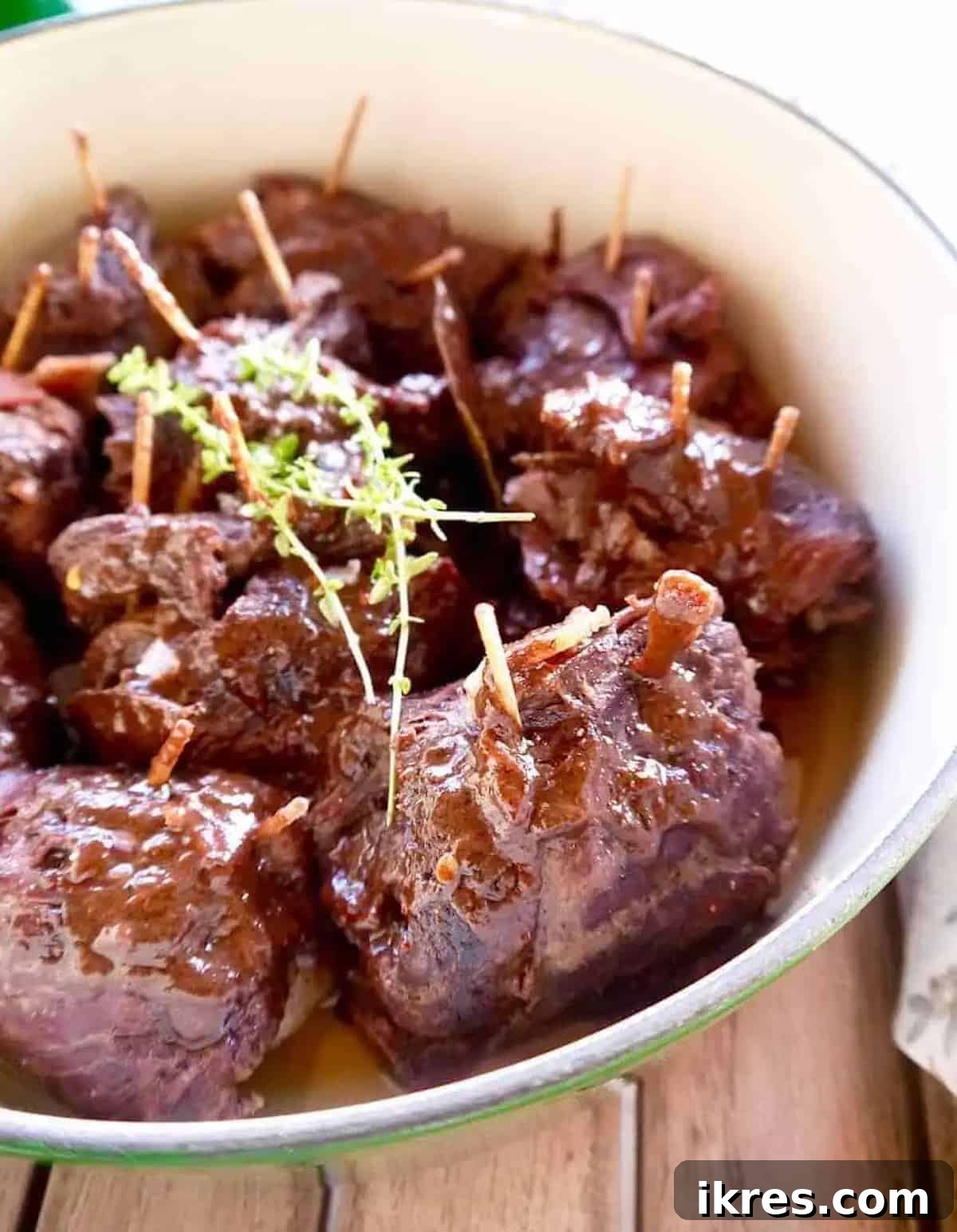
There’s something incredibly special about recipes passed down through generations, and this Eastern European beef roulade (also known as rouladen) is no exception. It’s a treasured dish from my grandmother, lovingly prepared by my mother, and a nostalgic taste of childhood for me. This recipe isn’t just about food; it’s about heritage, comfort, and the simple joy of sharing a truly exceptional meal with loved ones.
At its core, this recipe involves thin, flat pieces of beef, meticulously rolled with a savory filling of bacon, onion, and fresh thyme. The rolls are then gently cooked, allowing their flavors to meld and deepen, creating an incredibly rich, natural gravy that is the hallmark of this classic dish. It’s a testament to how humble, high-quality ingredients can transform into an extraordinary, flavorful, and incredibly tender meal that simply melts in your mouth. This isn’t just dinner; it’s an experience.
For a complete and unforgettable meal, serve these savory rolled steak recipes with a side of creamy Cottage Cheese Mashed Potatoes and vibrant Broiled Asparagus with Lemon. And for a sweet finish, our delightful almond flour brownies make the perfect dessert, rounding off a truly satisfying culinary journey.
Table of Contents
- Why This Beef Roulade Stands Out
- Essential Ingredients for Roulade Perfection
- Step-by-Step Guide to Making Beef Roulade
- Mastering Roulade: Expert Tips
- Your Roulade Questions Answered: FAQs
- Other Beef Recipes You’ll Love
- Beef Roulade with Bacon, Onion, and Thyme: Full Recipe
Why This Beef Roulade Stands Out
This traditional Eastern European Beef Roulade isn’t just another dinner recipe; it’s a culinary masterpiece that consistently impresses with its depth of flavor and tender texture. Here’s why this particular recipe deserves a place in your kitchen:
- Effortless Elegance: Despite its gourmet appearance and rich taste, this is a remarkably simple recipe requiring only a few, readily available ingredients. It proves that extraordinary meals don’t need complicated steps or an extensive shopping list. Its straightforward approach makes it accessible for home cooks of all skill levels, allowing you to create a sophisticated dish without the stress.
- Naturally Wholesome & Diet-Friendly: Crafted exclusively from whole food ingredients, this recipe naturally aligns with several dietary preferences. It is completely Gluten-free, Dairy-free, Paleo, and Whole30 compliant, making it an excellent choice for those seeking nutritious meals without sacrificing flavor. You can enjoy this hearty dish with peace of mind, knowing it’s made with clean, unprocessed goodness.
- Unforgettable Flavor Profile: Prepare your taste buds for an explosion of rich, savory deliciousness. The combination of succulent beef, smoky bacon, sweet caramelized onion, and fragrant thyme creates a complex flavor profile that is both deeply satisfying and incredibly comforting. The slow cooking process allows these flavors to marry perfectly, resulting in a robust and aromatic gravy that coats every tender piece of beef.
- Impress Your Guests (or Family!): This dish isn’t just full of flavor; it’s also visually stunning. The beautifully rolled beef, simmering in its delectable gravy, makes for an impressive presentation that is sure to wow anyone at your dinner table. Whether it’s a holiday gathering, a special occasion, or simply a comforting family meal, this roulade is guaranteed to earn rave reviews.
- A Taste of Heritage: Rooted in Hungarian and broader Eastern European culinary traditions, this recipe carries a rich history. It’s based on the authentic methods and cherished flavors that my grandmother and mother perfected over the years, bringing a genuine taste of heritage and heartwarming tradition straight to your plate. Each bite is a journey through time and culture.
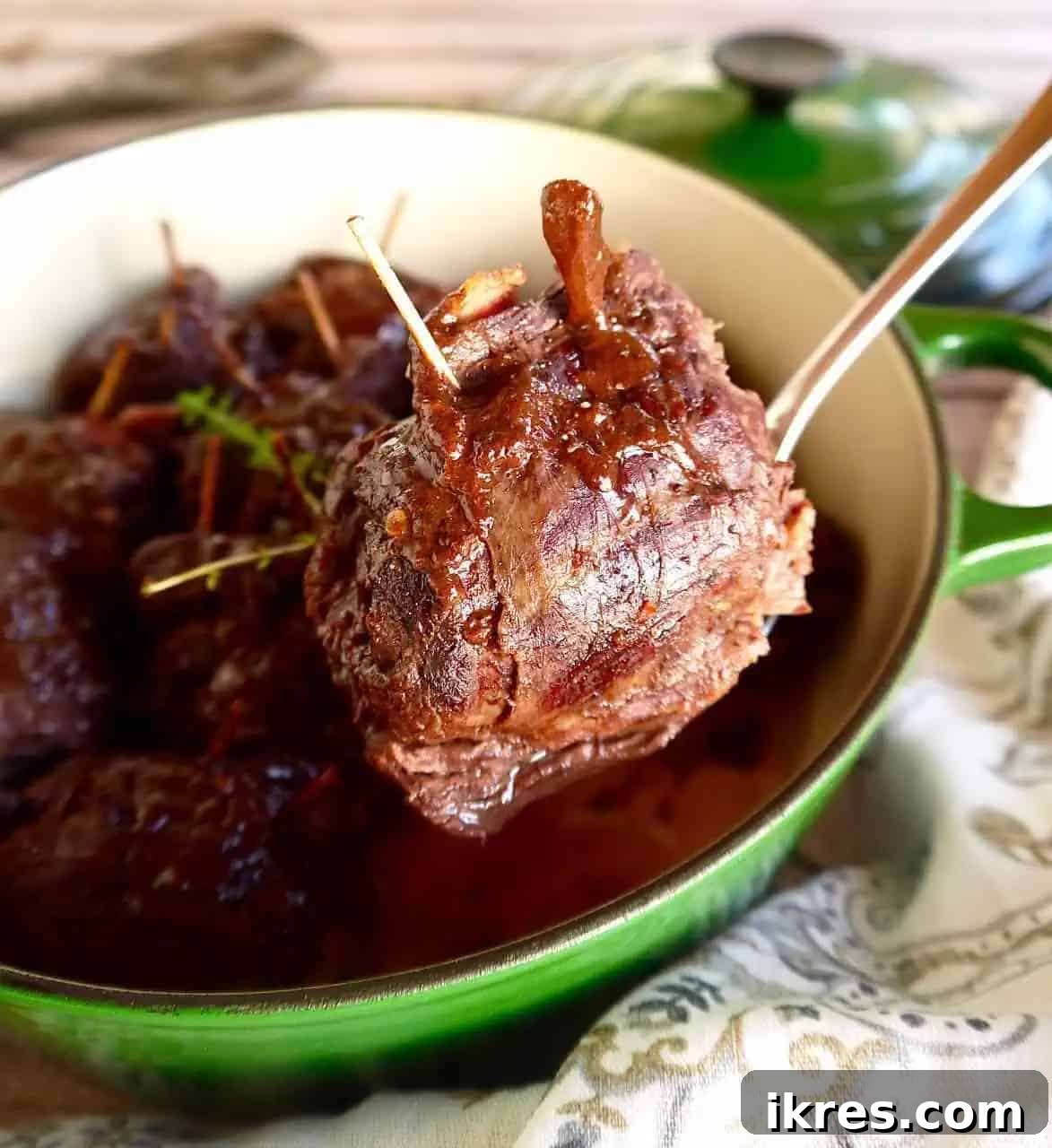
Essential Ingredients for Roulade Perfection
Crafting the perfect beef roulade relies on a few key ingredients. Opting for quality produce and cuts of meat will elevate your dish from good to unforgettable. Here’s a closer look at what you’ll need:
- Skirt Steak or Flank Steak: The choice of beef is crucial for achieving the ideal roulade. Skirt steak and flank steak are preferred due to their inherent leanness and fibrous structure, which become incredibly tender when slow-cooked. More importantly, these cuts can be easily sliced or purchased in long, flat pieces, making them perfect for rolling. Aim for slices that are about 1/4 to 1/2 inch thick and roughly 8-9 inches long to ensure easy rolling and even cooking.
- Onion (or Shallot): A foundational aromatic, onion brings a subtle sweetness and depth to the filling. When cooked down inside the roulade, it softens and caramelizes slightly, infusing the beef and gravy with a rich, savory flavor. If you prefer a milder, more delicate onion flavor, shallots make an excellent substitute. Cut them into thin wedges so they can be easily rolled without tearing the meat.
- Bacon: The bacon is a star player, adding a wonderful smoky, salty, and slightly fatty element that bastes the beef from the inside. For those following a Whole30 or Paleo diet, it’s essential to select bacon without added nitrates or sugar. This ensures a cleaner flavor profile and adherence to dietary guidelines. The bacon renders its fat during cooking, contributing significantly to the natural gravy.
- Fresh Thyme: Fresh herbs make a world of difference. Fresh thyme provides an earthy, peppery, and slightly floral aroma that complements beef beautifully. While dried thyme can be used in a pinch, fresh thyme sprigs release their essential oils more effectively during the long cooking process, imparting a more vibrant and nuanced flavor to the roulade and its gravy.
- Bay Leaves: These unassuming leaves are powerhouse flavor enhancers. Added to the cooking liquid, bay leaves contribute a subtle, almost minty and slightly bitter note that adds complexity and depth to the overall dish. They are essential for developing that authentic, rich Eastern European gravy.
- Crushed Red Pepper Flakes: For those who appreciate a hint of warmth, crushed red pepper flakes introduce a pleasant, subtle spice that elevates the savory flavors without overwhelming them. Adjust the quantity to your personal preference – a quarter teaspoon offers just a touch of heat, while more will provide a noticeable kick.
- Salt and Pepper: Basic seasonings are vital for bringing out the natural flavors of the beef and enhancing the richness of the filling.
- Water: The liquid base for cooking, which transforms into the flavorful gravy as it reduces and combines with meat juices and bacon fat.
- Toothpicks: Absolutely essential for securing the roulades, ensuring they hold their shape during the cooking process.
Step-by-Step Guide to Making Beef Roulade
Follow these detailed instructions to create perfect, tender beef roulades that will impress every time. Precision in preparation ensures the best results for this classic dish.
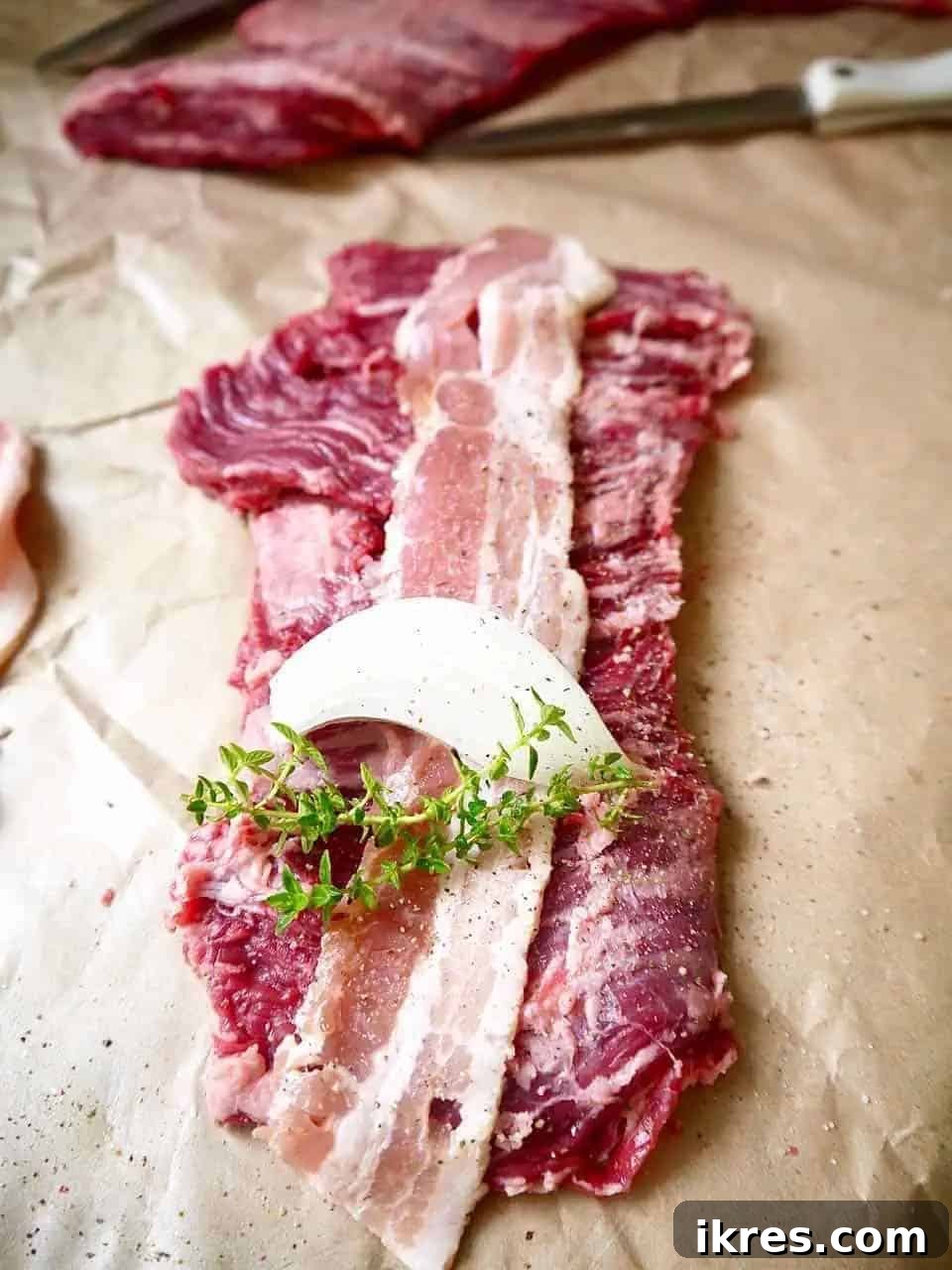
Step 1: Prepare the Beef and Filling. Begin by laying a single piece of your thinly sliced beef (skirt or flank steak) flat on a clean work surface. On top of the beef, carefully place a piece of bacon. If the bacon is too long for your steak, you can fold it over itself or trim it to fit neatly within the steak’s dimensions. Lightly sprinkle the bacon and beef with salt and freshly ground black pepper. Then, position a small wedge of onion and a sprig of fresh thyme towards one end of the steak, which will be the starting point for your roll.
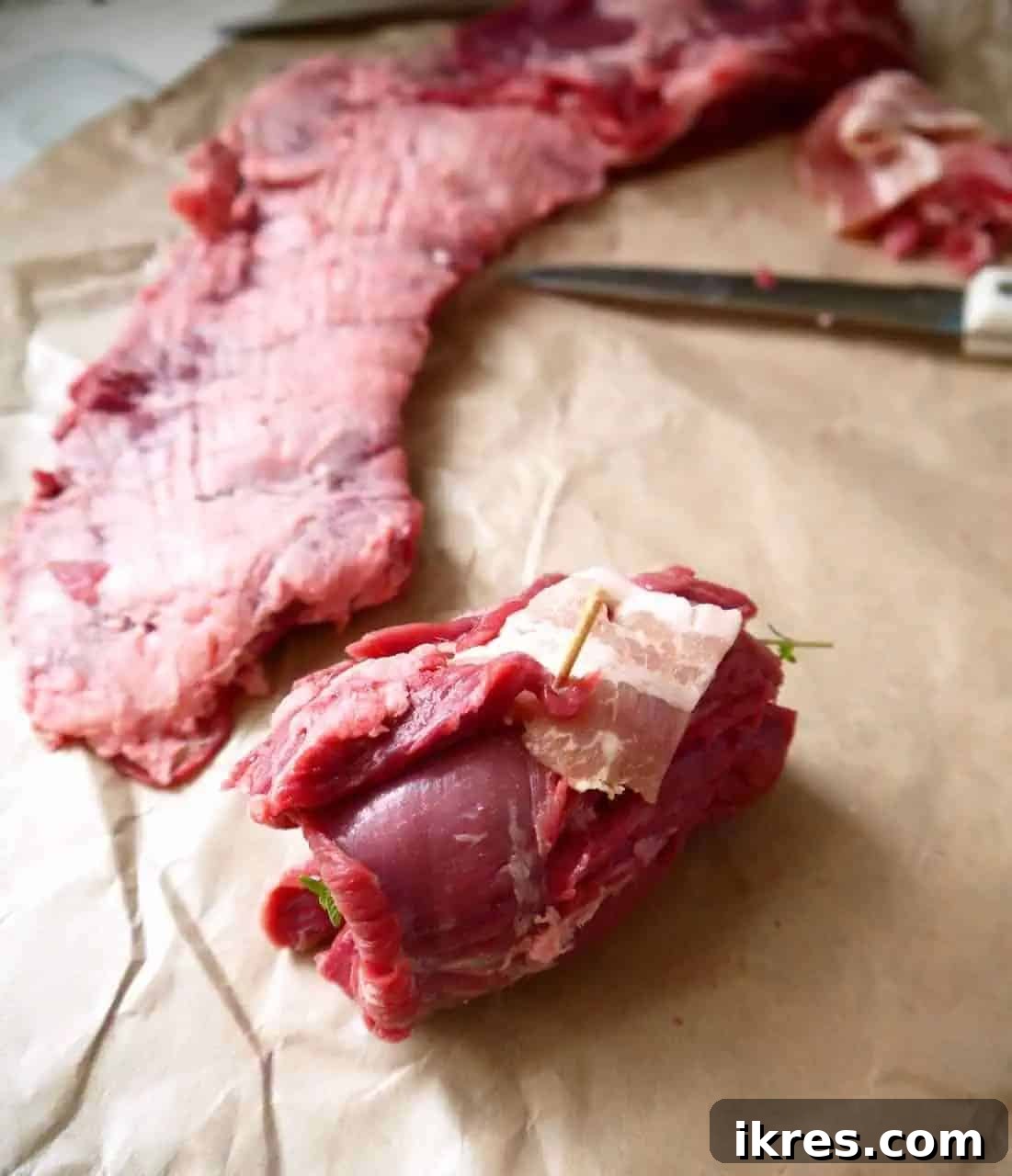
Step 2: Roll and Secure the Roulades. Starting from the end where you placed the onion and thyme, carefully but firmly roll the steak onto itself. Continue rolling until the meat is completely encased, forming a tight cylindrical shape. To prevent the roulade from unraveling during cooking, use one or two toothpicks to secure the roll in place. Ensure the toothpicks pass through both ends of the meat to hold the filling snugly. Repeat this process for all your beef pieces.
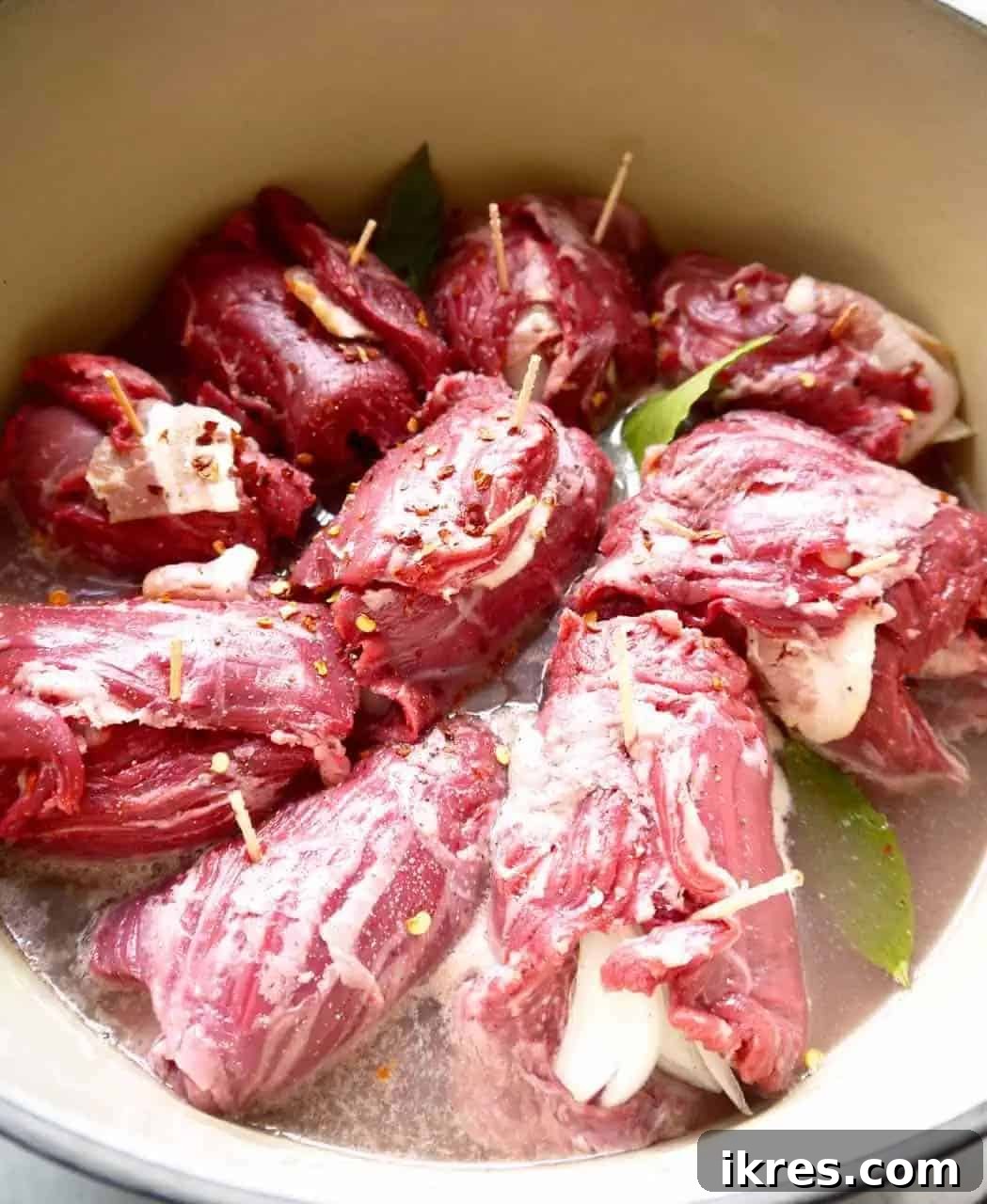
Step 3: Prepare for Cooking. Pour 2 cups of water into a large ceramic Dutch oven or a heavy-bottomed pot. Carefully arrange all the prepared beef roulades in a single layer within the pot, ensuring they are lying flat with the toothpick side facing up. This arrangement allows for even cooking and proper browning. Distribute 3 bay leaves, ¼ teaspoon of red pepper flakes (if using), and 3 additional sprigs of fresh thyme over and around the roulades in the pan.
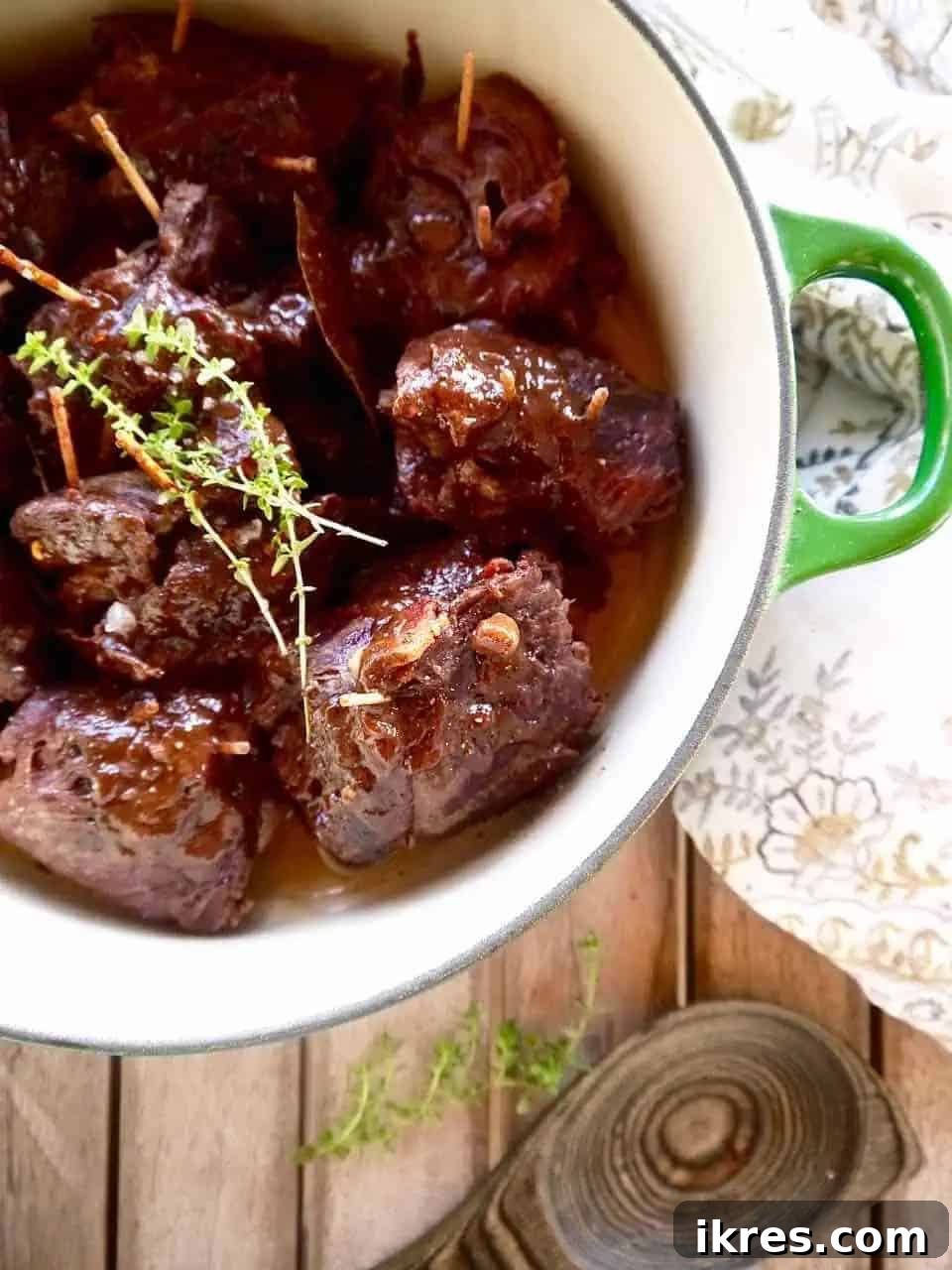
Step 4: Cook and Reduce. Place the Dutch oven over medium heat. Once the water begins to boil, partially cover the pot with a lid, leaving a small opening (about ¾ inch wide) to allow steam to escape. Let the roulades cook for approximately 25 minutes. After this initial period, carefully turn each roulade onto its side, or with the toothpick facing towards the bottom of the pan, and continue cooking with the lid still partially ajar for another 20 minutes. Finally, turn them onto their other side and remove the lid completely, allowing them to cook for a final 15 minutes. Once cooked, remove the meat from the pan. Increase the heat to high and vigorously boil the remaining liquid, stirring frequently, for 4-5 minutes until the sauce thickens to your desired consistency. You can either return the cooked roulades to the thickened sauce to coat them or serve the sauce separately over the meat.
Mastering Roulade: Expert Tips
Achieving perfectly tender and flavorful beef roulades is simple with these expert tips:
- Choosing the Right Steak Cut and Size: The success of your roulades starts with the beef. Opt for skirt steak or flank steak that is both long and thin. Ideal dimensions are typically between ¼ and ½ inch thick, and about 8 to 9 inches long. These cuts and dimensions ensure that the meat can be easily rolled into a compact cylinder and will become wonderfully tender during the slow cooking process. While an exact 8-9 inch length is ideal, don’t worry if your pieces vary slightly; some might be 6 inches, others 11 inches – the key is consistency in thickness for even cooking.
- Secure Rolling is Key: To prevent your delicious filling from escaping and to ensure the roulades maintain their shape, use two toothpicks per roll. Insert one toothpick through each end of the roulade, making sure it securely captures all layers of the meat and the filling. This extra measure provides stability, especially when turning the roulades during cooking.
- Perfecting the Gravy: The natural gravy formed from the meat juices, bacon fat, and cooking liquid is a highlight of this dish. After removing the cooked roulades, reducing this liquid over high heat is crucial. This process concentrates the flavors, creating a richer, thicker sauce that beautifully complements the tender beef. Once reduced, you have the option to either return the roulades to the pan to simmer briefly in the thickened sauce, or simply drizzle the exquisite gravy over the meat when serving. Both methods ensure maximum flavor.
- Don’t Overcrowd the Pot: When cooking, ensure your Dutch oven isn’t too crowded. If you’re making a large batch, consider cooking in two smaller batches or using a wider pot to allow the roulades to cook evenly and the liquid to reduce effectively. Overcrowding can lead to steaming rather than the desired slow simmer and slight roasting.
- Taste and Adjust: Always taste your sauce before serving! A final seasoning adjustment can make all the difference. You might want a pinch more salt, pepper, or even a dash of a complementary herb like parsley or chives right at the end.
Your Roulade Questions Answered: FAQs
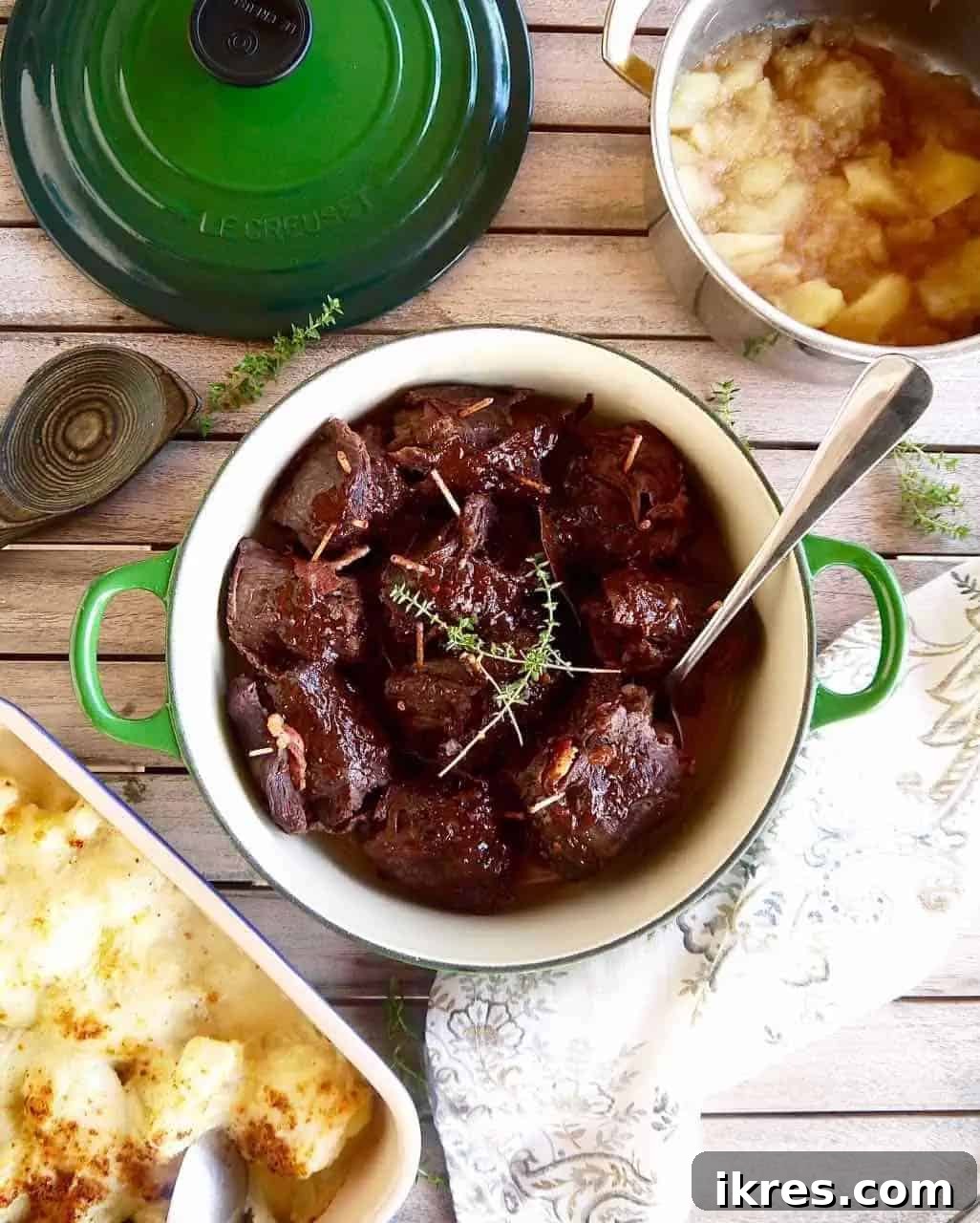
Traditionally, this hearty Eastern European dish is most often served with simple boiled or creamy mashed potatoes. My Whole30 Mashed Potatoes recipe or even this decadent Vegan Cauliflower Au Gratin would make fantastic pairings, soaking up all that incredible gravy. Interestingly, my research into the German version, often called Rouladen, reveals they sometimes include pickles in the center and are frequently served with a side of apple sauce, offering a delightful sweet-sour contrast. Feel free to explore these variations!
Leftover beef roulades can be stored in an airtight container in the refrigerator for 3-4 days. The flavors often deepen overnight, making them even more delicious the next day!
Absolutely! This is an excellent make-ahead meal. You can prepare and roll the beef roulades in advance, securing them with toothpicks, and then store them raw in the refrigerator for up to 24 hours. When you’re ready to cook, simply transfer them to the Dutch oven and proceed with the cooking instructions. This makes entertaining much easier.
While fresh thyme is highly recommended for its vibrant flavor, you can substitute it with dried thyme. As a general rule, use about one-third of the amount of fresh herbs when using dried (e.g., if the recipe calls for 3 sprigs of fresh thyme, use about 1/2 teaspoon of dried thyme in the filling and perhaps another 1/2-1 teaspoon in the cooking liquid).
If, after reducing the liquid, your gravy isn’t as thick as you’d like, you have a couple of options. You can continue to simmer it for a few more minutes over high heat to evaporate more liquid. Alternatively, you can create a quick slurry by mixing a teaspoon of cornstarch (or arrowroot powder for Paleo/Whole30) with a tablespoon of cold water, then whisk it into the boiling gravy and simmer until thickened. Just be sure to whisk continuously to prevent lumps.
Yes, with a slight modification! After rolling and securing the roulades, you can sear them briefly in a hot pan to develop some color and flavor (optional but recommended). Then, place them in your slow cooker with the 2 cups of water, bay leaves, red pepper flakes, and extra thyme sprigs. Cook on low for 6-8 hours or on high for 3-4 hours, until the beef is fork-tender. Once cooked, remove the roulades and reduce the liquid in a separate saucepan on the stovetop as described in step 4 to create your rich gravy.
Other Beef Recipes You’ll Love
If you’ve enjoyed the rich, comforting flavors of this beef roulade, we invite you to explore more of our cherished beef recipes. From hearty stews to flavorful roasts, these dishes are perfect for any occasion and showcase the versatility of beef.
Did you try this recipe? Please leave me a ⭐ review below! We love hearing your feedback!
Beef Roulade with Bacon, Onion, and Thyme
Rated 5 out of 5 stars based on 8 votes.
Dominique
5 people
10
1 5
1 15
Email Recipe
Print Recipe
Ingredients
- 2 cups water
- 3 1/2 lbs thin beef skirt steak /flank steak (long and thin pieces, between ¼-½ inch thick)
- 1 medium onion, cut into thin wedges
- 10 pieces of bacon (one piece per roulade, preferably nitrate-free and sugar-free for Whole30/Paleo)
- 13 fresh branches of thyme
- Salt and pepper to taste
- 3 bay leaves
- ¼ tsp red pepper flakes (optional, for a hint of spice)
- Toothpicks (for securing the rolls)
Instructions
- Pour 2 cups of water into a large ceramic Dutch oven or heavy-bottomed pot.
- Prepare your skirt steak or flank steak by cutting it into long, thin pieces, ideally around 8-9 inches in length and ¼-½ inch thick. (Slight variations in length are fine).
- Lay a piece of beef flat. Place one piece of bacon on top (fold or trim if too long). Season with salt and pepper. Place an onion wedge and a sprig of fresh thyme near one end of the steak. Roll the steak tightly onto itself to form a roulade. Secure the roll with two toothpicks, ensuring both ends of the meat are caught. Repeat for all beef pieces and place them flat in the Dutch oven, toothpick side up. Add 3 bay leaves, ¼ tsp red pepper flakes, and 3 more sprigs of thyme over the roulades.
- Cook over medium heat. Once the water boils, cover the pot with a lid, leaving an opening of about ¾ inch to allow steam to escape.
- After 25 minutes, carefully turn each roulade onto its side. Continue cooking with the lid still partially open for another 20 minutes. Then, turn each roulade onto its other side and remove the lid completely, cooking for a final 15 minutes.
- Remove the cooked roulades from the pan. Increase the heat to high and boil the remaining liquid vigorously for 4-5 minutes, stirring often, until the sauce thickens to your desired consistency. Turn off the heat. You can either return the meat to the pan to coat with the sauce or pour the reduced sauce over the meat when serving.
- This recipe typically yields 10 roulades. As a serving size is usually 2 per person, this recipe serves 5 people generously.
Notes
- Steak size: For best results, use skirt steak or flank steak that is long and thin, ideally between 1/4 and 1/2 inch thick and around 8-9 inches long. Variations in length are acceptable, but consistent thickness is key.
- Use two toothpicks per roulade to ensure the roll is securely held together during cooking. Make sure to insert them through both ends of the meat.
- After reducing the sauce in the pan, you can either return the cooked meat to the pot to soak up the flavors or transfer the meat to a serving dish and pour the rich sauce over it.
- For a deeper flavor, consider searing the rolled roulades briefly in a hot pan before placing them in the Dutch oven to cook. This creates a beautiful crust.
Nutrition (per serving)
Carbohydrates: 3g
Protein: 69g
Fat: 24g
Saturated Fat: 9g
Polyunsaturated Fat: 1g
Monounsaturated Fat: 10g
Trans Fat: 1g
Cholesterol: 200mg
Sodium: 257mg
Potassium: 977mg
Fiber: 1g
Sugar: 1g
Vitamin A: 183IU
Vitamin C: 6mg
Calcium: 38mg
Iron: 6mg
Nutrition information is an approximation and may vary based on ingredients and preparation methods.
Additional Info
Main Course
Eastern European, American
Tried this recipe?
Mention @perchancetocook or tag #perchancetocook! We’d love to see your creations!