
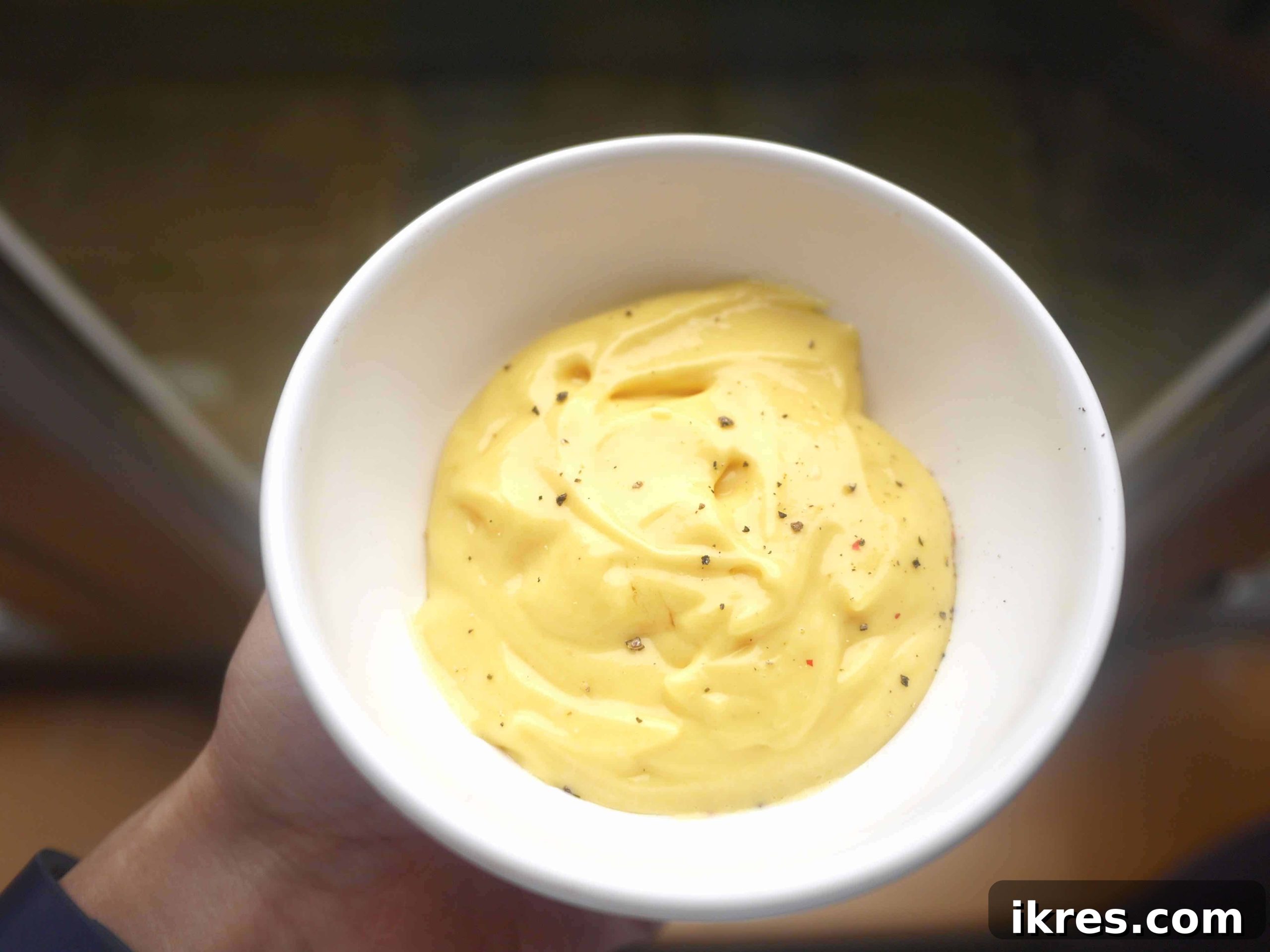
As a devoted mayonnaise enthusiast, one might assume my blog would already feature a perfected Paleo mayonnaise recipe. Especially given my passion for condiments and my constant quest for sauces ideal for dipping crisp Paleo sweet potato fries.
Surprisingly, I didn’t have a solid reason for postponing the creation of a go-to Paleo mayo until now. But that changed when my sister not only prepared her exquisite homemade mayonnaise for me but also patiently demonstrated the simple process. From that moment, I realized there was no longer any valid excuse to deny myself this culinary delight.
The truth is, it’s just too incredibly delicious and astonishingly easy to make.
The French Connection: A Sister’s Culinary Inspiration
My sister, Caroline, possesses a truly outstanding homemade mayonnaise recipe, which she traditionally pairs with her equally delightful homemade French fries. The mere thought of this combination is enough to make anyone’s mouth water!
This exquisite pairing is quintessentially French, a detail that makes perfect sense given that she and her family reside in France. The last time I visited their home, it was a beautiful display of culinary teamwork: her husband expertly handled the fries while Caroline, with her usual grace, crafted the mayonnaise from scratch. Witnessing their collaborative effort only deepened my appreciation for the simple elegance of their home-cooked meals.
I was overjoyed when she recently shared her cherished recipe with me and graciously agreed to have it featured on this blog. Truly, nothing compares to the fresh, light, yet sumptuously creamy taste of homemade mayonnaise. Looking back, I can’t help but regret waiting so long to adopt her incredible recipe into my own kitchen.
Transforming a Classic: Achieving Paleo Perfection
The transition from Caroline’s original recipe to a Paleo-friendly version was remarkably straightforward. The primary adjustment involved swapping canola oil for a high-quality, light olive oil. It’s crucial to select an olive oil that is light in color and flavor to ensure the robust olive taste doesn’t overpower the delicate essence of the mayonnaise itself. With this simple substitution, Caro’s Homemade Paleo Mayo was born, retaining all the wonderful qualities of the original while adhering to dietary preferences.
For my version, I opted for hot English mustard, which lends a delightful zing, but Dijon mustard works equally well if you prefer a milder flavor profile. I also incorporated a splash of fresh lemon juice, which beautifully brightens the mayo and helps to balance out the richness of the olive oil. The result? Absolutely delicious and truly revolutionary!
This homemade Paleo mayonnaise has instantly elevated all my favorite dishes. From now on, my tuna salads, egg salads, burger condiments, and even a vibrant healthy coleslaw will benefit immensely from its creamy goodness. The possibilities are endless, and I’m eager to incorporate this versatile condiment into countless future meals.
I think a fresh batch of coleslaw will be its maiden voyage. It’s truly a game-changer for anyone looking for a healthier, more flavorful alternative to store-bought mayo.
The Ultimate Homemade Paleo & Gluten-Free Mayonnaise Recipe
Prepare to transform your meals with this incredibly simple and delicious homemade mayonnaise. Free from undesirable oils and artificial ingredients, this Paleo and gluten-free recipe is a staple you’ll wonder how you ever lived without. It takes mere minutes to prepare and offers a fresh, vibrant taste that store-bought versions simply cannot match.
Ingredients
- 1 large egg yolk (preferably from a pasture-raised egg for optimal nutrition and flavor)
- 1 tsp mustard (hot English mustard for a kick, or Dijon mustard for a classic tang)
- A generous pinch of salt (sea salt recommended)
- 5 Tbs extra light olive oil (ensure it’s light in flavor to avoid an overpowering olive taste)
- 1 tsp fresh lemon juice
Equipment Needed
Making homemade mayonnaise is surprisingly simple, especially with the right tools. You’ll need:
- A medium-sized mixing bowl
- A hand-held electric mixer (this is key for proper emulsification and ease)
- Measuring spoons
- A whisk (optional, for initial mixing before the mixer)
While some people achieve success with a whisk and strong arm, a hand-held mixer makes the process virtually foolproof and much quicker, ensuring a consistently creamy result.
Step-by-Step Instructions for Flawless Mayo
- In a clean, dry bowl, combine the egg yolk, mustard, and salt. Using a hand-held mixer, beat these ingredients for approximately 45 seconds. The mixture should become well combined and slightly thickened, creating a good base for emulsification.
- With the mixer running continuously at a medium speed, begin to slowly drizzle in the extra light olive oil. Start with just 1 tablespoon, pouring it in a very thin, steady stream. This crucial step should take about 15-20 seconds per tablespoon. The slow addition of oil is vital to creating a stable emulsion and preventing the mayo from splitting. Repeat this process for each subsequent tablespoon of olive oil, adding and thoroughly mixing them one at a time until all 5 tablespoons are incorporated. You will notice the mixture thickening and becoming glossy.
- Once all the oil has been added and the mixture is thick and creamy, add the fresh lemon juice. Continue mixing for just a few more seconds to fully incorporate the lemon juice and brighten the flavor. Your homemade Paleo mayonnaise is complete when it reaches a wonderfully thick and spreadable consistency.
- This recipe typically yields between 1/4 to 1/2 cup of fresh, delicious mayonnaise, depending on the exact size of your egg yolk and the consistency you achieve.
Expert Tips for Perfect Homemade Mayonnaise
- Room Temperature Ingredients: Ensure your egg yolk and olive oil are at room temperature. Cold ingredients are more likely to cause the emulsion to break, resulting in a runny or separated mayonnaise.
- Slow Drizzle is Key: This cannot be stressed enough. Adding the oil too quickly is the most common reason for mayonnaise failure. Imagine a tiny, steady stream, almost a drip, especially at the beginning.
- The Right Oil: While extra light olive oil is recommended for its neutral flavor, you can experiment with other Paleo-friendly oils like avocado oil or macadamia nut oil. Just ensure they are of high quality and neutral in taste. Avoid extra virgin olive oil if you don’t want a strong olive flavor.
- Troubleshooting a Broken Mayonnaise: If your mayonnaise separates or becomes runny, don’t despair! Take a clean bowl and add another fresh egg yolk. Slowly, drop by drop, whisk in your broken mayonnaise into the new egg yolk until it emulsifies again. It often works wonders.
- Storage: Store your homemade mayonnaise in an airtight container in the refrigerator for up to 5-7 days. Because it contains raw egg, it’s best consumed fresh.
- Flavor Variations: Feel free to customize! Add a pinch of smoked paprika for a smoky mayo, a clove of minced garlic for aioli, or fresh herbs like dill or chives for an herbaceous twist.
Unleash the Flavor: Versatile Uses for Your Paleo Mayo
Now that you’ve mastered the art of homemade Paleo mayonnaise, prepare to elevate countless dishes. Its creamy texture and fresh flavor will become an indispensable part of your kitchen repertoire. Here are just a few ideas to get you started:
- Classic Sandwiches & Wraps: Say goodbye to dry sandwiches. This mayo adds moisture and flavor to chicken, turkey, or veggie wraps.
- Tuna Salad & Egg Salad: The vibrant taste of homemade mayo truly shines in these simple classics, making them extraordinarily delicious.
- Dipping Sauce Extraordinaire: Pair it with sweet potato fries, chicken nuggets, or fresh vegetable sticks for a satisfying snack.
- Healthy Coleslaw & Potato Salad: Forget heavy, sugary dressings. This mayo forms the perfect base for lighter, healthier versions of your favorite side dishes.
- Burger & Sandwich Spread: Spread it generously on your bun-less burgers or Paleo-friendly bread for an explosion of flavor.
- Deviled Eggs: Take your deviled eggs to a new level with the rich, homemade taste of this mayonnaise.
- Creamy Salad Dressings: Whisk it with a little vinegar, herbs, and water to create a delectable creamy dressing for green salads.
- Roasted Vegetable Companion: A dollop on warm roasted asparagus or broccoli is surprisingly delightful.
The possibilities are truly endless. This mayonnaise isn’t just a condiment; it’s a foundation for creating healthier, more flavorful meals that align with your Paleo and gluten-free lifestyle.
Why Choose Paleo & Gluten-Free Mayonnaise?
The decision to make your own Paleo and gluten-free mayonnaise goes beyond just dietary preferences; it’s a choice for superior health and taste. Traditional store-bought mayonnaises are often laden with unhealthy polyunsaturated fats from industrial seed oils like canola, soybean, and sunflower oil. These oils can be inflammatory and contribute to various health issues when consumed in large quantities.
By opting for a light olive oil (or avocado oil), you’re choosing a monounsaturated fat that is known for its heart-healthy benefits. Furthermore, homemade mayo avoids all the artificial preservatives, thickeners, and added sugars that are common in commercial products. You gain complete control over the quality and freshness of your ingredients, ensuring a pure, unadulterated condiment that supports your wellness goals without sacrificing flavor. It’s a simple change that makes a significant positive impact on your diet.
Nutrition Information
(Approximate values per serving, based on 4 servings)
- Calories: 170 kcal
- Carbohydrates: 0.3 g
- Protein: 1 g
- Fat: 19 g
- Saturated Fat: 3 g
- Polyunsaturated Fat: 2 g
- Monounsaturated Fat: 13 g
- Cholesterol: 49 mg
- Sodium: 26 mg
- Potassium: 8 mg
- Fiber: 0.1 g
- Sugar: 0.1 g
- Vitamin A: 66 IU
- Vitamin C: 0.5 mg
- Calcium: 7 mg
- Iron: 0.2 mg
Nutrition information is automatically calculated and should only be used as an approximation.
Additional Info
- Course: Sauce, Condiment
- Cuisine: Paleo, French-inspired
- Dietary Information: Gluten-Free, Dairy-Free, Whole30 Compliant (check mustard ingredients)
We encourage you to try this delightful recipe! Share your culinary creations with us by mentioning @perchancetocook or tagging #perchancetocook on Instagram. We love seeing your homemade triumphs!